 Pin It
 My grandmother's kitchen in Istanbul smelled like honey and butter the moment we'd start layering phyllo, and I'd watch her weathered hands move with such certainty, brushing each sheet with melted butter like she was painting something sacred. Years later, I realized baklava isn't just about technique—it's about patience, about understanding that the magic happens in those quiet moments between layers. The first time I made it alone, I rushed, and the phyllo tore in places, but the syrup still soaked in, and somehow it tasted like her kitchen anyway. Now I make baklava knowing that imperfection is part of the story.
I brought a batch to a neighbor's dinner party once, nervous because I'd made it in a rush between work meetings, and I watched this usually quiet man eat three pieces in silence and then ask for the recipe with the kind of sincerity you don't forget. That's when I understood—baklava transcends language and formality; it's an edible apology, celebration, and comfort all at once.
Ingredients
- Walnuts: Use fresh ones if you can find them—they should smell slightly earthy, not rancid, and finely chopping them by hand lets you control the texture better than a food processor.
- Pistachios: These are the jewels of baklava; if you can find unsalted roasted ones, even better, as they add color and a subtle richness.
- Almonds: They round out the flavor profile and add a delicate sweetness that keeps the filling from being too heavy.
- Granulated sugar: This binds the nuts and carries the spices; don't skip it even though honey will coat the finished baklava.
- Ground cinnamon: Quality matters here—fresh cinnamon smells warm and complex, not dusty and flat.
- Phyllo dough: Keep it covered with a damp towel or plastic wrap while you work; even a few minutes of exposure to air dries it out and causes cracking.
- Unsalted butter: Melted, it becomes the glue that holds everything together and creates that shatter-proof crispness.
- Honey: Use good honey, the kind that tastes like flowers—it makes a difference in the syrup's final flavor.
- Water and sugar for syrup: Together they create a light, clear base that lets the honey and spices shine.
- Lemon juice and zest: A small amount brightens the syrup and cuts through the richness without making it taste sour.
- Cinnamon stick: This infuses the syrup with a deeper, more nuanced spice than ground cinnamon alone.
Tired of Takeout? 🥡
Get 10 meals you can make faster than delivery arrives. Seriously.
One email. No spam. Unsubscribe anytime.
Instructions
- Set your oven and prepare the dish:
- Preheat to 350°F and generously butter a 9x13 inch baking dish so the baklava doesn't stick to the edges as it bakes. The butter here isn't just functional; it's the foundation for golden, crispy sides.
- Make your nut filling:
- Combine chopped walnuts, pistachios, almonds, sugar, and cinnamon in a bowl and give it a good toss so the spices distribute evenly. Taste a pinch—it should smell warm and slightly sweet, with the cinnamon just noticeable.
- Prepare the phyllo:
- Unroll your phyllo and immediately cover it with a damp kitchen towel or plastic wrap, lifting only what you need each time. Phyllo dries out faster than you'd think, and dry phyllo becomes brittle and impossible to work with.
- Layer the base:
- Place one sheet of phyllo in the dish and brush the entire surface with melted butter using a pastry brush in smooth, confident strokes. Repeat this until you've laid down 8 sheets, each one buttered—this creates the crispy foundation.
- Add the first layer of nuts:
- Sprinkle 1/3 of the nut mixture evenly across the phyllo, spreading it so every bite will have filling. Don't pile it high in one spot; an even distribution bakes more evenly.
- Build the middle layers:
- Layer 5 more phyllo sheets with butter between each, then add another 1/3 of the nut mixture. This creates the structure that makes each piece hold together without crumbling.
- Add the final filling layer:
- Repeat with 5 more buttered phyllo sheets and the remaining 1/3 of nuts, spreading them with the same care as before. You're almost there.
- Top with phyllo and prepare for baking:
- Finish with 8 to 10 more phyllo sheets, each one brushed with butter—this creates the golden crown of every piece. The more sheets on top, the crispier the baklava.
- Score the baklava before baking:
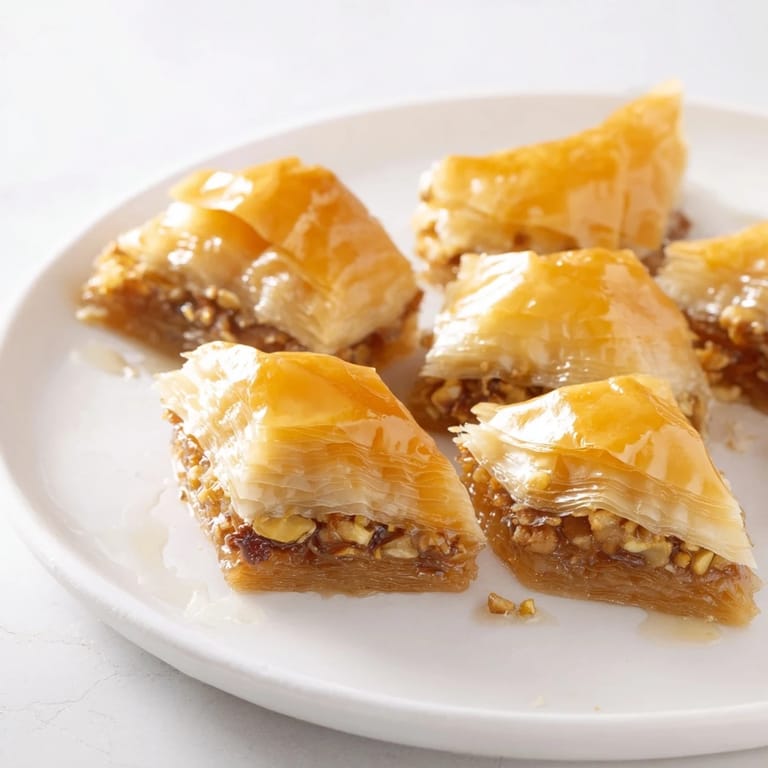
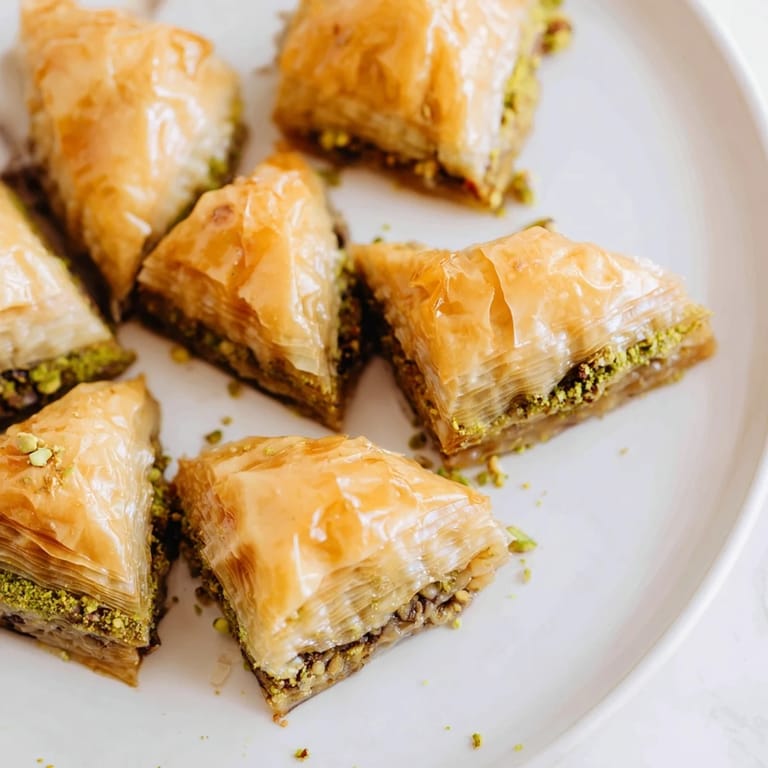
- Using a very sharp knife, cut the baklava into diamonds or squares all the way to the bottom, wiping your knife between cuts so you don't drag filling everywhere. This step matters because baklava hardens as it cools, and it becomes nearly impossible to cut cleanly afterward.
- Bake until golden:
- Bake for 45 minutes, until the top is deep golden brown and you can smell the butter and nuts toasting. The sound will change too—it'll crackle and pop slightly, letting you know the phyllo is crisping.
- Make the honey syrup while baklava bakes:
- In a saucepan, combine honey, water, sugar, lemon juice, lemon zest, and a cinnamon stick, then bring to a boil. Let it simmer gently for 10 minutes so the flavors meld, then remove the zest and cinnamon stick and let it cool slightly—the syrup should be warm but not piping hot when it meets the hot baklava.
- Pour syrup while everything is hot:
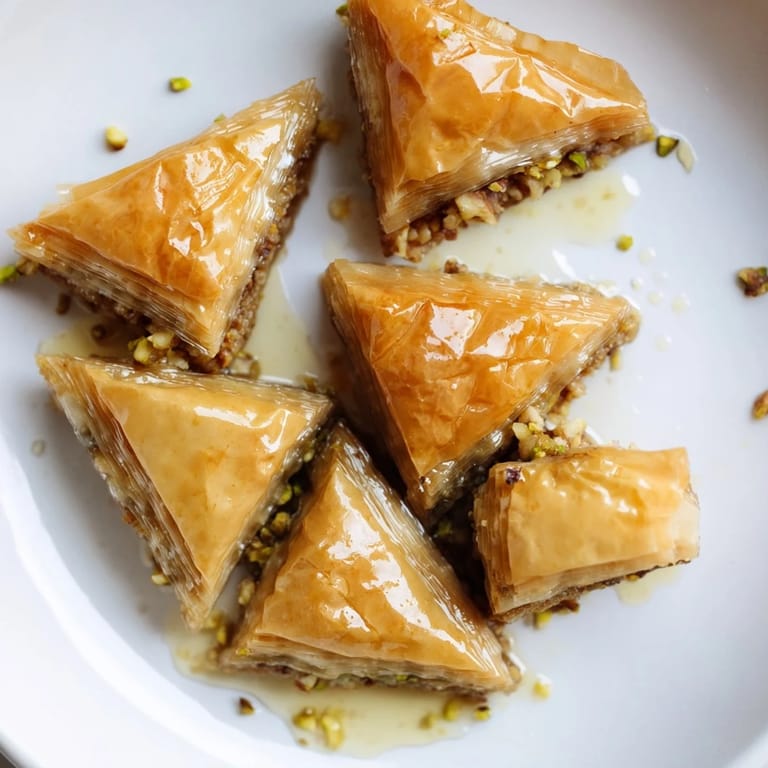
- This is crucial: pull the baklava from the oven and immediately, slowly pour the warm syrup over every piece, making sure it reaches into all the cuts. The hot phyllo absorbs the syrup more readily, creating that signature tender-yet-crispy texture.
- Let it rest and soak:
- Allow the baklava to cool completely at room temperature—this takes at least 4 hours, but overnight is ideal. As it cools, the syrup continues to soak in, and the baklava becomes more flavorful and slightly softer.
 Pin It
 A friend who'd grown up eating baklava at family celebrations in Cyprus once told me that homemade versions remind her of Sunday afternoons, of sitting at her grandmother's table with strong coffee and conversation that lasted hours. Making baklava connects you to that kind of tradition, even if it's new to your family.
The Phyllo Philosophy
Phyllo dough intimidates people, but it's actually one of the most forgiving ingredients once you understand its one rule: keep it covered. I used to think I needed to work lightning-fast, but really, phyllo is patient—it's just nervous about air. Work at a steady pace, cover what's not in use, and it'll cooperate beautifully. The reward is that impossibly thin, shatteringly crisp pastry that makes baklava sing.
Nuts and Spice: The Heart of the Matter
The nut filling is where you can be creative and personal—some families swear by walnuts alone, others use hazelnuts, and I've made versions with a touch of rose water mixed into the filling. The cinnamon is the backbone, but cardamom or clove can sneak in too if you're feeling adventurous. Don't overthink it; the most important thing is that the nuts are fresh and the ratios are balanced so no single element overwhelms the others.
The Syrup: Sweetness Perfected
The honey syrup is where baklava transforms from a dessert into something almost medicinal in its comfort—warm, soothing, and deeply satisfying. Some recipes use water alone, others all honey, but this balance of both lets the honey flavor shine without becoming cloying. The lemon zest is your secret weapon; it brightens everything and prevents the final taste from being one-note sweet. The cinnamon stick infuses slowly, adding warmth without the grittiness of ground cinnamon.
- Make extra syrup if you like your baklava extra-soaked—you can always drizzle more over individual pieces.
- The syrup keeps in the fridge for weeks, so you can make it days ahead and just warm it before using.
- If you're substituting orange blossom water, add just 1 tablespoon to the cooled syrup for a floral note that's distinctly different but equally lovely.
 Pin It
 Baklava is proof that good things take time and patience, and that tradition tastes better when you've made it yourself. Share it with people you care about, serve it with strong coffee, and let the moments around it matter as much as the dessert itself.
Recipe FAQs
- → What nuts are used in this baklava?
A combination of walnuts, pistachios, and almonds finely chopped creates the rich nut filling.
- → How is the honey syrup flavored?
The syrup includes honey, sugar, lemon juice, lemon zest, and a cinnamon stick, simmered to infuse warm aromas.
- → What type of dough is used for layering?
Thin, delicate phyllo dough sheets are brushed generously with melted butter and layered to create a crisp texture.
- → How long should the syrup soak into the baked pastry?
After baking, the warm syrup is poured over the hot pastry and allowed to absorb for at least 4 hours for perfect moistness.
- → Can baklava be stored after preparation?
Yes, keep it covered at room temperature for up to one week to maintain freshness and flavor.
- → What are some serving suggestions?
Baklava pairs wonderfully with strong Turkish coffee or tea to balance its sweetness.