 Pin It
 The first time I made basbousa, my neighbor smelled it baking and appeared at my door with a knowing smile—she'd grown up eating it in Cairo. She watched me pour the syrup over the hot cake and whispered that the secret was patience, that the cake needed to drink in every drop while still warm. That afternoon, sitting with steaming cups of mint tea, I understood why this humble semolina cake had survived generations. It wasn't fancy or complicated, just honest and deeply satisfying.
I made this for my sister's book club once, and two people asked for the recipe before they'd even finished their slice. What struck me was how quiet the room became—not awkward quiet, but the kind where everyone's just focused on the sweetness and the way the coconut plays with the syrup. That's when I realized basbousa does something special: it stops conversation just long enough to make you present.
Ingredients
- Fine semolina: This is your foundation—use the fine kind, not coarse polenta, or you'll get a grainy texture instead of that tender crumb we're after.
- Granulated sugar: Three-quarters of a cup goes into the batter, the rest into the syrup; don't skimp on either.
- Desiccated coconut, unsweetened: Sweetened coconut will make this cloying, so hunt for the unsweetened stuff—your taste buds will thank you.
- Plain yogurt: Room temperature works best; it's what makes the cake moist and prevents it from drying out during baking.
- Unsalted butter or ghee, melted: Ghee adds a deeper, almost nutty flavor if you want to be fancy, but butter works beautifully too.
- Baking powder: Just a teaspoon, enough to give the cake a gentle lift without making it fluffy.
- Vanilla extract: A small touch that rounds out the coconut and spice notes.
- Salt: A quarter teaspoon balances the sweetness in a way you won't quite taste but will definitely notice if it's missing.
- Whole blanched almonds: One for each piece—they're both decoration and a little surprise of texture when you bite through.
- Sugar and water for the syrup: The ratio matters; too much water and the syrup stays thin, too little and it crystallizes.
- Lemon juice: A teaspoon prevents the syrup from becoming grainy as it cools.
- Rose water or orange blossom water: Optional but worth seeking out—it's the whisper that makes people ask what that mysterious floral note is.
Tired of Takeout? 🥡
Get 10 meals you can make faster than delivery arrives. Seriously.
One email. No spam. Unsubscribe anytime.
Instructions
- Heat your oven and prepare the pan:
- Set the oven to 350°F and grease your 9x9 inch pan with butter or tahini—tahini actually works better than you'd expect. Let the pan sit while you make the batter so the bottom won't stick.
- Combine your dry ingredients:
- In a large bowl, whisk together the semolina, sugar, coconut, baking powder, and salt. This takes about two minutes and feels almost meditative; you're breaking up any clumps and making sure the baking powder is evenly distributed.
- Add the wet ingredients and mix:
- Pour in the yogurt, melted butter, and vanilla, then stir with a spatula until everything comes together into a thick, paste-like batter. It should look like wet sand that holds together when you press it.
- Spread and score:
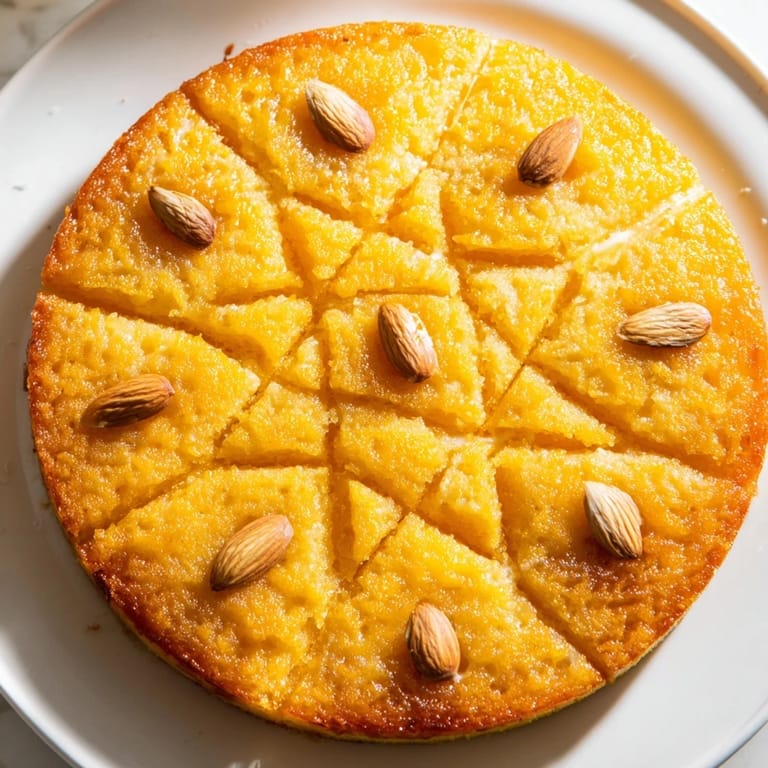
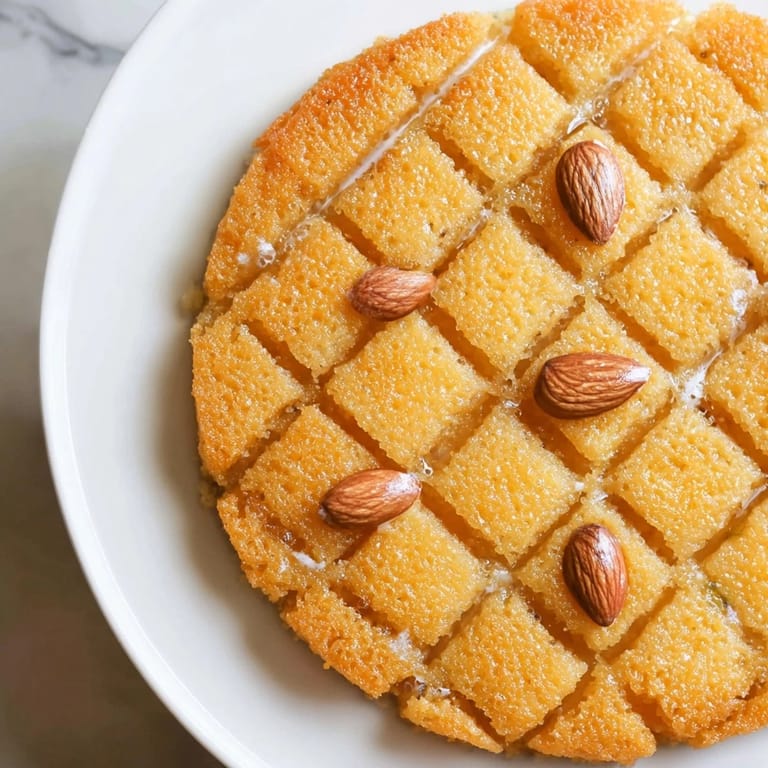
- Transfer the batter to your prepared pan and press it down firmly with the spatula so it's even. Using a sharp knife, score the surface into twelve squares or diamonds, cutting about halfway through—this is where the almonds will sit.
- Add the almonds and bake:
- Press a whole blanched almond into the center of each piece, then slide the pan into the oven for 30 to 35 minutes. You're looking for a golden-brown surface and a toothpick that comes out clean from the center.
- Make the syrup while the cake bakes:
- In a saucepan, combine the sugar, water, and lemon juice, then bring to a boil over medium heat. Let it simmer gently for 8 to 10 minutes until it thickens slightly—it should coat the back of a spoon. Stir in the rose water or orange blossom water if you're using it, then set it aside to cool completely.
- The crucial moment—add the syrup:
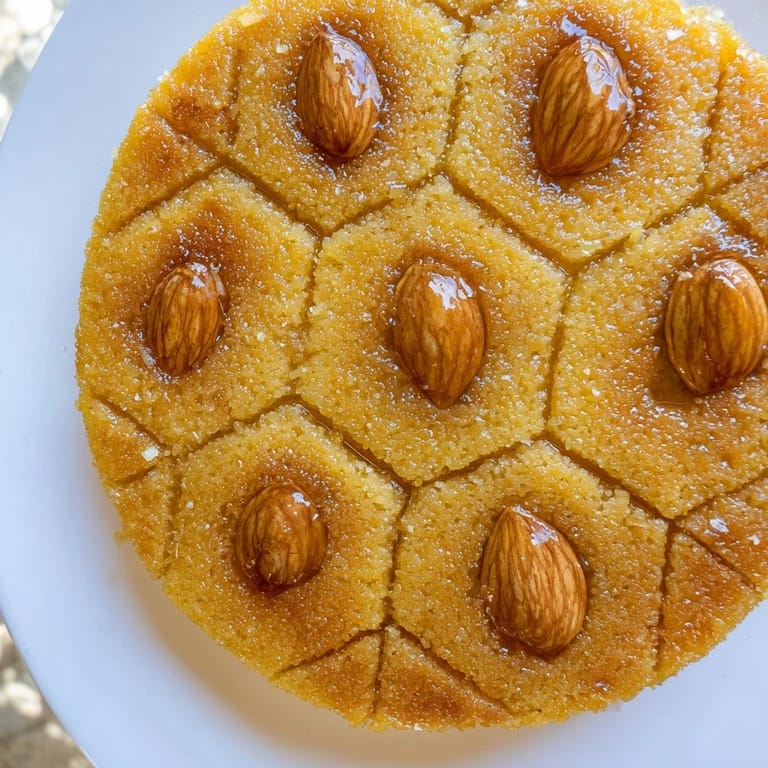
- The second the basbousa comes out of the oven, while it's still steaming, pour the cooled syrup evenly over the entire surface. This is why the cake becomes so moist—it drinks in the syrup while the crumb is still warm and open to absorbing it.
- Cool and serve:
- Let the basbousa cool completely to room temperature, then re-cut along your scored lines with a sharp knife. Serve with mint tea or strong coffee, and watch people's faces light up.
 Pin It
 There's something almost ceremonial about basbousa, the way it requires you to time two things perfectly and then trust that the heat will do its work. My grandfather used to say that good cooking is just respecting the ingredients enough to not rush them, and this cake taught me what he meant.
The Syrup Swap That Changes Everything
I once tried to make a lighter version using honey instead of sugar, thinking it would be more elegant. The syrup ended up thick and bitter, and I learned the hard way that basbousa doesn't want you to overthink it. The traditional sugar-and-water approach exists because it works—the sugar dissolves clean, the lemon juice keeps it from crystallizing, and the final texture is just right. Now when I'm tempted to improvise, I remember that afternoon and stick to what's proven.
Variations Worth Trying
Once you've made basbousa the traditional way, the fun begins. I've added a pinch of cardamom to the batter, swapped half the yogurt for sour cream to deepen the richness, and even topped it with pistachios instead of almonds on a whim. Each change shifts the flavor slightly, like turning the volume up or down on a familiar song. The beauty is that the base is so solid that experimentation feels safe, not reckless.
Serving and Storage Wisdom
Basbousa tastes best the day you make it, when the contrast between crispy edges and tender center is most pronounced. By day two, it softens completely and becomes almost custard-like, which some people prefer. It keeps in an airtight container for up to four days, though I've never had leftovers last that long.
- Serve it slightly warm with mint tea, and watch people slow down and actually taste what they're eating.
- If you want to make it ahead, bake and syrup it the morning of serving rather than the night before.
- Leftover syrup can be drizzled over yogurt, ice cream, or used in fresh lemonade for a floral twist.
 Pin It
 Basbousa is the kind of dessert that doesn't need much—just a quiet moment and someone to share it with. It's honest food, made with your hands, that turns an ordinary afternoon into something worth remembering.
Recipe FAQs
- → What makes the cake moist and tender?
The combination of yogurt and melted butter in the batter helps create a moist and tender texture in the cake.
- → Can I substitute the almonds for other nuts?
Yes, whole almonds can be replaced with pistachios or other preferred nuts for garnish and added texture.
- → How is the syrup prepared for soaking?
The syrup is made by boiling sugar, water, and lemon juice, then simmered until slightly thickened, and can be scented with rose or orange blossom water.
- → What is the best way to serve this cake?
Serve the cake cooled and cut into pieces, paired nicely with mint tea or Turkish coffee for a traditional experience.
- → Can the coconut flavor be intensified?
Yes, sprinkling extra desiccated coconut on top before baking adds more coconut aroma and flavor.