 Pin It
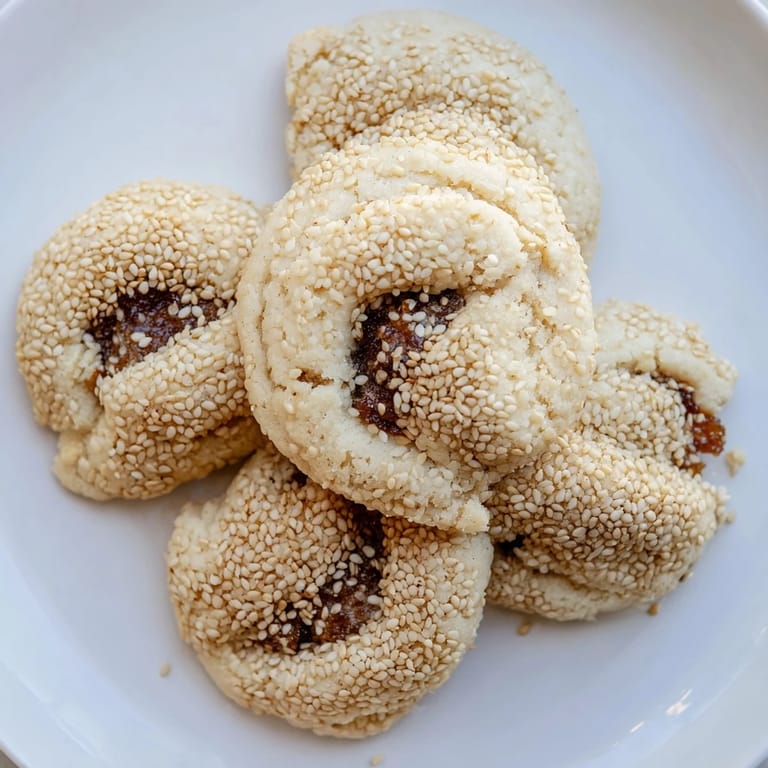
 My grandmother's hands moved with such certainty whenever she shaped kahk, the buttery dough yielding under her palms like it had been waiting all along. I was maybe eight, standing on a stool at her kitchen counter in Ramallah, watching sesame seeds stick to everything—my fingers, her apron, the floor—as she worked without measuring a single thing. She never told me this was how Palestinians had made these cookies for generations; I just understood it from the way she smiled when I bit into one, still warm, the date paste giving way to that tender crumb.
Years later, I made these for a friend who'd never tried them before, and I watched her face shift when she tasted the cardamom beneath the sweetness—a kind of surprised recognition, as if she'd been tasting this flavor her whole life without knowing it. That moment, seeing someone connect with food you've carried, is when a recipe stops being instructions and becomes something that matters.
Ingredients
- All-purpose flour (3 cups): The foundation that needs to stay soft, so be gentle when mixing and don't overthink kneading—overworked dough gives you tough cookies instead of tender ones.
- Unsalted butter (1 cup, softened): This has to be genuinely soft when you start, not just room temperature; the creamier your butter and sugar become, the more delicate your finished cookie will be.
- Powdered sugar (1/2 cup): It dissolves into the butter more smoothly than granulated sugar, which is why it matters here—this creates the melt-in-your-mouth texture that makes kahk special.
- Milk (1/4 cup, plus more as needed): Add it slowly, a tablespoon at a time, because every flour absorbs differently depending on humidity and where you live.
- Baking powder (1/2 teaspoon): Just enough to give the cookies a tender crumb without making them rise too much or taste metallic.
- Salt (1/4 teaspoon): A small amount that you probably won't taste directly, but it wakes up all the other flavors.
- Vanilla extract (1 teaspoon): Choose real vanilla if you can—it adds a warmth that plays beautifully with the dates and spices.
- Medjool dates (1 cup, pitted and chopped): These are sweeter and softer than other varieties, which means they cook down into paste almost without effort.
- Unsalted butter for filling (2 tablespoons): Melting it with the dates transforms them into something silky and cohesive.
- Ground cinnamon (1/2 teaspoon): Warm and familiar, it lets the date flavor shine instead of overshadowing it.
- Ground cardamom (1/4 teaspoon, optional): This is the secret ingredient that makes people pause mid-bite and ask what it is—don't skip it if you want authenticity.
- Sesame seeds (1/2 cup, untoasted): The coating that catches the light and makes these cookies feel special, toasted ones can scorch too easily at this oven temperature.
Tired of Takeout? 🥡
Get 10 meals you can make faster than delivery arrives. Seriously.
One email. No spam. Unsubscribe anytime.
Instructions
- Cream the butter and sugar into clouds:
- Beat them together until the mixture is pale and fluffy, about three minutes with an electric mixer or five if you're using a whisk—this incorporates air that keeps the cookies tender. If your butter is too cold, they'll be dense and heavy.
- Add vanilla and the dry ingredients:
- Pour in the vanilla first, then gently mix in the flour, baking powder, and salt until you don't see dry streaks anymore. Stop here—don't keep stirring.
- Bring the dough together with milk:
- Add milk a tablespoon at a time, working it in gently until the dough feels soft and pliable, like it's ready to be shaped but not sticky. You might not need all the milk, or you might need a bit more depending on your kitchen's humidity.
- Make the date paste while dough rests:
- Combine chopped dates and butter in a small saucepan over low heat, stirring as the dates soften and collapse into paste, about five to seven minutes. Add cinnamon and cardamom once it's smooth, then let it cool while you work with the dough.
- Divide and fill:
- Divide dough into 24 pieces, then flatten each one in your palm into a small disk about the size of a coin. Add a teaspoon of date filling to the center, fold the edges up to seal it, and gently roll it into a ball—your hands do most of this work naturally.
- Roll in sesame seeds:
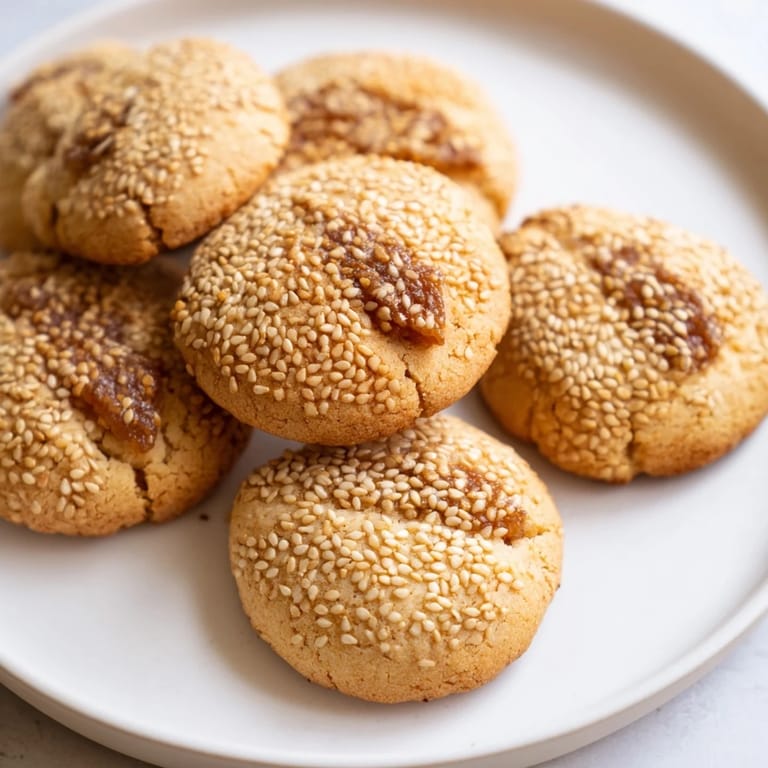
- Pour sesame seeds onto a plate and roll each ball through them, pressing lightly so they stick to the outside without being crushed. The seeds don't need to cover every millimeter; just enough to see them when baked.
- Shape with a fork or mold:
- Place each ball on parchment paper and use a fork to gently flatten it and create a crosshatch pattern, or use a traditional kahk mold if you have one. This step is as much about tradition as function—it slows you down and makes each one feel intentional.
- Bake until golden underneath:
- Bake at 350°F for 18 to 20 minutes—watch for the bottoms to turn golden while the tops stay pale. Overbaking darkens the tops and dries them out, so stay close toward the end.
- Cool completely before enjoying:
- Transfer to a wire rack and let them cool all the way through; this firms up the interior and lets the flavors settle. Eating one warm is tempting, but waiting makes the texture better.
 Pin It
 I realized these cookies had become something more than dessert the first time someone asked me to make them for a celebration and I said yes without hesitation. There's power in knowing you're carrying forward something that matters, that your hands are doing what hands before you did, even if your kitchen is nowhere near Ramallah.
The Story Behind Kahk
Kahk appears at Palestinian celebrations in ways that feel almost sacred—weddings, Eid gatherings, family visits—because making them together is as much about togetherness as the eating. The shape, the sesame coating, the date filling that tastes like spice and sweetness mingled, it's all deliberate. Each cookie carries that intention.
How to Store and Serve Them
These keep beautifully in an airtight container for up to a week, which means you can make them ahead for a gathering without last-minute stress. They taste best with something hot—coffee, tea, or both—because the warmth of the drink brings out the spices in the filling and makes the butter in the dough come alive on your tongue.
Small Variations That Make a Difference
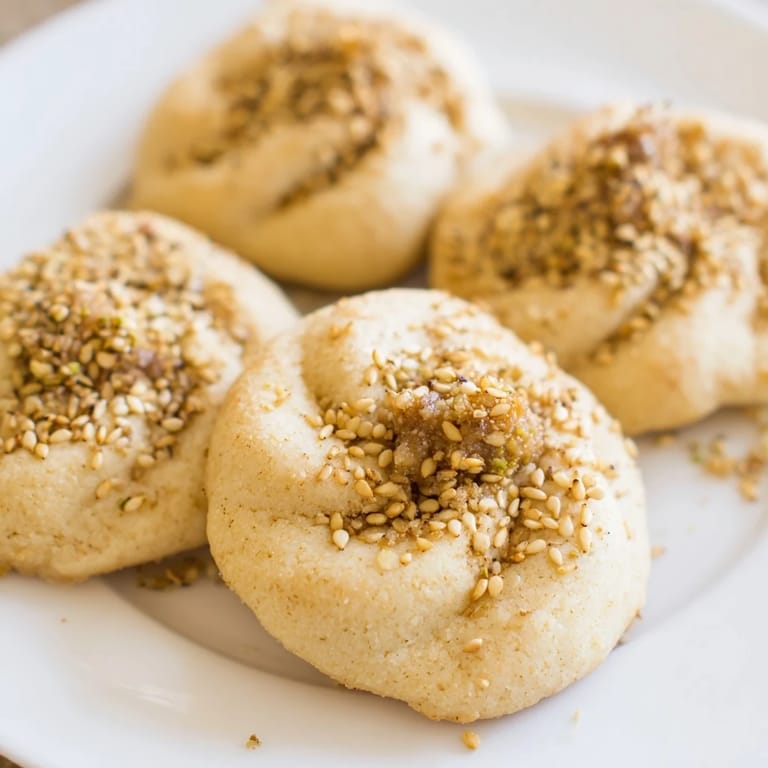
Once you make these once, you'll start noticing small ways to make them your own. Some families add finely chopped walnuts or pistachios to the date paste, others brush the unbaked cookies with a light egg wash for extra shine, and some press a single clove into the center for a hint of sharper spice. The skeleton of the recipe stays the same, but the details become personal.
- For a nuttier version, mix 1/4 cup finely chopped walnuts into the cooled date filling—they add texture and a subtle earthiness that complements the cardamom.
- If your dates seem very dry, add a splash of water to the saucepan while heating them so the paste doesn't become too thick or grainy.
- Make these with someone if you can, even if it's just one other person, because the rhythm of rolling and coating becomes a conversation without words.
 Pin It
 Making kahk is less about following a recipe perfectly and more about understanding that your hands know what to do once you've done it a few times. Trust that, and share them with people who matter.
Recipe FAQs
- → What type of flour is best for making the dough?
All-purpose flour provides the ideal texture for the soft and tender dough characteristic of Kahk cookies.
- → How is the date filling prepared for these cookies?
Chopped Medjool dates are gently cooked with butter and warm spices like cinnamon and cardamom until they form a smooth, sweet paste.
- → Why are sesame seeds used on the coating?
Sesame seeds add a subtle nuttiness and texture, complementing the buttery dough and sweet filling with a light crunch.
- → Can the dough be adjusted if it’s too dry or sticky?
Yes, adding small amounts of milk can help achieve a soft, pliable dough perfect for shaping and filling.
- → How should the cookies be baked for best results?
Bake at 350°F until the bottoms turn golden while the tops remain pale for a tender bite and proper texture.
- → Are there any suggested variations to the filling?
Adding finely chopped walnuts to the date paste introduces a pleasant crunch and extra flavor to the filling.