 Pin It
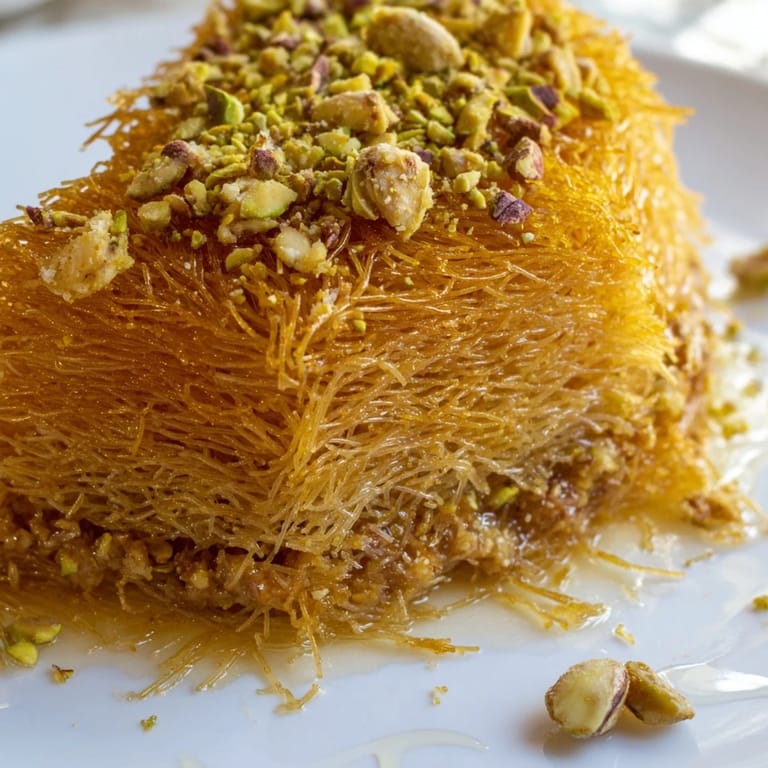
 The first time I really understood the magic of konafa was at my neighbor's kitchen table on a Friday evening, watching her weathered hands separate those impossibly thin strands of kataifi with the kind of practiced ease that only comes from years of tradition. She'd make it for every celebration, and I finally asked her to teach me, expecting some complicated technique, but instead found myself mesmerized by how something so delicate could transform into something so gloriously crisp and golden. That night, I tasted what patience tastes like, and I was hooked.
I remember bringing this to a potluck once, and a friend who usually skips dessert came back three times for more, each time shaking her head in disbelief that I'd made it myself. That's when I realized konafa isn't just dessert—it's a conversation starter, the kind of thing that makes people linger at the table a little longer and ask for your number to get the recipe.
Ingredients
- Kataifi (shredded phyllo dough), 500 g: This is the soul of the dessert, and you'll find it in Middle Eastern markets or specialty sections, usually frozen. Let it thaw completely at room temperature so the strands stay pliable and don't crack when you handle them.
- Unsalted butter, 200 g melted: The butter is what turns these delicate strands golden and crisp, so don't skip it or cut corners here. Make sure it's melted but not hot when you're brushing it on, or you'll end up with uneven browning.
- Walnuts, 150 g finely chopped: These give the filling its earthy backbone and a slight bitterness that balances the honey beautifully.
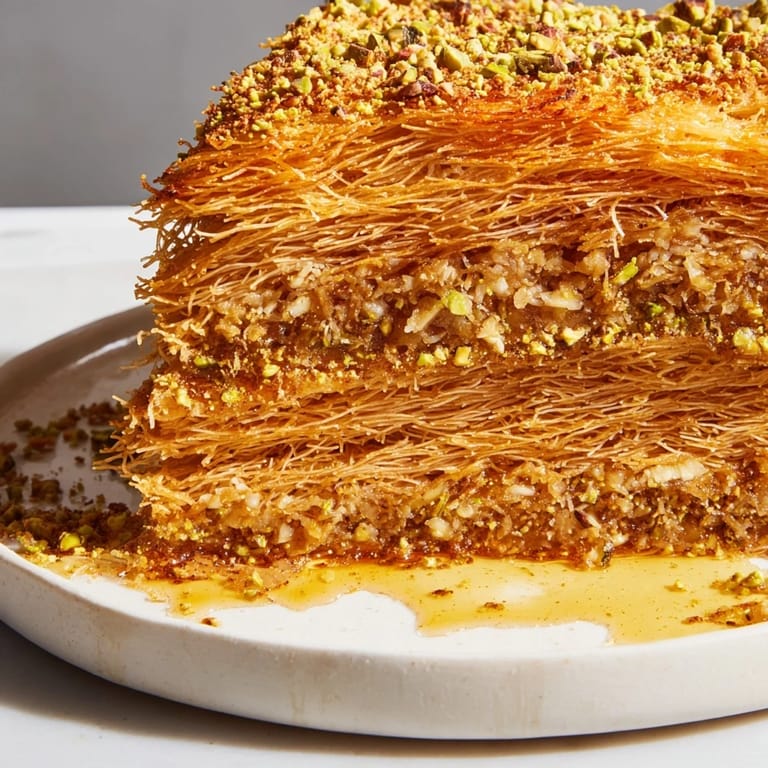
- Pistachios, 100 g finely chopped: They bring a subtle sweetness and that gorgeous green color that peeks through when you slice into it.
- Almonds, 50 g finely chopped: These add a delicate sweetness and help bind everything together in the best way.
- Granulated sugar, 60 g: Just enough to enhance the nuts without making the filling cloyingly sweet.
- Ground cinnamon, 1 tsp: The warmth of cinnamon is what makes people pause mid-bite and ask what that incredible spice is.
- Ground cardamom, 1/4 tsp: A tiny pinch goes a long way—it whispers rather than shouts, adding complexity that keeps people guessing.
- Granulated sugar, 200 g: For the syrup; this will become liquid gold when combined with water.
- Water, 120 ml: This creates the base for your honey syrup, which should be poured hot over the just-baked pastry for maximum absorption.
- Honey, 2 tbsp: Not just sweetness—honey adds a glossy finish and keeps the konafa moist as it cools.
- Lemon juice, 1 tsp: A tiny bit of brightness cuts through the richness and prevents the syrup from tasting one-dimensional.
- Rose water or orange blossom water, 1 tsp (optional): This is where tradition lives; if you can find it, add it. If not, your konafa will still be delicious, but if you do, close your eyes and breathe in—that's centuries of Middle Eastern baking right there.
Tired of Takeout? 🥡
Get 10 meals you can make faster than delivery arrives. Seriously.
One email. No spam. Unsubscribe anytime.
Instructions
- Set your oven and prepare your stage:
- Preheat your oven to 180°C (350°F) and grease a 23 cm round baking pan with butter. Cold hands work better here, so if you have time, chill your fingertips before you start—it sounds silly, but it makes handling the kataifi easier.
- Gently separate the kataifi into strands:
- Pull the thawed kataifi apart with your fingers until the strands are loose and airy. This takes a few minutes of patient work, but rushing it will result in clumpy layers instead of crispy ones. Think of it like untangling the world's most delicate net.
- Layer the first half of pastry:
- Spread half the kataifi into your pan, pressing down just enough to form an even base without compacting it too much. Then take your brush and drizzle half the melted butter evenly over it, letting some seep down into the layers.
- Mix your spiced nut filling:
- In a bowl, combine the walnuts, pistachios, almonds, sugar, cinnamon, and cardamom. Toss everything together until the spices are evenly distributed and the nuts are coated—you should smell something incredible at this point.
- Spread the filling evenly:
- Pour the nut mixture over the buttered kataifi layer, spreading it to the edges. Don't be shy here; this is where all the flavor lives, and you want every bite to have plenty of spiced nuts.
- Top with the remaining kataifi:
- Arrange the other half of the kataifi over the filling, pressing gently but firmly enough that everything holds together. Drizzle the remaining butter over the top, making sure every part gets some—this is what turns it golden.
- Bake until golden and crisp:
- Slide the pan into your oven for 30 to 35 minutes, keeping an eye on it after 25 minutes. You're looking for deep golden color and the smell of toasted nuts filling your kitchen—that's how you know it's ready.
- Make your honey syrup while it bakes:
- In a saucepan, combine the sugar and water, bring it to a boil, then lower the heat and let it simmer for 7 to 8 minutes. Once it's slightly thickened, remove it from heat and stir in the honey, lemon juice, and floral water if you're using it. Let it cool for just a minute or two—you want it warm when you pour it on, not piping hot.
- Pour syrup over hot pastry immediately:
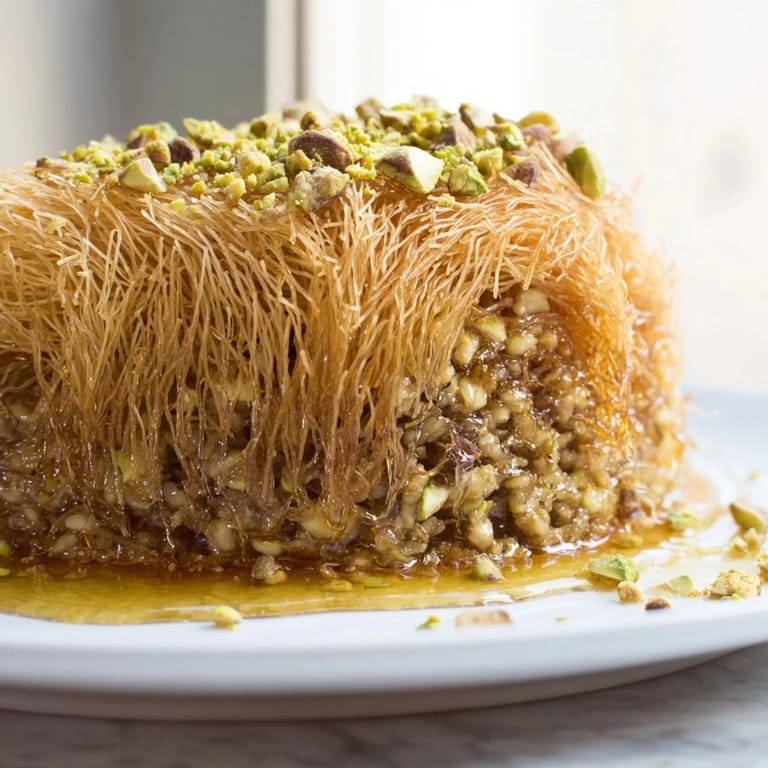
- The moment your konafa comes out of the oven, pour the warm syrup evenly over the top. It should sizzle slightly and soak into all those layers—this is the moment where everything comes together.
- Cool with patience and then slice:
- Let it rest for at least 30 minutes before slicing. This gives the layers a chance to set and the syrup time to fully absorb. Use a sharp knife and cut into diamonds or squares, wiping your blade between cuts for clean edges.
 Pin It
 Years later, I made this for my daughter's friend who was homesick, and watching her face change the moment she took that first bite—how her eyes went quiet and soft—reminded me that food is the most honest language we have. Konafa became the dessert I'd make whenever someone needed a little comfort, and it never failed to do its job.
On Nut Combinations and Seasonal Swaps
While the trio of walnuts, pistachios, and almonds is classic for a reason, I've learned that this dessert is remarkably forgiving when it comes to substitutions. One winter, I had hazelnuts and pecans on hand instead, and honestly, it was even better—nuttier, deeper, with a richness that lingered. The point isn't to follow a rule; it's to use what you have and let your pantry guide the flavor. Same goes for the spices—add extra cinnamon if that's what you love, or skip the cardamom if it's not your thing. This is your kitchen, after all.
The Syrup: Why It's Everything
I used to think the syrup was just an afterthought, something to make it look fancy, but then I realized it's actually what separates good konafa from exceptional konafa. The honey and lemon juice aren't just flavor—they're moisture, they're shine, they're what makes people come back for another bite three hours later. If you can find rose water or orange blossom water, add it; if you can't, a tiny pinch of orange zest whisked into the syrup works beautifully too. The goal is to create something that tastes like it traveled all the way from Cairo to your kitchen.
Serving and Storage Wisdom
Konafa is best served at room temperature the same day it's made, when the contrast between crispy pastry and soft, syrup-soaked center is at its most dramatic. That said, it keeps beautifully in an airtight container for up to three days, though by day two the pastry will soften slightly—which some people find less exciting, but others actually prefer. I've also discovered that adding a dollop of whipped cream, fresh berries, or even a small scoop of vanilla ice cream transforms it into something else entirely, something you could serve at a dinner party without anyone knowing you made it at home.
- Store konafa covered at room temperature, never in the refrigerator where it will go soft.
- Reheat gently in a 160°C oven for about 10 minutes if you want to restore some crispness.
- Make the syrup just before you pour it; it's best when fresh and warm.
 Pin It
 Every time I make konafa, I remember why I love cooking—because it connects me to people, to places I've never been, to stories that aren't mine but somehow become mine through my hands. This dessert is my invitation into that tradition, and now it can be yours too.
Recipe FAQs
- → What is kataifi and how is it used here?
Kataifi is shredded phyllo pastry that forms the crispy outer layers of the dish, providing a delicate and crunchy texture when baked.
- → Can I substitute the nuts in the filling?
Yes, you can swap walnuts, pistachios, and almonds with hazelnuts, cashews, or pecans according to your preference.
- → How do the spices affect the flavor?
Cinnamon and cardamom add warm and aromatic notes that complement the nutty filling and enhance the overall taste.
- → What is the purpose of the honey syrup?
The honey syrup soaks into the baked layers, adding moistness and a fragrant sweetness with hints of lemon and floral essences.
- → How should this dessert be served?
Serve at room temperature, often cut into shapes like diamonds or squares, optionally with fresh berries or whipped cream.
- → Is this dessert suitable for vegetarians?
Yes, it contains no meat products and fits well within vegetarian dietary preferences.