 Pin It
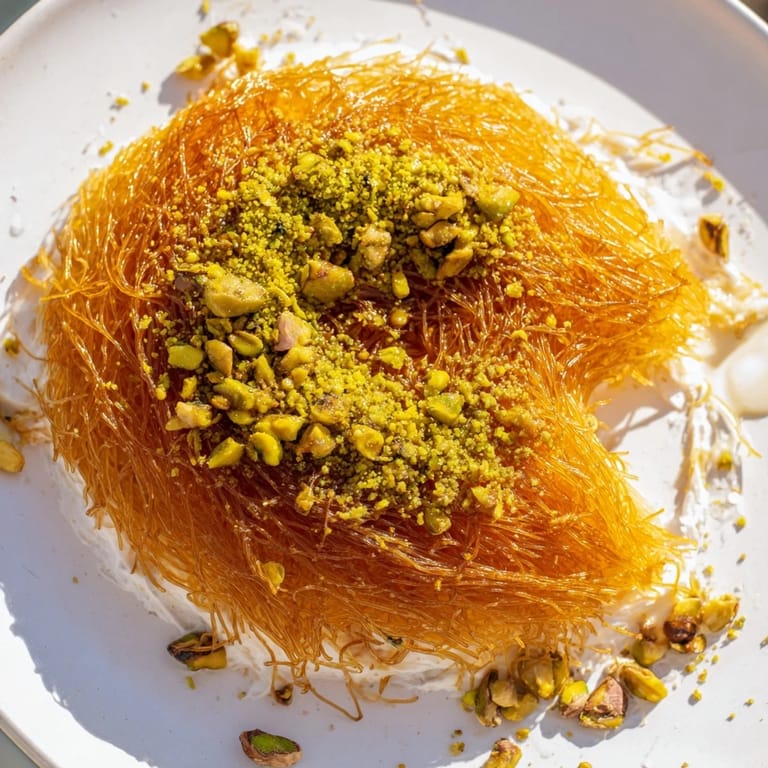
 The first time I watched someone pull knafeh from the oven, I was transfixed by how it transformed—golden strands crisping up while the cheese inside stayed warm and yielding. There's something almost magical about how the butter-soaked phyllo catches the heat, turning into this thin, delicate network that shatters on your tongue. My friend's grandmother made it look effortless, though she later admitted the trick was in patience and listening to the sizzle. Now whenever I make it, that sound takes me right back to her kitchen, steam rising and the smell of orange blossom filling every corner.
I remember bringing this to a small dinner party and watching my partner's face when they bit into it—they didn't expect the cheese to stretch quite so much, and it made them laugh. That moment of discovery, when someone experiences the contrast for the first time, never gets old. It became our thing after that, something we'd make together on winter nights when we wanted to feel a little transported.
Ingredients
- Akawi cheese (or unsalted mozzarella): The soul of this dish—soaking it removes the salt so it melts into something silky rather than rubbery, and the stretchy quality is what creates that signature pull.
- Ricotta cheese: This softens the filling and adds a subtle sweetness that balances the saltiness of the cheese, making it richer without being heavy.
- Kataifi (shredded phyllo dough): Unlike regular phyllo, these thin strands become impossibly crispy and delicate when buttered and baked, almost like edible lace.
- Unsalted butter: You need enough to coat every strand so it crisps evenly; this is not the place to skimp or use salted butter.
- Sugar, water, and lemon juice for syrup: The lemon juice prevents the syrup from becoming cloying and adds brightness that cuts through the richness.
- Orange blossom water and rose water: These are non-negotiable if you want authentic flavor, though start with less than you think you need—a little goes a long way.
- Pistachios: Finely chopped and scattered on top, they add a nutty finish and visual elegance without overwhelming the delicate flavors.
Tired of Takeout? 🥡
Get 10 meals you can make faster than delivery arrives. Seriously.
One email. No spam. Unsubscribe anytime.
Instructions
- Soak the cheese first:
- If using Akawi, patience here saves you later—change the water several times over hours or overnight to pull out excess salt so the filling tastes balanced, not like the sea. Pat everything dry before using so you don't introduce water into the dish.
- Mix your filling:
- Combine the drained cheese together in a bowl and set aside, keeping it simple so the delicate flavors shine.
- Butter and separate the kataifi:
- This is where most people rush and regret it—work gently to separate those strands before pouring the melted butter over them, then toss carefully so every piece glistens without clumping into knots.
- Build your base:
- Grease your baking dish, then press the buttered kataifi into the bottom firmly but gently, creating an even layer that will crisp up and hold everything together.
- Layer the cheese:
- Spread the cheese mixture evenly across the phyllo base, being generous but not so much that it oozes out during baking.
- Top with the final phyllo:
- Layer the remaining buttered kataifi on top and press down lightly so it adheres without crushing the layers beneath.
- Bake until golden:
- At 180°C (350°F), watch for the top to turn deep golden and crispy, about 30-35 minutes—you want the sound of a crackle when you tap it, not silence.
- Make your syrup while baking:
- Combine sugar, water, and lemon juice, bring to a boil, then simmer gently until slightly thickened and the sugar fully dissolves. Remove from heat, stir in the orange blossom and rose water, and let it cool so it won't cause steam when it hits the hot knafeh.
- Invert and soak:
- The moment it comes out of the oven, invert it onto a serving platter—this keeps the bottom crispy and the top becomes the presentation. Pour the cooled syrup over the hot knafeh so it absorbs beautifully without making it soggy.
- Garnish and serve:
- Scatter the finely chopped pistachios on top and drizzle with honey if you like, then serve while it's still warm so the cheese is at its most yielding.
 Pin It
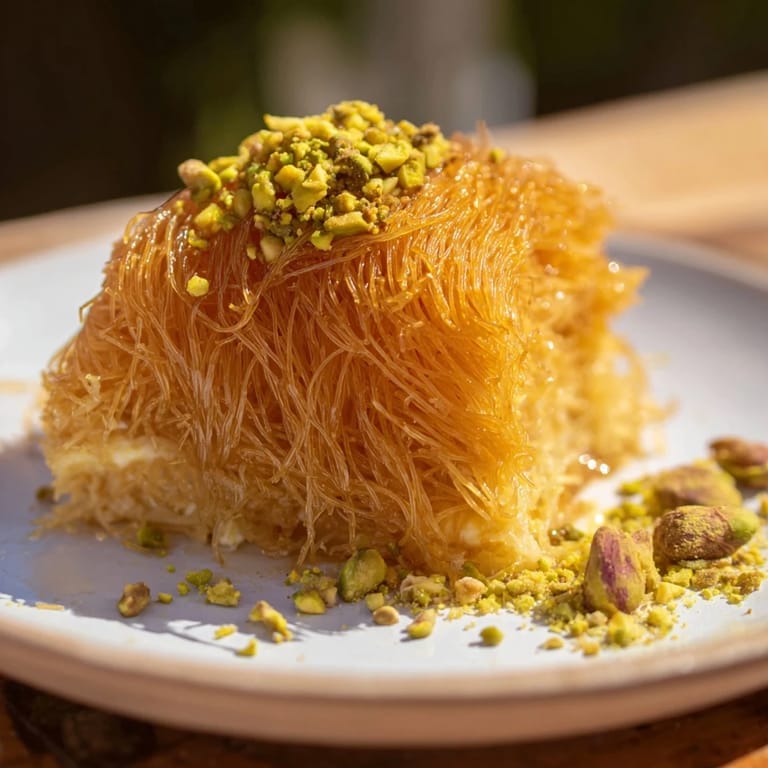
 There's a moment about halfway through baking when you peek into the oven and the kitchen fills with this golden, buttery aroma mixed with hints of flowers—that's when you know it's going to be beautiful. Years later, I still get that same small thrill of anticipation, wondering if this time will turn out as good as I remember.
Why the Inversion Is Your Secret
Inverting the knafeh onto a serving platter immediately after baking is the move that separates a good version from a stunning one—the bottom layer of phyllo, which baked directly against the pan, becomes crispy and golden and turns into the beautiful top presentation, while the fresh syrup soaks into the warm phyllo without making it soggy. It's the kind of small technique that feels clever when you understand why it works, and your guests will never believe it's not sitting in a special pastry dish.
Texture and Temperature Matter More Than You'd Think
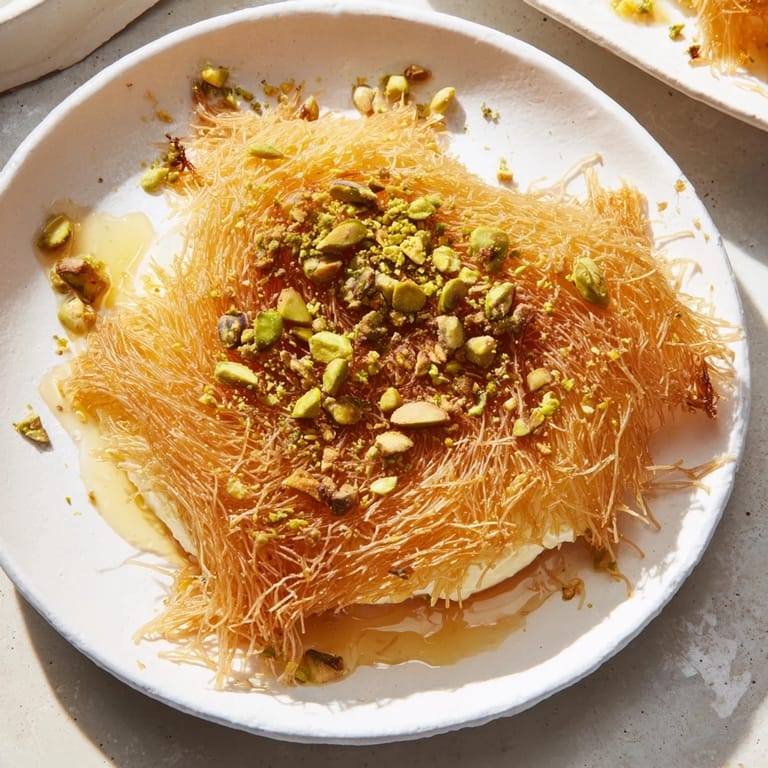
This dish is best served warm, when the cheese is still stretched and giving, and the phyllo still crackles between your teeth—if it cools completely, the cheese sets and the magic diminishes slightly. Some people reheat it gently in a low oven or even a warm skillet, which works, but that first-from-the-oven moment is really where the recipe shines brightest.
Making It Your Own
While the traditional version is nearly perfect, I've learned that small tweaks can make it feel fresher or richer depending on the mood—some bakers add a whisper of cinnamon or cardamom to the syrup, while others use half the rose water and double the orange blossom for a brighter finish. The bread-and-butter version I've shared here is the one that never fails and tastes like comfort, but don't be afraid to adjust the floral notes to match your own taste memories.
- For a crunchier, almost caramelized top, broil the knafeh for just 1-2 minutes right after baking, keeping a close eye so it doesn't burn.
- Pair it with strong Turkish coffee or mint tea to cut through the sweetness and make the whole experience feel like a proper occasion.
- Leftover syrup keeps beautifully in the fridge and can be drizzled over plain yogurt or ice cream the next day.
 Pin It
 Making knafeh is one of those recipes that becomes easier and more joyful each time you make it, until eventually it feels like muscle memory rather than following steps. I hope this becomes something you return to again and again, filling your kitchen with that unforgettable scent.
Recipe FAQs
- → What cheeses are best for the filling?
Akawi cheese soaked to reduce saltiness combined with creamy ricotta creates the perfect stretchy, mild filling. Mozzarella can be a substitute.
- → How do I prepare the kataifi pastry?
Gently separate the shredded phyllo strands and coat them evenly with melted butter to ensure crispiness during baking.
- → What is the role of the syrup?
The fragrant syrup, infused with orange blossom and rose waters plus lemon juice, soaks into the hot pastry, adding moisture and floral sweetness.
- → Can I make the dessert ahead of time?
For best texture, serve immediately after baking. If needed, a brief broil after reheating can restore crispiness.
- → What are good beverage pairings?
Traditional companions include Turkish coffee or refreshing mint tea to balance the rich, sweet flavors.