 Pin It
 The first time I bit into a makroudh at a Tunisian friend's kitchen table, I understood why these cookies show up at every celebration. She handed me one still warm from the oil, the outside crackling between my teeth before giving way to that impossible softness of spiced date paste inside. I watched her work that evening—the way she shaped the dough with such casual precision, folded it over the filling like she was tucking in a child—and I knew I had to learn this. Now whenever I make them, I can almost hear her laughter and smell that particular sweetness of honey and orange blossom that fills a kitchen for hours.
I made these for my neighbor last winter when she was dealing with something difficult, and she came back the next day asking for the recipe with tears in her eyes—not from sadness, but because she said they tasted like comfort. That moment taught me that some foods carry meaning beyond ingredients. Now I make them whenever someone needs a small reminder that they're cared for, wrapped in wax paper and tied with string.
Ingredients
- Fine semolina: The foundation that gives these their signature texture—choose one labeled fine, not coarse, or your dough will feel gritty instead of silky.
- Unsalted butter and olive oil: Together they create a richness that neither could achieve alone, keeping the dough tender without feeling heavy.
- Warm water: Add it slowly and only as much as you need, because semolina drinks differently depending on humidity in your kitchen.
- Salt and cinnamon: These two quiet ingredients anchor everything, preventing the sweetness from becoming cloying.
- Pitted dates: The star filling that should be soft and naturally sweet—if yours are hard, soak them briefly in warm water first.
- Orange blossom water: A small amount transforms the dates from simple to something that tastes like a memory, though the cookies are beautiful without it too.
- Honey for syrup: This is what makes the outside gleam and seals in tenderness, so don't skip it or use a syrup substitute.
- Sesame seeds: Optional but they add a gentle nuttiness and look beautiful scattered on top while the honey is still warm.
Tired of Takeout? 🥡
Get 10 meals you can make faster than delivery arrives. Seriously.
One email. No spam. Unsubscribe anytime.
Instructions
- Cook the date filling until it becomes paste:
- Combine your chopped dates with butter, cinnamon, and nutmeg in a saucepan over low heat, stirring occasionally as they soften and meld together into something almost glossy. This takes about five minutes, and you'll know it's ready when a spoon dragged through leaves a brief trail.
- Stir in orange blossom water and let it cool completely:
- The orange blossom water should go in off heat so its fragrance isn't cooked away—this small step is what gives the filling its whispered complexity. Once cooled, shape it into thin logs about one centimeter thick and set them on parchment paper.
- Build the semolina dough with your hands:
- In a large bowl, combine semolina, sugar, salt, and cinnamon, then pour in melted butter and olive oil. Use your fingertips to rub everything together until it looks and feels like wet sand, which means the fat is distributed evenly.
- Add warm water gradually until the dough comes together:
- You want a soft, pliable dough that holds together without being sticky—add water a splash at a time, kneading gently between additions. The dough should feel almost alive under your hands, responsive and smooth.
- Rest the dough while you gather yourself:
- Cover the bowl loosely and let it sit for twenty minutes at room temperature, which allows the semolina to fully hydrate and the gluten to relax, making shaping easier.
- Roll and groove the dough:
- Divide your dough in half and roll each piece into a log about five centimeters thick, then use your finger or the back of a small spoon to press a deep groove lengthwise down the center of each log. This groove is where the filling will nestle.
- Fill and seal with care:
- Lay your date filling log into the groove, then fold the dough over to enclose it completely and gently press the seam closed. Roll it lightly to smooth any cracks, then flatten it just slightly so the cookies will cook evenly.
- Cut the diamonds with a steady hand:
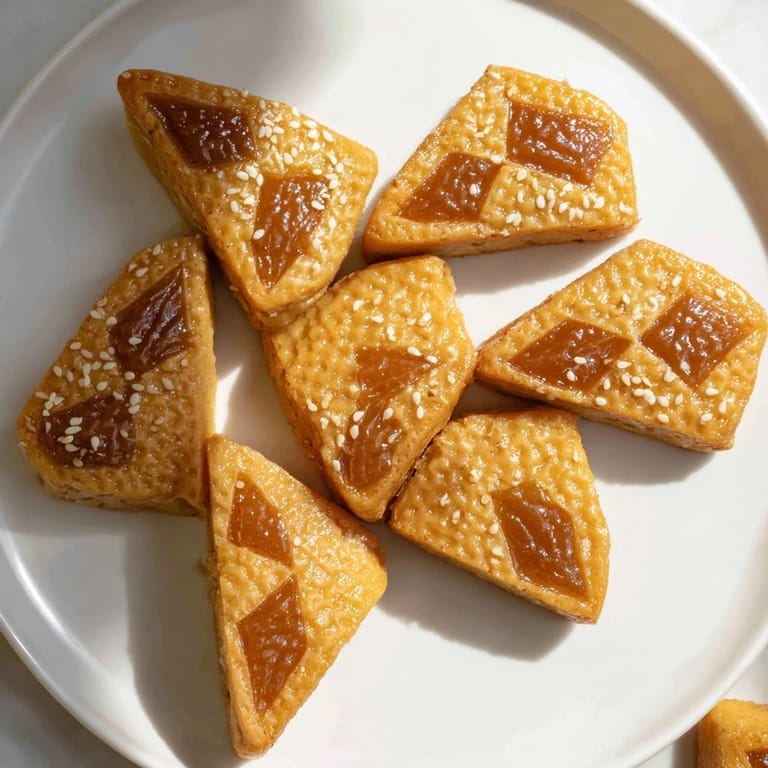
- Using a sharp knife, cut diagonally through the filled log to create diamond shapes about four to five centimeters across—these proportions matter because they allow the inside to cook through while the outside gets golden.
- Heat your oil to precisely 170 degrees Celsius:
- Use a thermometer if you have one, because this temperature is the sweet spot where the outside crisps while the inside stays tender. Too hot and you'll burn the outside before the inside cooks; too cool and you'll end up with greasy cookies.
- Fry in batches until each side is deep golden:
- Don't crowd the pan—work in two or three batches depending on your pan's size, frying each batch for about five to seven minutes until all sides are a rich golden brown. Use a slotted spoon to turn them gently and lift them out.
- Drain immediately and prepare for the honey bath:
- Place fried makroudh on paper towels to shed excess oil while you warm honey with orange blossom water in a small saucepan. The honey should be warm but not hot, or it will slide right off the cookies instead of clinging.
- Dip each one with intention and set to cool:
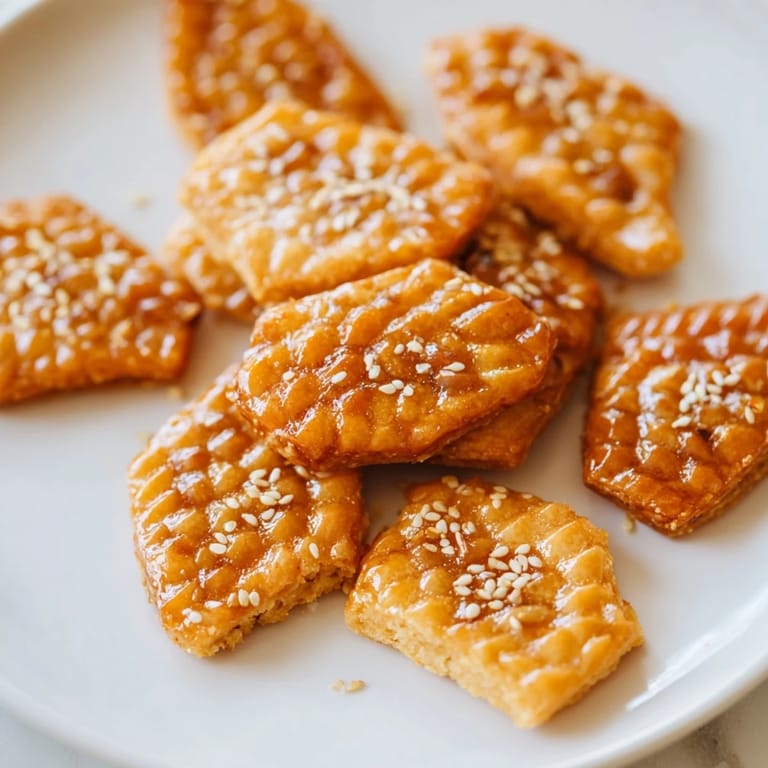
- Using tongs or two forks, briefly dip each fried makroudh into the warm honey syrup, coating it fully, then transfer to a wire rack to cool and dry slightly. The syrup will continue to seep in as they cool, creating that jeweled appearance.
- Add the finishing touch while still warm:
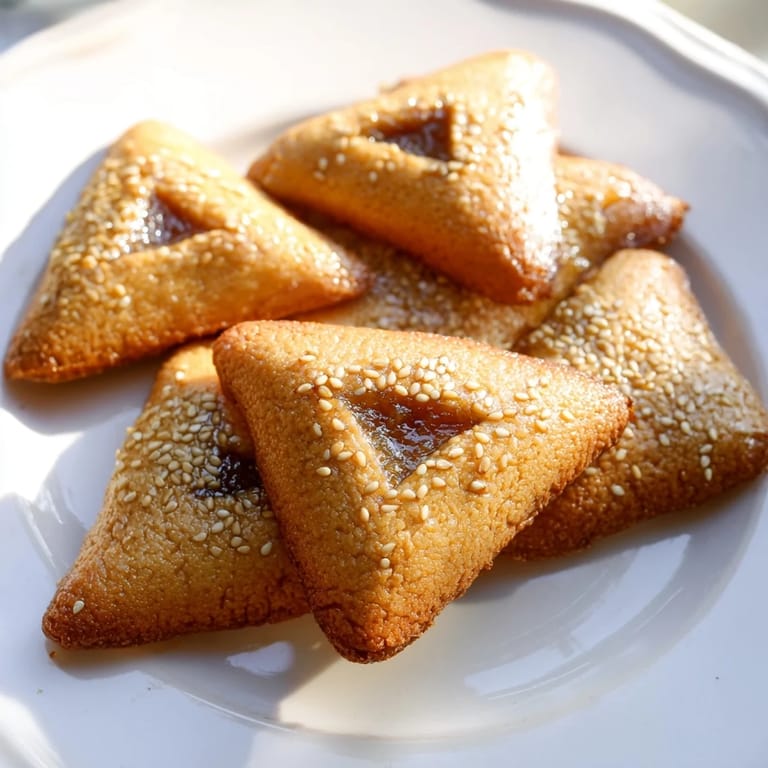
- If using sesame seeds, sprinkle them over the makroudh while the honey is still tacky—they'll adhere beautifully and add a subtle crunch and visual elegance.
 Pin It
 There's something almost meditative about making makroudh—the repetition of rolling, grooving, filling, and cutting becomes rhythmic after a while, and your hands learn what the dough should feel like. I've made these when I needed to think through something difficult, and the quiet work of shaping them seemed to settle whatever was churning in my mind.
The Choice Between Frying and Baking
Fried makroudh are traditional and absolutely worth the effort, but I've also baked a batch when I was cooking for someone watching their oil intake, and they were genuinely delicious—just lighter and less dramatic. Baked at 180 degrees Celsius for 25 to 30 minutes until golden, they still shattered and still held the spiced filling tenderly, then received the honey syrup just the same. The difference is subtle enough that both versions deserve a place in your repertoire depending on your mood and circumstances.
Making Them Ahead and Storing Gracefully
Makroudh actually improve after a day or two as the honey seeps deeper and the flavors marry together, so there's real advantage to making them a few days before you need them. Store them in an airtight container at room temperature, layering them between parchment if you're stacking them, and they'll stay crisp outside and tender inside for up to a week. If they ever start to feel stale, a brief warm-up in a 150-degree oven will revive them completely.
Variations and Flavor Explorations
Once you've mastered the basic version, these cookies invite gentle experimentation—some families add a pinch of ground clove or allspice to the date filling, while others swap orange blossom water for rose water or omit it entirely for a plainer taste that lets the dates shine. I've seen versions with a small handful of chopped pistachios mixed into the filling, and while that's not traditional, it's undeniably good. The dough itself is also forgiving; I've made it with clarified butter instead of regular, or with a touch more cinnamon when I was craving extra warmth.
- Try adding a tiny pinch of ground clove to the filling for unexpected depth.
- Rose water works beautifully if you can't find orange blossom water.
- A small amount of chopped toasted nuts mixed into the filling adds richness without overwhelming the dates.
 Pin It
 Every time I make makroudh, I'm reminded that the best recipes are the ones that connect us to other kitchens, other hands, other moments. These cookies are worth making.
Recipe FAQs
- → What type of semolina is best for makroudh dough?
Fine semolina works best as it creates a smooth yet textured dough that crisps beautifully when fried.
- → Can I bake makroudh instead of frying them?
Yes, baking at 180°C for 25–30 minutes until golden is a lighter alternative while still achieving a crisp crust.
- → How is the date filling prepared for makroudh?
The dates are cooked with butter and warm spices like cinnamon and nutmeg until they form a thick paste, then shaped into logs for filling.
- → What does orange blossom water add to makroudh?
It imparts a delicate floral aroma that complements the sweetness and spices, but it can be omitted or substituted with rose water.
- → How should makroudh be stored after preparation?
Keep them in an airtight container for up to one week to maintain freshness and crispness.