 Pin It
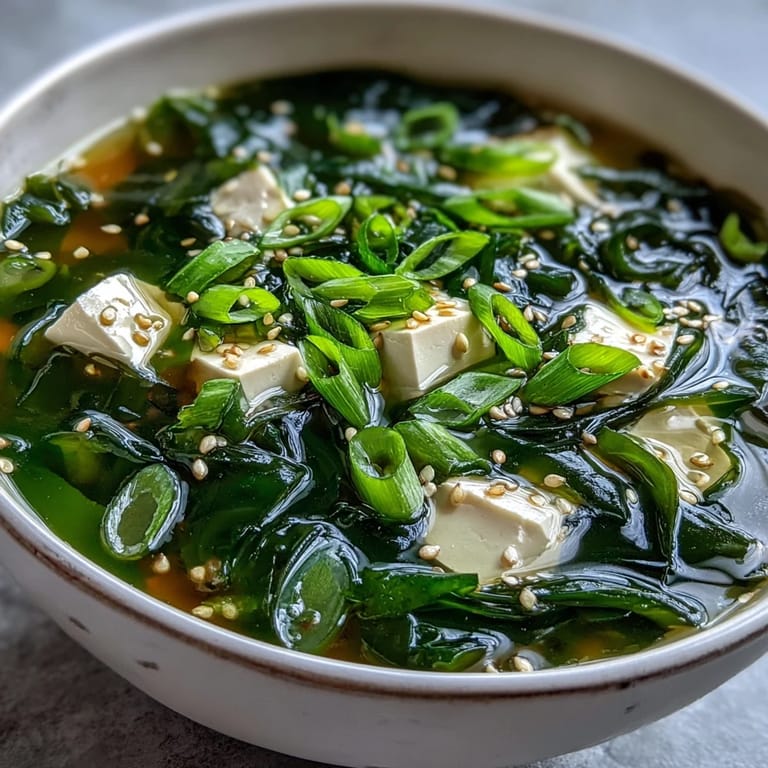
 My neighbor handed me a steaming bowl of wakame soup on a gray Tuesday morning, still wrapped in a cloth napkin, and I understood immediately why she made it almost every week. The broth was so clear you could see the delicate seaweed unfurling at the bottom, and it tasted like pure comfort—nothing forced, nothing complicated. Since then, I've made it countless times, and it never fails to settle something restless in me.
I brought this soup to a potluck once, nervous because it seemed too simple next to everyone else's elaborate dishes, but it disappeared first. A friend came back asking for the recipe, saying she'd been craving exactly this kind of quiet nutrition. That moment taught me that straightforward doesn't mean unimpressive.
Ingredients
- Dried wakame seaweed: This thin, tender seaweed is packed with minerals and iodine, and it rehydrates beautifully in minutes—buy it from the Asian section or online, and a little goes a long way.
- Dashi stock: The soul of the soup, made from kombu and bonito or shiitake and kombu; vegetarian versions are equally authentic and flavorful.
- Silken or firm tofu: Silken gives a creamier mouthfeel, firm holds its shape better—either works, just handle it gently when stirring.
- Scallions: Fresh, sharp, and they brighten everything; slice them just before serving so they keep their color and bite.
- White miso paste: Milder and slightly sweet compared to red miso, it dissolves smoothly into hot broth without overpowering the delicate flavors.
- Soy sauce: A whisper of umami that anchors the broth; use gluten-free tamari if that matters to you.
- Sesame oil: Optional but recommended, just a drizzle adds depth and a toasted aroma that makes people pause mid-sip.
Tired of Takeout? 🥡
Get 10 meals you can make faster than delivery arrives. Seriously.
One email. No spam. Unsubscribe anytime.
Instructions
- Wake up the wakame:
- Place the dried seaweed in a small bowl of cold water and let it sit for 5 minutes—you'll watch it unfurl and soften, transforming from brittle flakes into tender ribbons. Drain it well so you're not adding extra water to the soup.
- Heat the dashi gently:
- Pour your stock into a medium saucepan and bring it to a gentle simmer over medium heat, letting the aroma fill your kitchen as a reminder of what's coming. Don't let it boil hard; this soup values calm.
- Add tofu and wakame:
- Slide the cubed tofu and rehydrated wakame into the simmering broth and let them warm through for 2 to 3 minutes, just until everything is heated through. The tofu will soften slightly, the seaweed will relax further.
- Blend the miso:
- Scoop a ladle of hot broth into a separate bowl with the miso paste and stir until completely smooth and creamy, breaking up any stubborn lumps. This step prevents miso from clumping in the pot.
- Bring it together:
- Pour the miso mixture back into the soup and stir gently, letting the flavors marry for just a moment before adding soy sauce and sesame oil if you're using it. Heat for one more minute but don't let it bubble—boiling breaks down miso's delicate enzymes.
- Finish and serve:
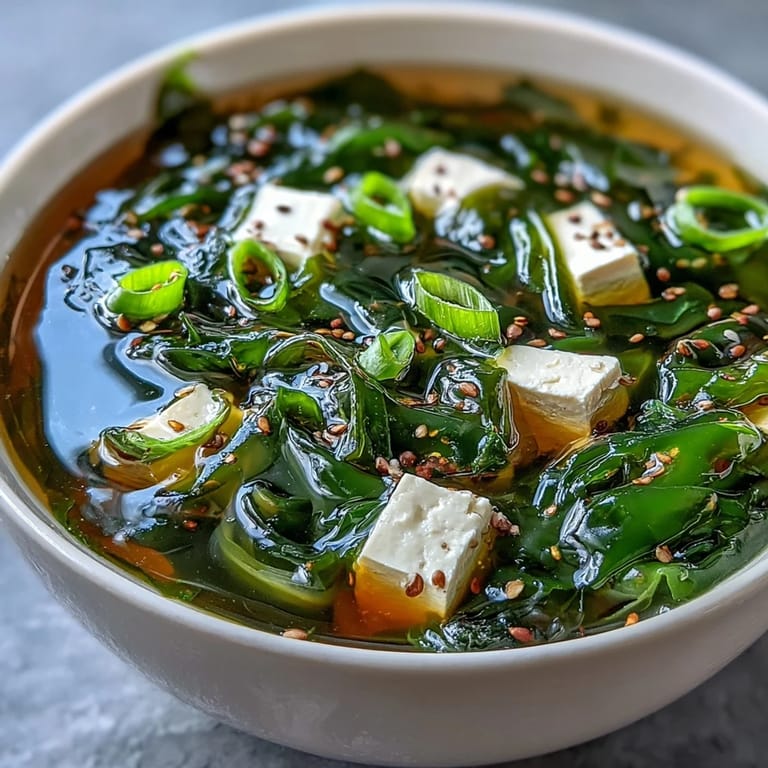
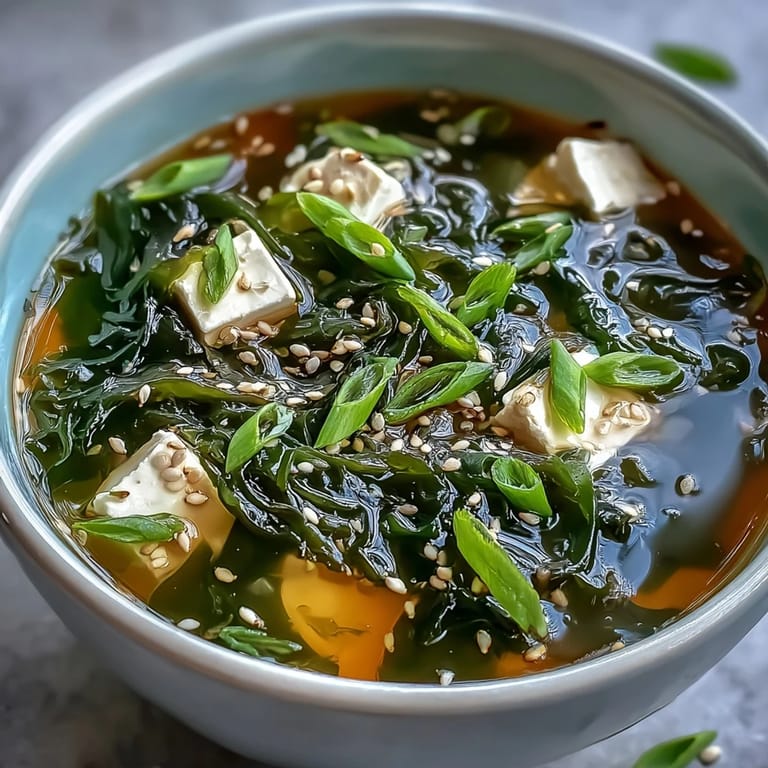
- Pour the soup into bowls and top each one generously with sliced scallions, their fresh green color making the whole thing look alive and appetizing. Serve immediately while the warmth is still rising.
 Pin It
 My daughter asked if this was what Japanese grandmothers made for their families, and I realized that's exactly what I was trying to recreate—something simple that carried intention. Now it's the first thing she requests when she's feeling under the weather.
Building Flavor Without Fuss
The secret to this soup's depth is respecting each ingredient's job—the dashi provides the foundation, the wakame adds mineral notes, the tofu offers neutral comfort, and the miso brings everything into focus. Nothing fights for attention; instead, they harmonize. This is how Japanese cooking often works: knowing when restraint is more powerful than abundance.
Variations That Still Honor the Original
Once you understand the structure, you can gently expand it without losing its essence. A handful of spinach wilts in at the very end, mushrooms can simmer alongside the tofu, thin carrot slices add sweetness. Some mornings I add a raw egg that cooks softly in the heat, creating little clouds of protein. The soup adapts gracefully because it's built on a confident foundation.
Making This Soup Your Own
This recipe asks almost nothing of your kitchen or your time, which is precisely why it's become a ritual rather than a chore. Whether you serve it as an opening to a larger meal or as a quiet lunch by itself, it carries the same gentle nourishment. The beauty is in the simplicity, and once you've made it once, you'll understand why it deserves a permanent place in your rotation.
- Keep dried wakame and dashi in your pantry so you can make this soup on impulse whenever you need something grounding.
- Make dashi from scratch if you can—the difference between store-bought and homemade is noticeable and worth the minimal extra effort.
- Let the scallions be the last step; their freshness is what catches you when the spoon reaches your mouth.
 Pin It
 This soup has taught me that some of the best meals are the ones that ask the least but give the most. It's a quiet teacher, and once you've understood its lesson, you'll find yourself making it again and again.
Recipe FAQs
- → Is wakame soup healthy?
Yes, wakame seaweed is exceptionally rich in iodine, calcium, magnesium, and other essential minerals. It's low in calories while providing beneficial nutrients that support thyroid function and overall health.
- → Can I make this soup vegan?
Absolutely. Use kombu and shiitake mushroom dashi instead of fish-based dashi stock. Most miso pastes are naturally vegan, but always check the label to ensure no fish-derived ingredients are included.
- → Why add miso paste at the end?
Miso contains live enzymes and beneficial probiotics that are destroyed by high heat. Dissolving it in a separate bowl with hot broth before adding it back to the soup preserves these beneficial properties and prevents the miso from boiling.
- → Can I add other vegetables?
Certainly. Sliced mushrooms, carrots, spinach, or bok choy make excellent additions. Add heartier vegetables like carrots earlier in the simmering process, while delicate greens like spinach should be added in the last minute.
- → How do I store leftovers?
Store cooled soup in an airtight container in the refrigerator for up to 3 days. The wakame may continue to soften and the flavors will meld together. Reheat gently without boiling to preserve the miso's beneficial properties.