 Pin It
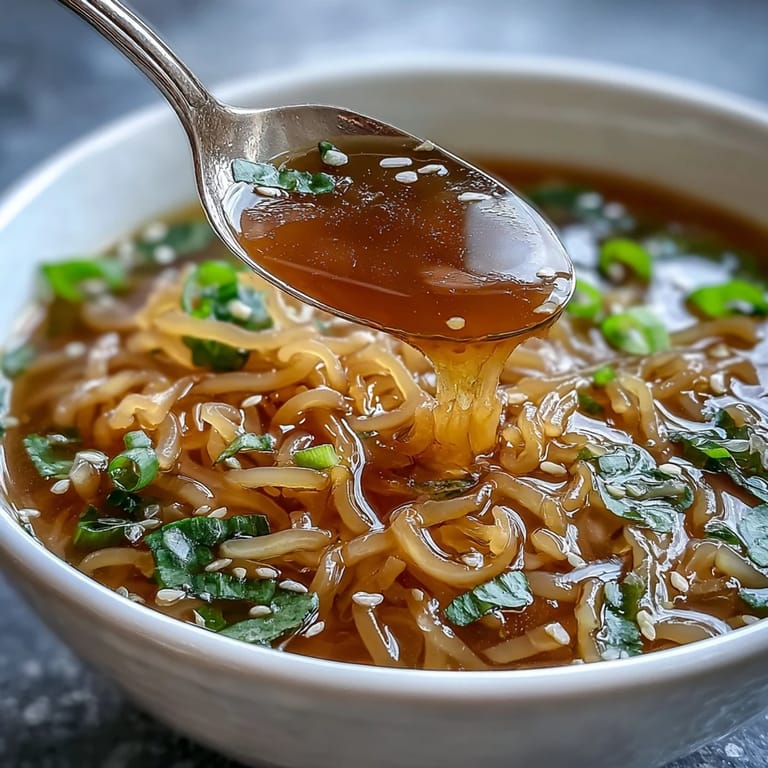
 My kitchen was unusually quiet that Tuesday morning when I first tried shirataki noodles—no kids around, just me and a steaming mug of coffee wondering if these translucent strands could actually taste good. A friend had sworn by them for months, calling them her secret weapon for staying satisfied without the carb crash that usually followed lunch. I was skeptical until that first sip of bone broth hit my tongue, rich and warming, carrying hints of ginger and garlic through tender noodles that somehow tasted nothing like what I expected. That bowl changed how I thought about comfort food.
I made this for my partner one chilly evening when neither of us felt like anything heavy, and watching him slurp those noodles while steam fogged up his glasses reminded me why simple food often hits hardest. He asked for seconds, then wanted to know how to make it himself—which never happens. Now it's become our go-to when we want something that feels indulgent but leaves us feeling energized instead of sluggish.
Ingredients
- Bone broth (4 cups): This is your foundation, and honestly, quality here changes everything—look for versions with no added sugar and ideally some visible collagen, because that's what makes the broth silky and deeply satisfying.
- Fresh ginger (thumb-sized piece, sliced): Don't peel it, just smash it lightly with the side of your knife to release those warming oils that make your whole body feel better.
- Garlic (2 cloves, smashed): Smashing rather than mincing gives you bigger, softer pieces that infuse without dissolving, so you can fish them out afterward.
- Soy sauce or tamari (2 tablespoons): Tamari keeps this gluten-free if that matters to you, but either one brings that savory depth that makes you want to drink the leftover broth straight from the bowl.
- Rice vinegar (1 tablespoon): A small splash brightens everything and prevents the broth from tasting flat—taste as you go because you might want just a touch more.
- Sesame oil (1 teaspoon): Toasted sesame oil specifically; regular oil won't give you that nutty undertone that makes people close their eyes on the first sip.
- Shirataki noodles (400 g, drained and rinsed): These come packed in liquid that can smell off, so don't skip the rinsing step—it's the difference between enjoying them and wondering why you bothered.
- Soft-boiled eggs (2, halved), spring onion, red chili, fresh herbs, sesame seeds: Toppings are where you inject personality and texture, so choose what speaks to you that day.
Tired of Takeout? 🥡
Get 10 meals you can make faster than delivery arrives. Seriously.
One email. No spam. Unsubscribe anytime.
Instructions
- Build your broth foundation:
- Pour that bone broth into a medium pot and add the ginger slices, smashed garlic, soy sauce, rice vinegar, and sesame oil all at once. Bring everything up to a gentle boil over medium heat, letting the aroma fill your kitchen—this is when you know something good is happening.
- Let flavors marry:
- Turn the heat down and simmer for 10 minutes without touching it; this is when the ginger releases its warming oils and the garlic softens enough to flavor without overwhelming. You'll notice the broth smells deeper, more complex than when you started.
- Rescue your noodles from their packaging:
- While the broth works, drain those shirataki noodles and rinse them thoroughly under cold running water—spend a full minute here, swishing them around, because this step removes the odor that comes with the package. Then place them in a sieve and pour fresh boiling water over them to remove any remaining coating and warm them through.
- Unite noodles and broth:
- Add the blanched noodles directly to your simmering broth and let them heat through for just 2 to 3 minutes; they're already cooked, so you're just warming them and letting them absorb some of that liquid gold. Fish out the ginger and garlic pieces with a slotted spoon so they don't overpower the final taste.
- Serve with intention:
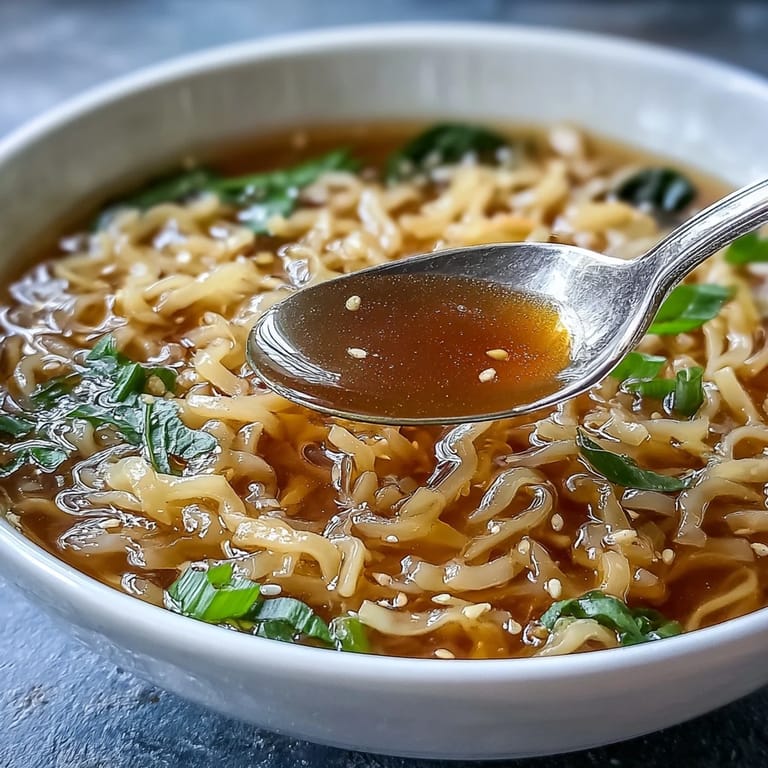
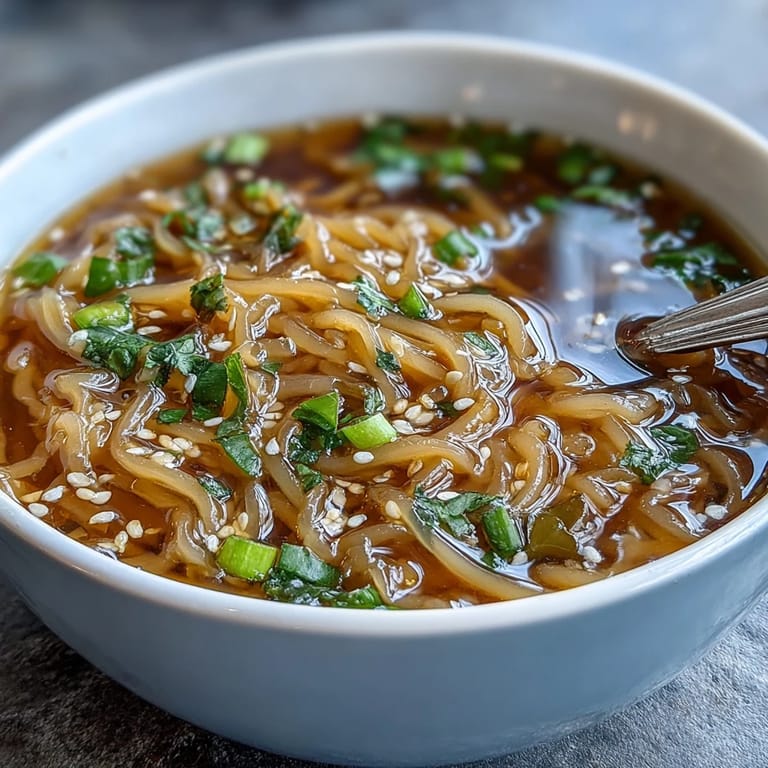
- Divide the noodles and broth evenly between two bowls, then arrange your chosen toppings on top—a halved soft-boiled egg, some thinly sliced spring onion for brightness, chili for heat if you want it, a scatter of fresh herbs, and a sprinkle of toasted sesame seeds. The bowl should look inviting enough to photograph, but more importantly, smell good enough that you can't wait to eat.
 Pin It
 One Saturday afternoon, my mother sat down to this bowl while recovering from a cold, and I watched her methodically work through it while barely watching television—no rush, no effort, just presence. Afterward she asked if I could make it again the following week, which in her language means she felt cared for through food. That's when I realized this wasn't just a recipe, it was a way to tell someone they matter without saying a word.
Understanding Shirataki Noodles
These translucent noodles are made from konjac plant fiber, which means they're essentially carb-free and calorie-sparse, but they need respect in the kitchen—they're not wheat pasta, so don't expect or demand the same texture. They have a slightly chewy, slippery quality that actually works beautifully in broth where you want something that soaks up flavor without weighing you down. Once you stop comparing them to regular noodles and start appreciating them for what they are, the appeal clicks into place.
The Bone Broth Question
Homemade bone broth is wonderful if you have time, but there's zero shame in reaching for a quality store-bought version on a Tuesday night—life gets busy, and a good broth in the pantry means you're always 20 minutes away from a nourishing meal. What matters is checking labels for added sugars and unnecessary fillers, then choosing something that tastes rich and feels satisfying on its own before you even add anything else. I keep several varieties on hand depending on what I'm making, and honestly, having options makes cooking feel less like a chore and more like having choices.
Making This Meal Your Own
The beauty of this recipe is that it holds its bones while inviting customization—you could add shredded rotisserie chicken for protein abundance, toss in some sautéed mushrooms for earthiness, or even crack a raw egg into the hot broth to poach it at the last second. Some mornings I make it with white miso stirred in instead of soy sauce, or add a splash of coconut aminos if I'm avoiding soy that day. The recipe as written is perfect, but think of it more as a template than a rule book.
- Vegetarian versions work beautifully with a rich vegetable broth and tofu pressed and cubed as the protein.
- Add extra protein by stirring in shredded chicken, a dollop of miso, or crispy tofu cubes just before serving.
- If you prefer more herbaceous flavors, skip the garlic and ginger and use a splash of kombu-based broth with fresh dill or tarragon instead.
 Pin It
 This bowl has become my answer to those moments when I need food that's both simple and serious about making me feel good. Make it, sit down without distractions, and pay attention to how your body responds—that's when you'll understand why it's become a quiet favorite in my kitchen.
Recipe FAQs
- → Do shirataki noodles have any taste?
Shirataki noodles have a very neutral taste on their own, which makes them perfect for absorbing flavors from broths and sauces. When properly rinsed and simmered in a seasoned broth, they take on the savory, aromatic qualities of the cooking liquid.
- → How do I prepare shirataki noodles properly?
Drain and rinse the noodles thoroughly under cold water to remove the liquid they're packaged in. Then pour boiling water over them in a sieve to eliminate any natural odor. This quick preparation ensures the noodles are clean and ready to absorb your broth's flavors.
- → Can I make this vegetarian?
Absolutely. Substitute the bone broth with a high-quality vegetable broth and omit the eggs or replace them with seasoned tofu. The ginger, garlic, and sesame seasonings work beautifully with vegetable bases for a completely plant-based version.
- → What protein can I add to make it more filling?
Shredded cooked chicken, sliced pork, or firm tofu work wonderfully as protein additions. Simply add them to the broth during the final few minutes of simmering so they heat through and absorb the aromatic flavors.
- → How long will the leftovers keep?
The broth can be stored separately for up to 4 days in the refrigerator. However, shirataki noodles are best enjoyed fresh as they can become slightly soft when reheated. For meal prep, store the broth and noodles separately, then combine when ready to eat.