 Pin It
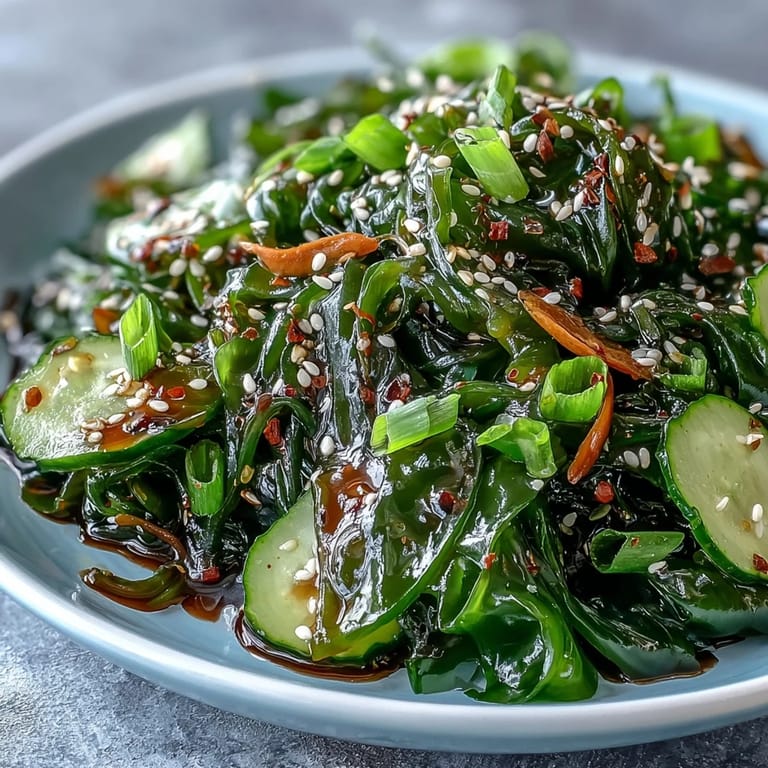
 There's something almost magical about watching dried seaweed transform in a bowl of cold water—it unfurls like it's been waiting for permission to come alive. I discovered seaweed salad entirely by accident when a friend brought it to a potluck, and I was skeptical until the first bite hit my tongue. The sesame-ginger dressing is bright and just slightly sweet, cutting through the oceanic earthiness in a way that made complete sense. Now I make it whenever I need something that tastes both indulgent and genuinely good for me.
My sister served this at her dinner party last spring, and I watched people who claimed they'd never eat seaweed go back for seconds. She set it out alongside some grilled fish, and somehow it became the thing everyone was talking about. The conversation shifted from polite small talk to people asking questions about where the seaweed came from and whether they could eat it every day. That's when I realized this salad had quietly become something special in my rotation.
Ingredients
- Dried wakame seaweed: Start with good quality dried wakame—it matters more than you'd think, and it expands to about three times its volume when soaked, so 30 grams is genuinely enough to feed four people.
- Cucumber: Keep it thinly sliced and don't peel it unless you prefer to; the skin holds structure and adds visual pop.
- Carrot: A julienne peeler makes this quick work, but even rough thin slices work perfectly fine and honestly look more intentional.
- Scallions: Use both the white and green parts—the white adds a sharp bite and the green brings mild onion sweetness.
- Toasted sesame oil: This is non-negotiable; regular sesame oil tastes like nothing, but toasted sesame oil carries all the nutty warmth you're after.
- Rice vinegar: It's gentler and slightly sweet compared to other vinegars, which balances the earthy seaweed beautifully.
- Soy sauce or tamari: If you're cooking gluten-free, tamari works identically and nobody will notice the difference.
- Fresh ginger: Grate it just before mixing—the difference between fresh and pre-grated ginger in this dish is genuinely noticeable.
- Maple syrup or honey: A touch of sweetness rounds everything out and keeps the dressing from tasting too sharp.
- Toasted sesame seeds: Buy them already toasted to save yourself a step, and use them in both the dressing and as a final garnish.
- Chili flakes: Optional, but they add a gentle heat that wakes up your palate without overwhelming the delicate flavors.
Tired of Takeout? 🥡
Get 10 meals you can make faster than delivery arrives. Seriously.
One email. No spam. Unsubscribe anytime.
Instructions
- Rehydrate the seaweed:
- Place your dried wakame in a bowl and cover it with cold water—you'll immediately feel the transformation beginning as it softens and opens up. After 7 to 10 minutes, it'll be completely tender and almost vibrant green; drain it well and squeeze out the excess water with your hands or a clean kitchen towel, because extra moisture will dilute your dressing later.
- Combine the vegetables:
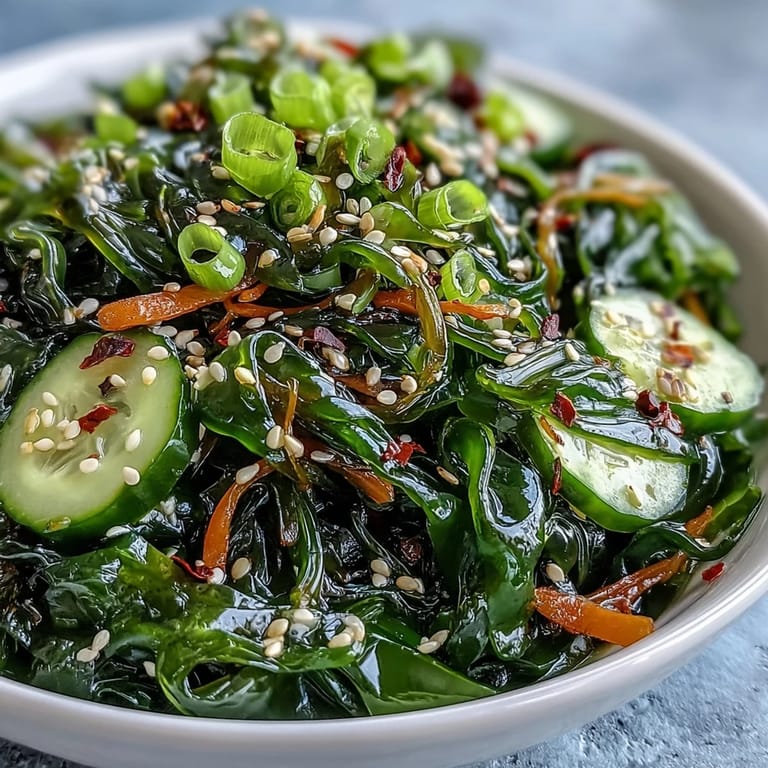
- In a large bowl, toss together the rehydrated seaweed, thinly sliced cucumber, julienned carrot, and sliced scallions. Everything should look fresh and colorful at this point, and you can actually taste each component separately.
- Whisk the dressing:
- In a small bowl, whisk together the sesame oil, rice vinegar, soy sauce, freshly grated ginger, maple syrup, sesame seeds, and chili flakes if you're using them. Take your time whisking so the oil and vinegar emulsify slightly and the ginger distributes evenly throughout.
- Bring it together:
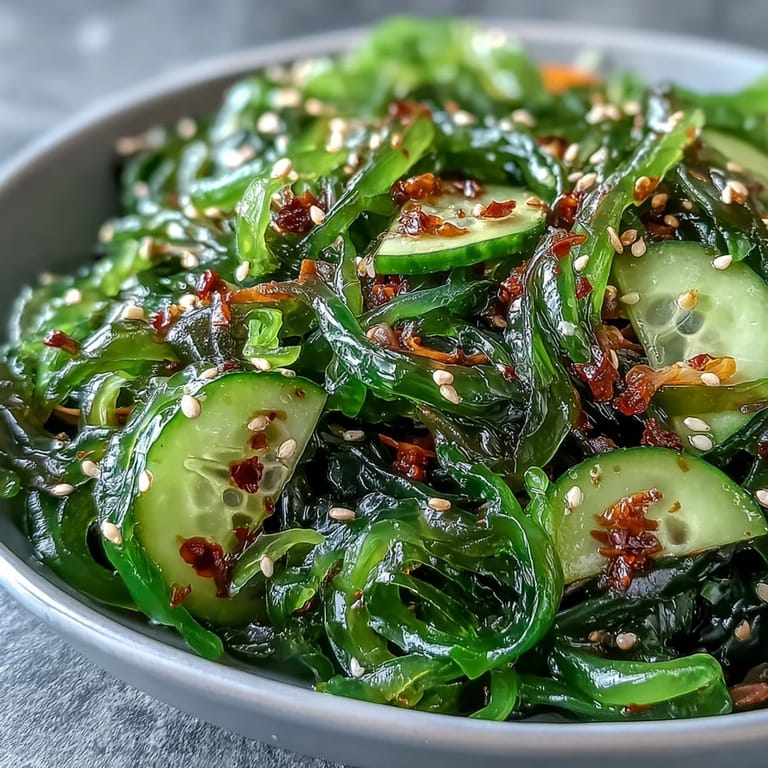
- Pour the dressing over the salad and toss gently with your hands or salad tongs, making sure every strand of seaweed gets coated without crushing anything. The salad will look glossy and smell absolutely incredible at this point.
- Finish and serve:
- Transfer everything to a serving bowl and sprinkle with additional sesame seeds and fresh cilantro or parsley if you have it on hand. You can serve it immediately while it's cold and crisp, or chill it for 15 to 30 minutes to let the flavors meld together even more.
 Pin It
 I served this to my neighbor when she was going through a rough patch, and she ate the entire bowl while we sat on the porch talking about nothing in particular. Something about this salad seemed to ease the moment—it was light enough to eat without thinking, but interesting enough to hold attention. We ended up having the best conversation we'd had in months, and I'm pretty sure this seaweed salad was somehow part of that.
The Magic of Umami
The combination of seaweed, soy sauce, and toasted sesame oil creates an umami powerhouse that tastes complex and deeply satisfying despite how simple it is to make. This isn't a salad that leaves you feeling like you're missing something; the savory depth keeps you coming back for another bite. It taught me that healthy eating doesn't have to taste austere or virtuous—it just has to taste good.
Timing and Temperature
The temperature of your salad genuinely matters here, and cold is the answer. Everything should come from the refrigerator if possible, because the contrast between the cool vegetables and the rich, warm sesame oil dressing is part of what makes this so refreshing. I learned to chill my bowl beforehand if the weather is warm, which sounds fussy but actually makes a difference in how the salad tastes and feels.
How to Make It Your Own
This salad is a foundation that welcomes your own additions without demanding them. I've added thinly sliced radish when I wanted extra crunch, shredded red cabbage for color and texture, and even some shredded nori if I was feeling extra. The beauty is that you can taste each addition clearly because the dressing is so well balanced.
- Thinly sliced radish adds a sharp, peppery crunch that plays beautifully against the umami.
- Shredded red cabbage brings both sweetness and a firm bite that holds up to the dressing.
- A handful of microgreens or fresh herbs scattered on top right before serving adds brightness and texture.
 Pin It
 This salad has become my answer to the question of what to bring when I want to contribute something that feels thoughtful without being heavy. It's proof that some of the most delicious things we eat are also the most nourishing.
Recipe FAQs
- → What type of seaweed works best?
Dried wakame is ideal for this salad. It rehydrates beautifully, becoming tender yet maintaining a pleasant texture. You can find it in most Asian grocery stores or the international aisle of well-stocked supermarkets.
- → How long should I soak the seaweed?
Soak dried wakame in cold water for 7-10 minutes until fully tender. It will expand significantly, so 30 grams (about 1 cup dried) yields plenty for four servings. Drain well and gently squeeze out excess water before tossing with the vegetables.
- → Can I make this salad ahead of time?
Yes! In fact, chilling for 15-30 minutes before serving enhances the flavor as the seaweed absorbs the dressing. The salad keeps well in an airtight container in the refrigerator for up to 2 days, though the vegetables may soften slightly over time.
- → Is this dish naturally vegan?
Yes, when made with maple syrup instead of honey, this dish is entirely vegan. Use tamari instead of regular soy sauce if you need it to be gluten-free as well. Always check your seaweed packaging to ensure no additional ingredients are included.
- → What can I serve with seaweed salad?
This pairs beautifully with other Japanese dishes like miso soup, tempura vegetables, or grilled fish. It's also excellent alongside sushi rolls or as part of a bento box. For beverages, chilled sake or green tea complement the flavors perfectly.
- → Can I adjust the spice level?
Absolutely. The chili flakes are optional, so you can omit them entirely for a mild version or increase the amount for more heat. You could also add a pinch of red pepper flakes or a drizzle of sriracha if you prefer.