 Pin It
 There's something magical about watching a room full of people gravitate toward a well-built charcuterie board—it's like watching a party organize itself around something beautiful. My neighbor moved in three houses down, and I wanted to do something special to welcome her, so I spent an afternoon arranging cured meats, cheeses, and colorful vegetables on my grandmother's old wooden board. By the time she arrived, I'd created this landscape of flavors and textures that somehow made her new house feel less empty. She stood in my kitchen for twenty minutes just admiring it before we even touched a single grape.
I learned the power of a good charcuterie board when my sister called me panicked about hosting her boyfriend's parents for the first time. Instead of making her stress over a complicated dinner, I sent her with a board I'd assembled that morning, and she texted me later saying it was the best move ever—everyone was too busy talking and enjoying the spread to judge her cooking skills. That's when I realized this isn't just food; it's permission to gather without pressure.
Ingredients
- Prosciutto (120 g): Buy it thinly sliced and let it come to room temperature before arranging; cold prosciutto is stiff and won't drape beautifully, but at room temperature it becomes almost silky and easier to fold into loose, inviting piles.
- Salami (120 g): The salty backbone of your board—choose a variety with visible marbling because it's not just better tasting, it also looks more visually interesting than uniform slices.
- Smoked ham (120 g): This adds a slightly different flavor profile than prosciutto and fills out the board with color variety without being redundant.
- Chorizo slices (100 g): The spicy moment your guests won't expect; its deep red color creates visual drama on the board.
- Brie (150 g, sliced): Let it warm up just slightly before serving because cold brie tastes like nothing, but room-temperature brie becomes creamy and luxurious on a cracker.
- Aged cheddar (150 g, cubed): The sharp, reliable choice that everyone recognizes—cubing it makes it easier to eat and creates little golden blocks that catch the light.
- Gouda (120 g, sliced): Slightly sweet and smoky, it bridges the gap between the sharp cheddar and the creamy brie in a way that makes the whole board feel balanced.
- Blue cheese (100 g, crumbled): Not for everyone, but essential for those who love it—the crumbles scatter naturally across the board like little flavor bombs.
- Hummus (100 g): The creamy, earthy dip that makes vegetables feel like a treat instead of an obligation.
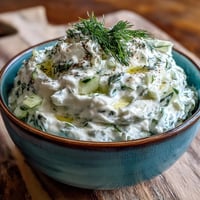
- Tzatziki (100 g): Cool and herbaceous, it's the dip that surprises people who thought they were just coming for cheese.
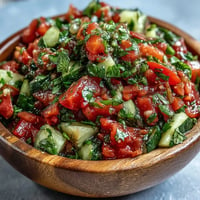
- Roasted red pepper dip (100 g): Sweet and slightly smoky, it adds a third dimension to your dip selection and makes the board feel intentional rather than random.
- Assorted crackers (150 g): Buy at least three different types—multigrain for substance, water crackers for delicate flavor pairing, and something fun like herb or seed crackers to show you actually thought this through.
- Baguette slices (100 g): Toast them lightly if you want them to hold up better under dips, or leave them soft if you want that warm, fresh bread moment.
- Breadsticks (100 g): These are your textural contrast—crunchy when you need it, and they look elegant fanned out in a corner.
- Red and green grapes (2 cups total): The sweet relief between salty meats and sharp cheeses; keep them in a cluster so they stay cool and look like little jewels.
- Cherry tomatoes (1 cup): Their acidity cuts through the richness of the cheeses and adds brightness that yellow or orange varieties can't quite match.
- Cucumber slices (1 cup): Prepare these last minute or they'll weep water onto your beautiful board.
- Bell pepper strips (1 red): The red is crucial for color contrast; they're the edible garnish that makes everything else look more intentional.
- Baby carrots (1 cup): Sweet enough to appeal to people who might skip vegetables elsewhere, and they fill visual gaps naturally.
- Mixed nuts (½ cup): Toast them lightly in a dry pan for five minutes if you have time—they'll taste fresher and their aroma will make the whole gathering feel more special.
- Olives (½ cup, pitted): Both green and black because they're different flavor experiences; pitted is non-negotiable unless you want your guests pulling pits out mid-conversation.
- Dried apricots (¼ cup): These add a subtle sweetness that nobody expects but everyone appreciates—they're the secret weapon that makes people think you're a more sophisticated entertainer than you actually are.
- Dried figs (¼ cup): Chewier texture than the apricots, they create a different eating experience and their dark color provides visual weight to balance bright fruits.
- Fresh herbs (rosemary, thyme): Use whole sprigs scattered across the board as both garnish and flavor hint; they make people think you're classier than you probably are, and they smell incredible.
Tired of Takeout? 🥡
Get 10 meals you can make faster than delivery arrives. Seriously.
One email. No spam. Unsubscribe anytime.
Instructions
- Start with the foundation:
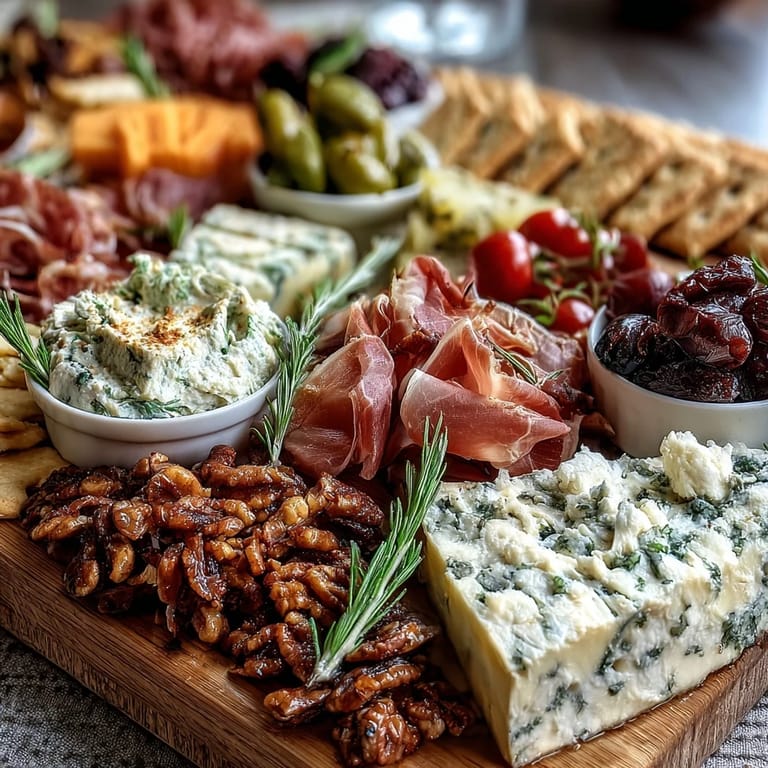
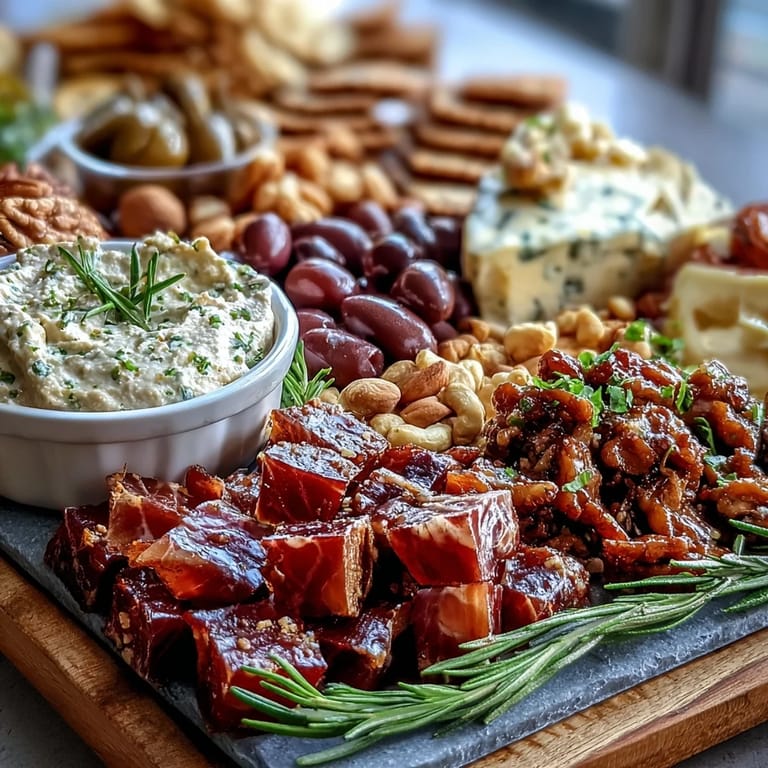
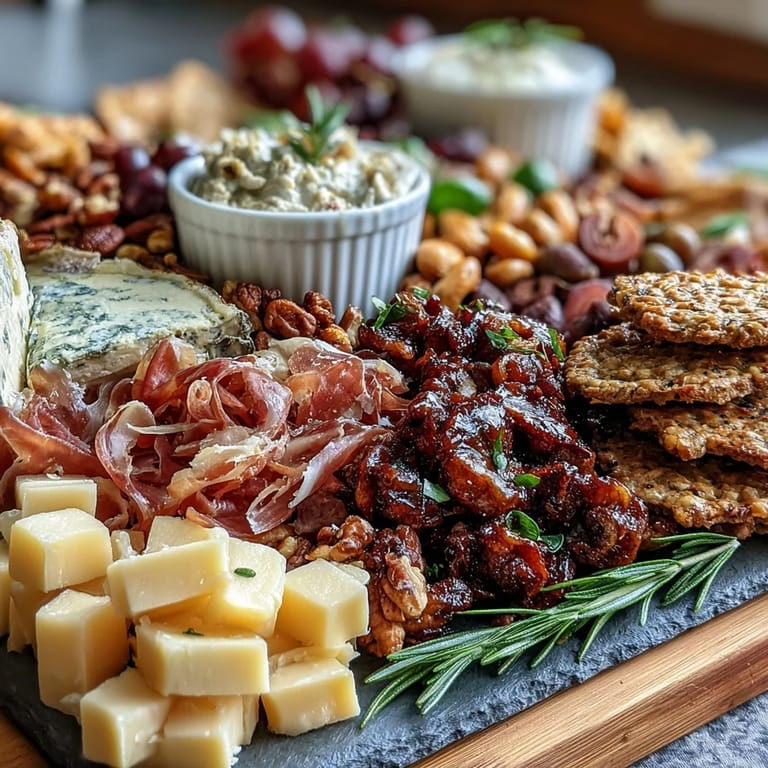
- Arrange your cured meats in loose, casual folds rather than laying them flat in neat rows; the air pockets between the folds make them look abundant and inviting, and people will find it easier to grab pieces without disturbing your carefully planned aesthetic. Think of it like creating landscape layers, not a tile pattern.
- Position the cheeses strategically:
- Create pockets of different cheese types around the board so nobody has to stretch across the entire platter to find what they want. I like to space them roughly equidistant but deliberately offset, not in neat rows—it looks gathered rather than gridded.
- Nestle your dips:
- Pour dips into small bowls that actually look intentional—avoid using those tiny ceramic spoons holders if you can find regular small bowls instead. Tuck them among the meats and cheeses so they feel like natural stopping points rather than afterthoughts.
- Create cracker pathways:
- Fan out different types of crackers and bread in different corners or sections rather than mixing them together. This lets guests choose which vehicle works best for their next bite without overthinking it.
- Fill spaces with fresh produce:
- Use grapes, tomatoes, cucumber, peppers, and carrots to create color blocking and fill the visual gaps between cheeses and meats. Arrange them in small clusters rather than scattering them everywhere; it feels more deliberate and guests know what to do with a cluster rather than a lonely vegetable.
- Scatter nuts and dried fruits:
- Sprinkle these in small piles throughout the board, which creates textural variety and gives your eye places to rest between the dominant flavors. They're also perfect for the person at your party who's always hungry but never wants a full combination.
- Finish with fresh herbs:
- Tuck whole sprigs of rosemary and thyme around the board as a final touch—they add aroma that makes everything smell like you spent hours cooking when you actually spent twenty-five minutes arranging. They're edible too, which is a nice surprise for people who nibble them.
 Pin It
 I remember my neighbor standing in my kitchen with her hand over her heart, genuinely touched that I'd made this welcome moment for her. It wasn't about the ingredients at all—it was about seeing someone notice that you'd thought about them, that you'd arranged this beautiful thing specifically for their arrival.
The Secret to Making It Look Effortless
The best charcuterie boards look like they happened naturally, like you just gathered beautiful things without overthinking the arrangement. In reality, you're doing subtle visual math—balancing heavy elements like cheese against light elements like herbs, creating color contrast so nothing blends into the background, and leaving just enough breathing room so people don't feel afraid to take the first piece. The magic is that nobody needs to know you spent mental energy on any of this; they just need to feel welcomed by the effort.
Timing and Temperature Matter More Than You Think
I've made charcuterie boards in summer when the kitchen is warm and in winter when it's cold, and the timing changes dramatically. On hot days, I assemble everything at the last possible moment and actually keep the board in a cool spot until guests arrive; in winter, I have more flexibility and can build it an hour ahead. The cheese tells you the story—if the brie is looking sweaty or the edges are softening into the cheddar, it's been out too long and needs to go back to the fridge for a reset.
When Something Unexpected Becomes the Star
One time I was missing an ingredient I'd planned on, so I grabbed honeycomb from the back of my cabinet and drizzled it over the blue cheese at the last second. It turned into the most talked-about element of the entire board, and now I plan for it. The best charcuterie moments often come from improvisation rather than following a recipe exactly.
- If you're short on any ingredient, add something unexpected like fig jam, honey, or hot pepper jelly instead of leaving a gap.
- Soft cheeses like brie need to be the last things you arrange because they'll start collecting crumbs if they're exposed too long before serving.
- Always have a small spoon or spreader by each dip so guests don't feel awkward about how to actually use them.
 Pin It
 A charcuterie board is really just an invitation to slow down and taste things together, which is probably why people love them so much. The gathering around it matters more than the perfect arrangement, but getting the arrangement right is what gives people permission to gather.
Recipe FAQs
- → What types of meats are included?
The board features prosciutto, salami, smoked ham, and chorizo slices, offering a flavorful cured meat variety.
- → Which cheeses complement this spread?
Slices of brie, aged cheddar cubes, gouda, and crumbled blue cheese provide a rich and varied cheese selection.
- → What dips are served alongside?
Hummus, tzatziki, and roasted red pepper dip add creamy, tangy, and smoky elements to the arrangement.
- → How are fresh produce items used here?
Grapes, cherry tomatoes, cucumber slices, bell pepper, and baby carrots fill the gaps, adding freshness and color.
- → Can this board accommodate dietary preferences?
Yes, meats or cheeses can be substituted, and gluten-free crackers can be included to suit different needs.
- → What tools are helpful for assembly?
A large serving board, small bowls for dips, cheese knives, and serving tongs or forks facilitate elegant presentation and serving.