 Pin It
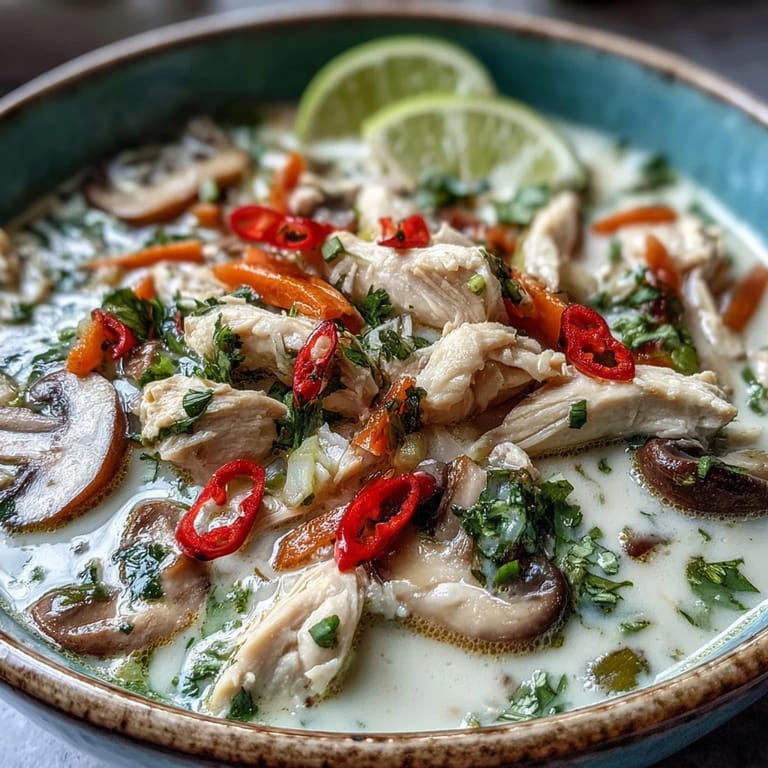
 My neighbor handed me a steaming bowl of Thai coconut curry soup on a gray Tuesday afternoon, and I watched the steam curl off the surface while she explained how she'd learned to make it during a cooking class in Bangkok. The fragrance alone—that perfect marriage of lemongrass, ginger, and coconut—made me set down my coffee and ask for the recipe that same evening. Now I make it whenever I need something that feels both indulgent and nourishing, and it never fails to transport me back to that moment of tasting something truly alive.
I served this soup to my sister during her first week working from home, when she'd been living on sad desk lunches and microwaved leftovers. Watching her take that first spoonful and then just sit there, eyes closed, reminded me why cooking for people matters. She's asked for it at least once a month since then.
Ingredients
- Chicken breast or thighs (400g): Thighs stay more forgiving if you're cooking quickly, but breast works beautifully if you don't overdo the heat—slice them thin so they cook through in minutes.
- Mushrooms (200g): Shiitake adds earthiness that coconut milk loves, but button mushrooms are reliable and won't overpower the broth.
- Carrots (2 medium): Julienne them thin enough that they soften in the simmer time without turning into mush.
- Red bell pepper (1 small): Adds sweetness and visual pop, though any color works if that's what you have.
- Baby spinach or bok choy (100g, optional): This is my move for sneaking in greens at the last second—they wilt in seconds and add texture.
- Spring onions (2): Save these for the garnish; they bring a fresh bite that cuts through the richness.
- Fresh ginger (1 tablespoon, grated): Don't skip this—it's the backbone of the whole flavor profile and worth the tiny bit of prep.
- Garlic (3 cloves, minced): Mince it small so it melts into the broth rather than leaving little chunks.
- Lemongrass (2 stalks, optional): Bruise it with the side of your knife before adding; this releases the essential oils that make the soup sing.
- Kaffir lime leaves (4, optional): If you find them, use them—they add a citrus complexity that lime juice alone can't replicate.
- Red curry paste (2 tablespoons): Bloom it in oil before adding liquid so the spices wake up and distribute evenly.
- Coconut milk (800ml): Full fat creates richness, but light coconut milk works if that's your preference—just know the soup will taste slightly less indulgent.
- Chicken broth (500ml): Use good broth here; it becomes the base that carries everything else.
- Fish sauce (1 tablespoon): This seems mysterious until you taste what it does—it deepens and rounds out flavors without tasting fishy at all.
- Brown sugar (1 tablespoon): A tiny bit balances the heat and salt, making each spoonful feel more complex.
- Lime juice (1 lime): Squeeze it fresh just before serving so it stays bright and doesn't mellow out in the heat.
- Fresh cilantro, red chili, lime wedges: These are your finishing moves—they add freshness and let people adjust the heat to their liking.
Tired of Takeout? 🥡
Get 10 meals you can make faster than delivery arrives. Seriously.
One email. No spam. Unsubscribe anytime.
Instructions
- Wake up the aromatics:
- Heat oil in your pot over medium heat and add the ginger, garlic, and lemongrass—you'll know they're ready when your kitchen suddenly smells like Thailand. It takes about a minute, and you'll feel the shift when the sizzle softens into something fragrant and inviting.
- Coax out the curry:
- Stir in the red curry paste and let it toast for another minute—this step is crucial because it transforms the paste from a thick concentrate into something that'll blend seamlessly into your broth. You'll see it darken slightly and smell it deepen.
- Sear the chicken:
- Add your sliced chicken and stir constantly for 2 to 3 minutes so it gets coated in that curry-spiced oil. The chicken will start to turn opaque at the edges, but it won't be fully cooked yet, and that's exactly right.
- Build the broth:
- Pour in the coconut milk and chicken broth along with the kaffir lime leaves, carrots, mushrooms, and bell pepper. The liquid should come up around the vegetables with room to simmer gently without boiling over.
- Simmer until everything softens:
- Bring it to a gentle simmer and let it bubble quietly for 10 to 12 minutes—the chicken will turn completely opaque, the carrots will tender up, and the mushrooms will soften and deepen in color. You're not rushing; you're letting flavors marry and develop.
- Season to taste:
- Add the fish sauce, brown sugar, and lime juice, then taste and adjust—this is where the soup becomes yours. If you want it spicier, add more curry paste; if you want it sweeter, a touch more sugar; if you want it more aromatic, squeeze more lime.
- Add the greens:
- If you're using spinach or bok choy, add it now and simmer for just 1 to 2 minutes until it's wilted but still bright. Overcooked greens turn dark and bitter, so don't leave them in longer than you need to.
- Final touches:
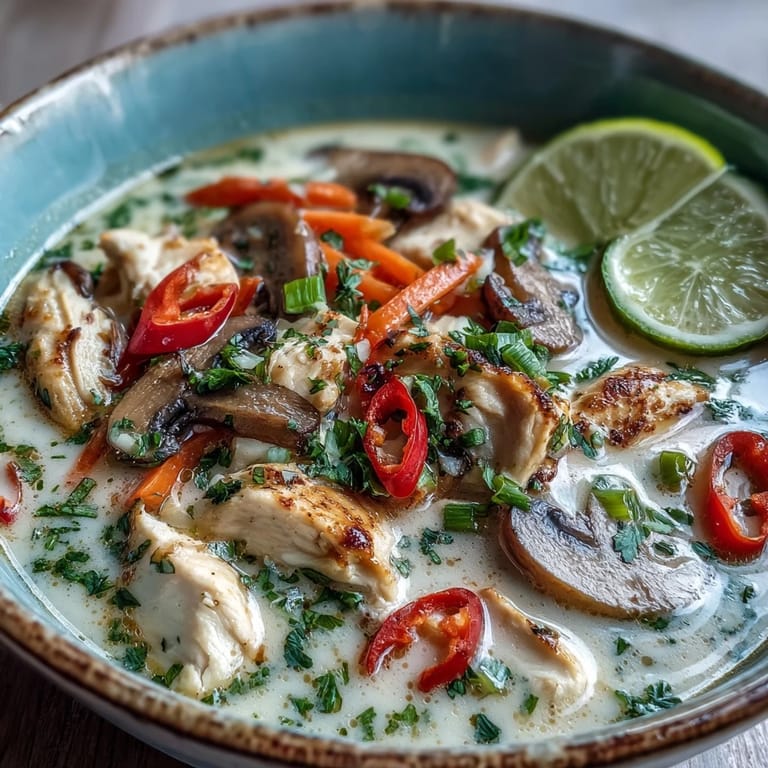
- Remove the lemongrass stalks and kaffir lime leaves—they've given their gift and now they'll just get in the way. Ladle into bowls and crown each one with spring onions, cilantro, a scatter of fresh chili, and a wedge of lime on the side.
 Pin It
 There's a moment when you're ladling this soup and the steam rises up with all those bright herbs and spices, and it feels like you're handing someone a little bowl of warmth and care. That's when I know I've made something worth making.
Building Layers of Flavor
Thai cooking is about building layers—you're not just throwing everything in at once and hoping for the best. Blooming the curry paste in oil first means the spices release and distribute evenly instead of clumping. Adding vegetables at different times means softer ones won't dissolve into the broth before the soup is even done. And holding back the lime juice until the very end means you get that bright finish instead of a muted citrus background that's been cooking away.
Making It Your Own
This soup is endlessly adaptable, and that's part of why I keep making it. Swap the chicken for shrimp if you want something lighter, or tofu if you're cooking vegetarian—just use vegetable broth and soy sauce instead of fish sauce so everything stays cohesive. The spice level is entirely in your hands; start with less curry paste and add more as you taste because you can always make it hotter but you can't undo it.
Serving and Pairing Ideas
This soup is satisfying on its own, but a bowl alongside jasmine rice or rice noodles turns it into something more substantial—something that feels like dinner rather than just a first course. If you're feeling fancy, a crisp white wine like Riesling or Gewürztraminer cuts through the richness and echoes the citrus notes from the lime.
- Serve with jasmine rice or rice noodles on the side so people can customize how hearty they want their bowl.
- Have extra lime wedges, cilantro, and sliced chili available so guests can adjust the brightness and heat to their liking.
- Make extra—this soup tastes even better the next day after the flavors have settled and deepened overnight in the fridge.
 Pin It
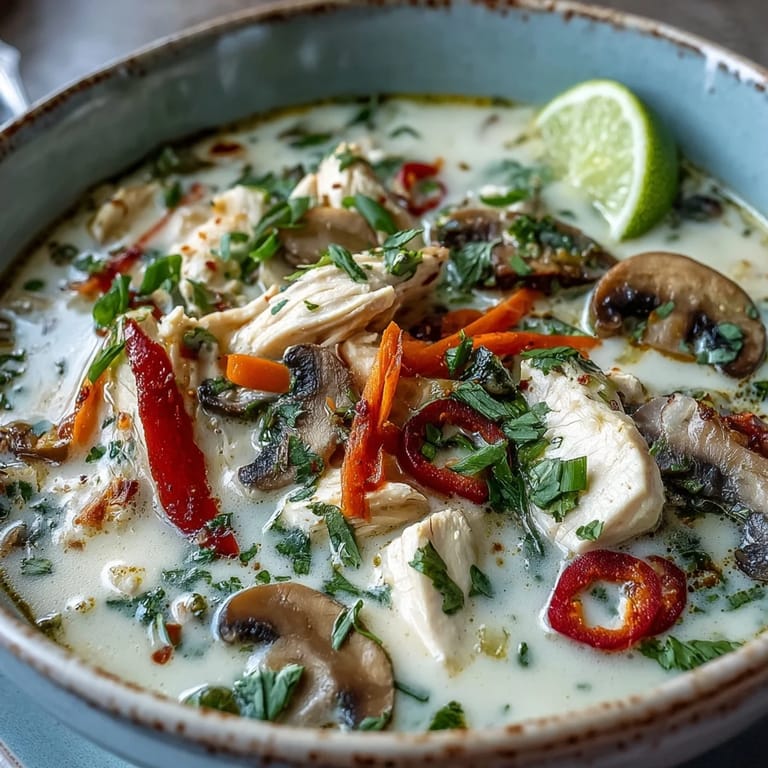
 This soup has become my answer for when I want to cook something that feels special without stress, something that tastes like I know what I'm doing in the kitchen. Make it once and you'll understand why.
Recipe FAQs
- → Can I make this soup vegetarian?
Yes, substitute chicken with firm tofu and use vegetable broth instead of chicken broth. Replace fish sauce with soy sauce or tamari to maintain the savory depth.
- → How spicy is this curry soup?
The spice level depends on your red curry paste. Start with 2 tablespoons for moderate heat, or reduce to 1 tablespoon for milder flavor. You can always add more paste while simmering.
- → Can I use light coconut milk?
Yes, light coconut milk works well and reduces the calorie count. However, full-fat coconut milk creates a richer, creamier broth that better carries the aromatic spices.
- → What can I serve with this soup?
Jasmine rice or rice noodles make excellent accompaniments for a heartier meal. The soup also pairs beautifully with crisp white wines like Riesling or Gewürztraminer.
- → How long does this soup keep?
Store cooled soup in an airtight container for up to 3 days. Reheat gently on the stove, adding a splash of broth if needed. The flavors often deepen overnight.
- → Can I freeze this curry soup?
Yes, freeze for up to 2 months. Coconut milk may separate slightly upon thawing, but whisking while reheating will restore the creamy texture.