 Pin It
 My friend Sarah showed up at my door on a sweltering afternoon with a container of takeout Thai food and said, "Try this," before I'd even said hello. I took one spoonful of that creamy coconut rice dotted with tender chicken and fresh herbs, and something clicked. The way the coconut mellowed the spice, how the lime cut through everything, the crunch of fresh vegetables against soft rice—it felt like eating a conversation between flavors. That night, I decided to figure out how to make it at home, and what started as curiosity became something I crave whenever I need to feel like I'm traveling without leaving my kitchen.
I made this for a potluck last spring, and I watched people come back for seconds before they'd even finished exploring the other dishes. One person asked if I'd trained as a chef, which made me laugh because I was still figuring out the right amount of fish sauce that afternoon. What stuck with me wasn't the compliments, though those were nice—it was how the bowl somehow made everyone at the table slow down and actually taste what they were eating instead of just consuming.
Ingredients
- Jasmine rice: Rinsing it removes the starchy coating, so you end up with grains that stay separate instead of clumping together, especially important when you're cooking it in coconut milk.
- Full-fat coconut milk: Don't reach for the lite version—that's where the richness and body of this dish lives, and it's not something you can fake with less calories.
- Chicken thighs: They're forgiving if you slightly overcook them, and they stay juicier than breast meat, which matters when you're sharing these bowls with people who didn't cook them.
- Fish sauce: It smells intense on its own, almost funky, but once it hits the warm chicken with the lime juice, it transforms into something that makes people ask what that amazing savory note is.
- Fresh Thai basil: Regular basil tastes completely different—Thai basil has this peppery, almost licorice-like quality that makes the whole bowl taste more authentic and alive.
- Lime juice: Fresh squeezed, always—bottled lime juice sits in the back of my fridge turning sad and oxidized, and this dish deserves the brightness of the real thing.
Tired of Takeout? 🥡
Get 10 meals you can make faster than delivery arrives. Seriously.
One email. No spam. Unsubscribe anytime.
Instructions
- Combine rice and coconut liquid:
- Pour your rinsed jasmine rice into a saucepan with the coconut milk, water, and salt. The mixture should smell creamy and slightly floral before it even hits the heat.
- Bring to a boil and reduce:
- Watch for the moment when steam starts rising urgently and tiny bubbles form across the surface, then immediately turn the heat down to low and cover with a lid.
- Let it simmer undisturbed:
- For 15 to 18 minutes, resist the urge to lift the lid and peek—the steam is doing important work inside there. When the time is up, the liquid should be completely absorbed and the rice tender enough to press between your thumb and finger.
- Rest and fluff:
- Turn off the heat and let the rice sit covered for 5 minutes, which lets the grains relax and firm up just slightly. Then run a fork through it gently, separating any grains that stuck together.
- Heat oil in your skillet:
- Sauté garlic and ginger:
- Once the oil shimmers, add your minced garlic and grated ginger. The kitchen fills with this warm, spicy aroma within seconds—that's your cue that they're releasing their oils and you're about 30 seconds away from adding the chicken.
- Add chicken and cook through:
- Toss in your bite-sized chicken pieces and let them sit for a moment before stirring, which gives them a chance to brown instead of steam. Stir occasionally for about 6 to 7 minutes until they're golden on the outside and cooked through—no pink inside when you cut into the thickest piece.
- Add sauce ingredients:
- Pour in the fish sauce, soy sauce, brown sugar, white pepper, and fresh lime juice, then toss everything together until the chicken is evenly coated. The sauce should be glossy and smell intoxicatingly good.
- Blanch vegetables quickly:
- Drop your sugar snap peas and julienned carrots into boiling water for exactly 1 minute—no longer, or they'll lose their snap. Transfer immediately to a bowl of cold water to stop the cooking, then drain well.
- Keep bell pepper raw:
- The red bell pepper goes in raw for crunch and brightness, sliced thin so it plays nicely with the other textures.
- Build your bowls:
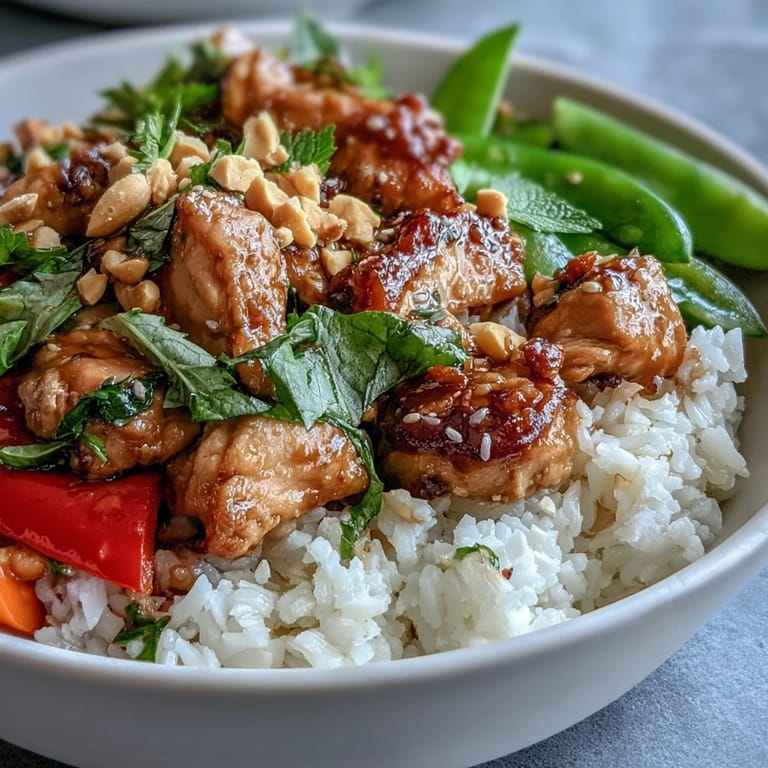
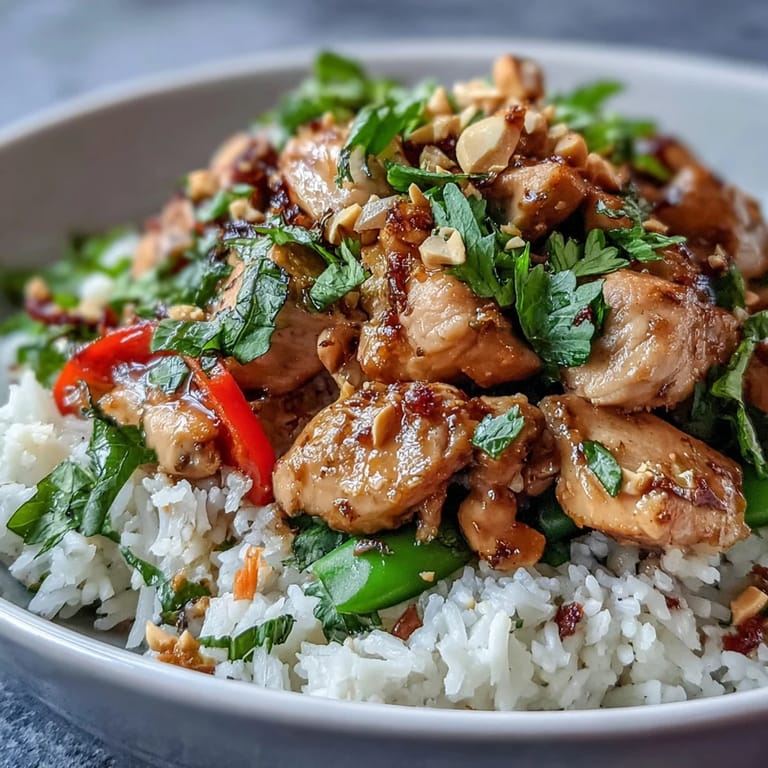
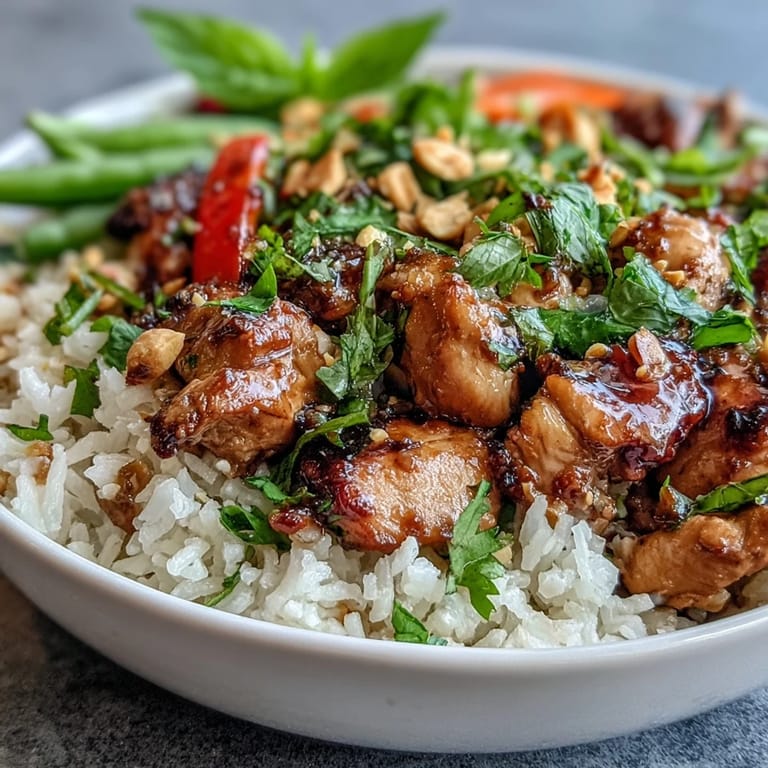
- Start with a generous scoop of that creamy coconut rice, then arrange the cooked chicken, blanched vegetables, and raw bell pepper on top in whatever pattern appeals to you. Layer matters less than making sure each spoonful has a bit of everything.
- Garnish generously:
- Scatter cilantro and torn Thai basil over the top, add sliced green onion and red chili if you want heat, then finish with chopped roasted peanuts for crunch.
- Serve with lime:
- Hand each person a lime wedge so they can squeeze it over their bowl right before eating—that final burst of citrus should wake up every flavor.
 Pin It
 My partner ate one of these bowls on a Tuesday night when I was testing recipes, and they looked up and said, "This tastes like a memory," which I think is the highest compliment food can receive. That's when I realized this bowl isn't really about the individual ingredients—it's about how they create this moment of something warm and slightly exotic in an ordinary evening.
Why Fresh Herbs Matter So Much
The herbs in this bowl aren't garnish doing decorative work on top—they're the difference between a nice rice bowl and something that transports you. Fresh cilantro brings this herbaceous, slightly clean note that makes the coconut feel less heavy. Thai basil adds pepper and complexity that dried basil could never reach, and the green onion provides a sharp, oniony bite that cuts through the richness of the rice and chicken. If you can't find Thai basil, don't just substitute regular basil and call it good—reach out to an Asian market, order it online, or acknowledge that you're making a different dish and adjust your expectations accordingly.
The Art of Blanching Vegetables
Blanching vegetables for exactly one minute sounds like it shouldn't matter, but it's the line between something that tastes good and something that tastes right. That brief dip in boiling water softens the raw edge slightly while the ice bath stops the cooking immediately, leaving you with vegetables that have lost their rawness but kept their crunch and brightness. I learned this the hard way by over-blanching peas once and ending up with something that tasted mushy and tired, which broke the whole texture story of the bowl. The bell pepper stays raw specifically because it's thin enough to soften slightly from the warmth of everything around it, so you get that sweet crunch without the cooking step.
Adjusting Heat and Flavor to Your Taste
The red chili is genuinely optional, and I mean that—some people love the slow build of heat, while others want to taste the coconut and herb layers without any spice competing. You can also adjust fish sauce to your preference, starting with less if you're uncertain and adding more if you want that deeper umami depth. The brown sugar balances the salty, funky elements, so taste as you go and remember that lime juice can rescue a flavor profile that feels a little off.
- Add chili to your own portion at the table rather than cooking it into everything, so people who prefer gentler flavors aren't stuck with heat they didn't choose.
- Fish sauce timid at first—you can always add another half teaspoon, but you can't take it back once it's mixed in.
- Let each person finish their own bowl with a squeeze of fresh lime, because that moment of customization makes the whole experience feel more intentional.
 Pin It
 This bowl has become my answer to the question "what should we make?" on nights when we want something that tastes like we tried but doesn't require us to be heroes in the kitchen. It's the kind of dinner that makes you grateful for fresh produce, good coconut milk, and the fact that cooking something this good doesn't have to be complicated.
Recipe FAQs
- → Can I make this bowl ahead of time?
Yes, prepare components separately up to 2 days ahead. Store rice, chicken, and vegetables in airtight containers. Reheat gently and assemble when ready to serve for best texture and flavor.
- → What type of rice works best?
Jasmine rice is ideal for its fragrant aroma and slightly sticky texture that complements coconut milk. Basmati or long-grain white rice are acceptable substitutes, though cooking times may vary slightly.
- → How can I adjust the spice level?
Control heat through the red chili garnish. Omit entirely for mild flavor, add half for moderate spice, or include the whole chili with seeds for intense heat. Additional chili flakes work too.
- → Is this suitable for meal prep?
Excellent for meal prep. Portion into containers keeping garnishes separate. Rice and chicken reheat beautifully in the microwave. Add fresh herbs and peanuts just before eating for optimal texture.
- → Can I use brown rice instead?
Brown rice works but requires longer cooking time and more liquid. Increase water to 1.5 cups and simmer 40-45 minutes. The nuttier flavor pairs well with coconut, though texture differs slightly.
- → What protein alternatives work well?
Extra-firm tofu cubed and pan-fried creates excellent vegetarian options. Shrimp cook quickly and absorb Thai flavors beautifully. Pork tenderloin sliced thin offers a leaner meat alternative with similar cooking time.