 Pin It
 The first time I made paella, I wasn't thinking about impressing anyone—I just wanted to recreate that golden, aromatic pan I'd watched being made at a tiny restaurant in Valencia. The kitchen filled with this incredible smell the moment the saffron hit the hot broth, and I realized right then that this wasn't just a rice dish. It was theater, gathered around one pan, everyone waiting for that first taste. Now whenever I make it, I'm transported back to that moment of discovery, when I understood why paella matters so much to the people who created it.
I'll never forget the year my partner insisted we cook paella for our anniversary dinner at home instead of going out. We were nervous, honestly—what if it stuck to the pan, or the mussels didn't open nicely? But halfway through, with the saffron steam rising up and our friends arriving in an hour, we both stopped and just looked at each other. This dish had a way of making us slow down and trust the process, even under pressure. By the time we served it, with everyone gathered around the table, it didn't matter that one mussel stayed closed—the whole experience was perfect.
Ingredients
- Chorizo sausage (200 g): Use good Spanish chorizo if you can find it; the smoky oils from the sausage flavor the entire dish, so it's worth the quality upgrade.
- Chicken thighs (250 g): They stay moist and tender where breasts would dry out in the time it takes paella to cook.
- Large shrimp (250 g): Peel and devein them yourself just before cooking to keep them from turning rubbery; that small moment of preparation pays off.
- Mussels (250 g): Buy them the day you plan to cook, keep them cold, and discard any with cracked shells or ones that don't open after cooking.
- Calamari rings (250 g, optional): They add a tender texture and look beautiful; include them if you can, but the paella is complete without.
- Short-grain paella or Arborio rice (400 g): The shape and starch content create that creamy interior while the grains stay distinct, which is essential to paella's texture.
- Saffron threads (1/2 tsp): This is the soul of paella—the golden color and subtle floral flavor make it unmistakable, so don't skip it.
- Chicken or seafood stock (1 L): Warm it before adding so the rice cooks evenly and the pan temperature doesn't drop.
- Olive oil (2 tbsp): A good extra virgin oil adds depth, but you don't need anything fancy.
- Onion and bell peppers: The onion builds a sweet foundation while the peppers add color and a gentle sweetness that balances the saffron.
- Tomatoes (2 medium, diced): Fresh tomatoes are better, but canned work too if they're in season somewhere else in the world.
- Frozen peas (150 g): They thaw quickly in the hot rice and add a brightness that feels essential near the end.
- Garlic (3 cloves, minced): Add it after the peppers soften so it doesn't burn and turn bitter against the hot pan.
- Smoked paprika (1 tsp): This is the second essential spice; Spanish paprika has a depth that regular paprika can't match.
- Bay leaf, salt, and pepper: Season generously but taste as you go, since the stock brings its own saltiness.
- Fresh parsley and lemon wedges: The parsley brings freshness to the finished dish, and lemon cuts through the richness in the most satisfying way.
Tired of Takeout? 🥡
Get 10 meals you can make faster than delivery arrives. Seriously.
One email. No spam. Unsubscribe anytime.
Instructions
- Wake up the saffron:
- Pour 3 tablespoons of hot stock over the saffron threads in a small bowl and let them steep for at least 5 minutes. This coaxes out the color and flavor that will tint your entire paella golden.
- Brown the proteins:
- Heat the olive oil in your paella pan over medium heat, then add the chorizo and chicken pieces. Let them cook undisturbed for about 5–7 minutes until they're nicely browned on the outside—this creates flavor that lingers in the oil. Remove them to a plate and set aside.
- Build the flavor base:
- Add the chopped onion and sliced bell peppers to the same pan and sauté gently for 4–5 minutes until they soften and start to caramelize at the edges. This is where the sweetness comes from.
- Add aromatics and tomatoes:
- Stir in the minced garlic and diced tomatoes and cook for 2 minutes, just long enough for the garlic to become fragrant without browning. You'll smell when it's ready.
- Coat the rice:
- Pour in the rice and smoked paprika, stirring constantly for 1–2 minutes so every grain gets coated in the oil and spices. This toasting step helps the rice stay distinct instead of becoming mushy.
- Return the meat and add the liquid:
- Put the browned chorizo and chicken back into the pan, then pour in the saffron-infused stock along with the remaining warm stock. Add the bay leaf, salt, and pepper, then stir gently to distribute everything evenly.
- Let the rice cook undisturbed:
- Bring everything to a boil, then reduce the heat to medium-low and simmer uncovered for about 15 minutes without stirring. You'll hear the rice begin to crackle slightly at the bottom—that's the socarrat forming, the caramelized layer that's prized in authentic paella.
- Nestle in the seafood:
- Arrange the shrimp, mussels, and calamari (if using) on top of the rice, then scatter the frozen peas over everything. Loosely cover the pan with foil to trap steam.
- Finish cooking:
- Cook for another 10–12 minutes until the shrimp are pink, the mussels have opened (discard any that remain closed), and the liquid is mostly absorbed. The rice should smell nutty and toasty.
- Rest and serve:
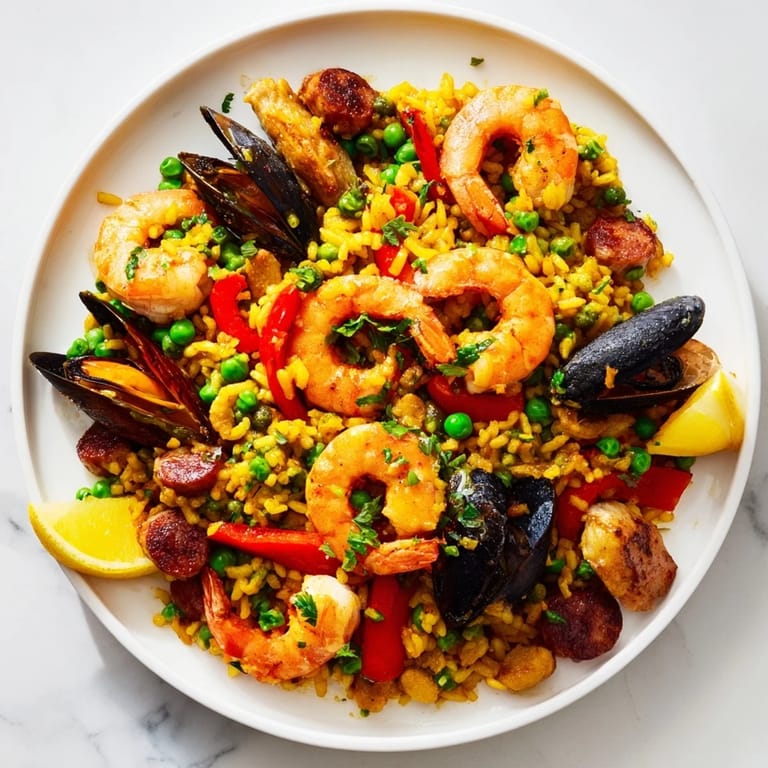
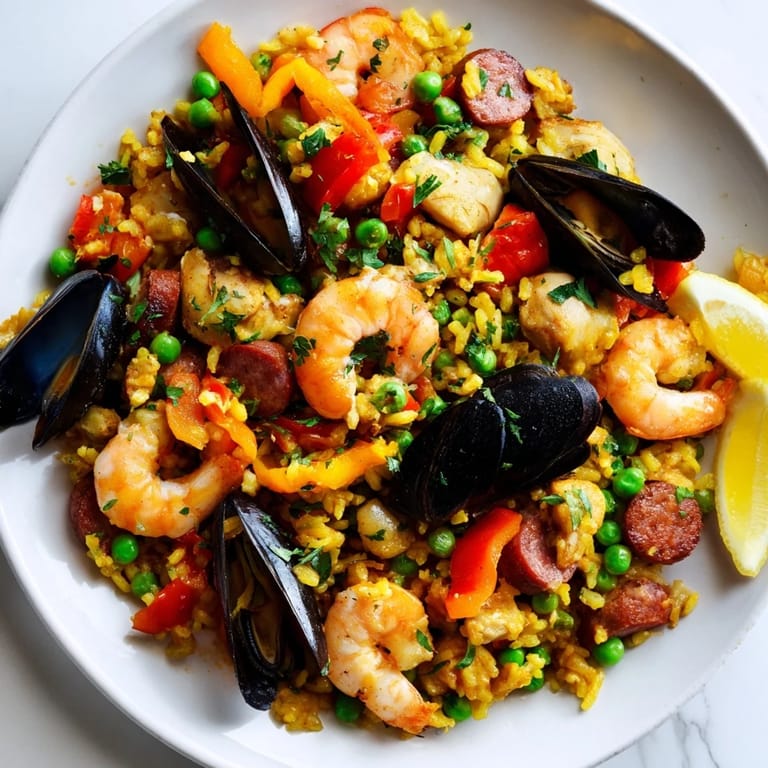
- Remove from heat, leave the foil on, and let the paella rest for 5 minutes so the rice finishes cooking gently in the residual heat. Garnish with chopped parsley and lemon wedges before bringing the whole pan to the table.
 Pin It
 I once made paella for a dinner party where my usually confident self was absolutely terrified—would the seafood cook evenly, would anything stick, would the timing work out? But as the steam rose from under that foil and I could smell everything melding together, I realized that this dish teaches you something about cooking and life. It asks you to set things in motion, trust the heat and time, and then step back. That night, gathered around the pan with good wine and better friends, I understood why people fight to protect the way paella is made. It's not just about technique; it's about the moment it creates.
Choosing Your Paella Pan
A true paella pan is wide and shallow with sloped sides, designed so that the rice spreads thin enough to develop that essential socarrat. If you don't have one, a large, deep skillet works perfectly fine—the timing might shift by a minute or two, but the result will be just as delicious. The width matters more than the name on the pan; you want the rice to have room to breathe and brown.
The Right Saffron Matters
Real saffron is expensive and worth every penny in paella because it's the signature ingredient that can't be faked. Avoid saffron that looks dull or powdery—good threads are deep red with a slight shimmer. Store it in a cool, dark place in an airtight container, and it will stay potent for years. When you steep it in hot stock, it blooms into a color that's almost magical, and that's how you know you chose well.
Making It Your Own
While paella has strong traditions, it's also deeply personal to whoever is cooking it. Some families swap in clams or scallops instead of shrimp, others add artichokes or green beans. The skeleton of the dish—the saffron rice, the browning of proteins, the unhurried simmering—stays the same, but the details belong to you.
- Use whatever seafood looks best at your market or what your guests prefer.
- If making a vegetarian version, sauté mushrooms and add white beans or chickpeas for substance.
- Pair with a crisp Spanish white wine like Albariño to echo the coastal origins of this dish.
 Pin It
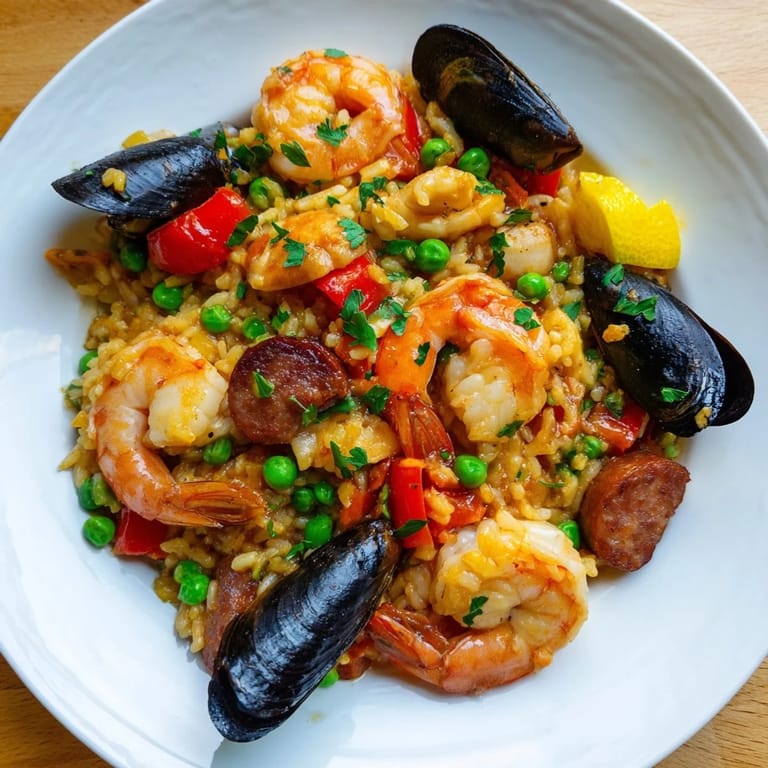
 Paella is the kind of dish that brings people together because it lives on the table, not hidden on individual plates. Serve it straight from the pan with lemon wedges and fresh parsley, and let everyone gather around. This is how food becomes a memory.
Recipe FAQs
- → What type of rice is best for paella?
Short-grain rice like paella rice or Arborio is ideal as it absorbs flavors well without becoming mushy.
- → How is saffron used in this dish?
Saffron threads are steeped in warm stock to release their color and aroma before adding to the rice.
- → Can I substitute the seafood in the dish?
Yes, you can swap in clams, scallops, or other fresh seafood depending on availability.
- → Why is it important not to stir the rice while cooking?
Leaving the rice undisturbed helps form a crispy bottom crust known as socarrat, a prized feature.
- → What spices enhance the smoky flavor?
Smoked Spanish paprika adds a rich smoky depth complementing the meats and seafood.