 Pin It
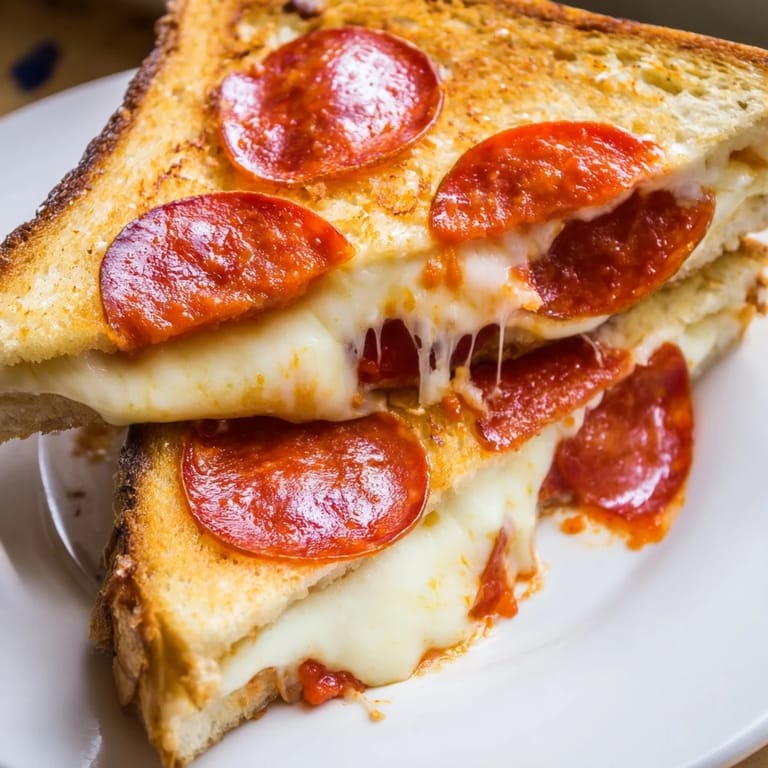
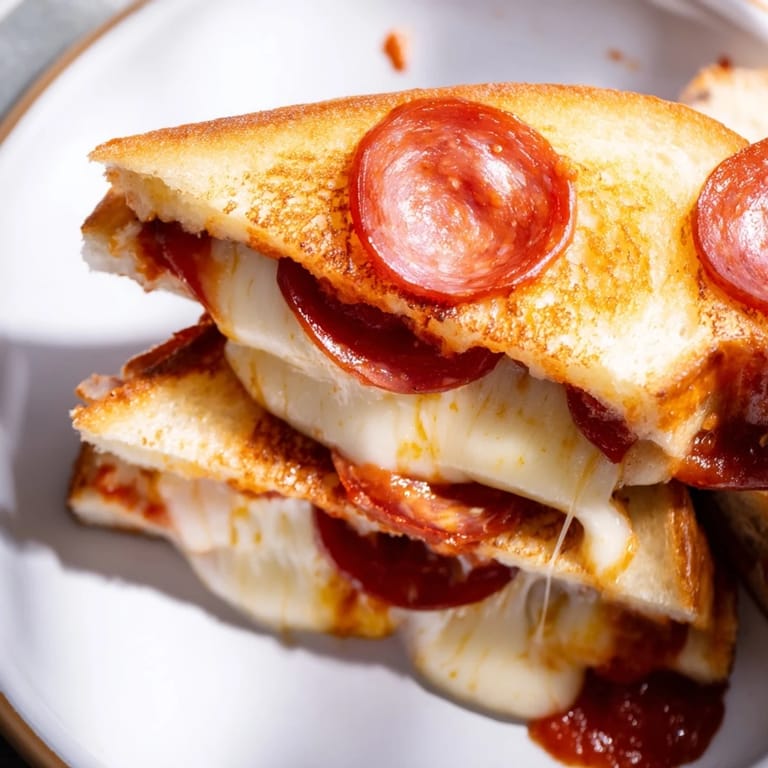
 There's something almost rebellious about combining two things that have no business working together—except they absolutely do. I was standing in my kitchen on a rainy Tuesday, staring at leftover pepperoni and a wedge of fresh mozzarella, when it hit me: what if I treated pizza like a grilled cheese? Twenty minutes later, I was biting into something that felt like both comfort foods had decided to become best friends. The crispy edges, the way the cheese pooled at the corners, the marinara that peeked out between the bread—it was messy and perfect.
My roommate walked in mid-cook and asked what I was making. I couldn't explain it, so I just handed her half. She took one bite and didn't say anything for a solid ten seconds—then asked if I could make it again tomorrow. That's when I knew this wasn't just a random kitchen experiment. It was the kind of sandwich that makes people stop and pay attention.
Ingredients
- Italian bread or sourdough, 4 slices: The foundation matters here—you want something sturdy enough to hold everything without falling apart, but with enough surface area to get those crispy, golden edges.
- Mozzarella cheese, 4 oz sliced or shredded: Fresh or low-moisture both work, but shredded melts faster and distributes more evenly than chunks.
- Pepperoni, 12–16 slices: Don't skimp or crowd it—let the slices lay flat so they get a little crispy instead of bunching up in the middle.
- Marinara sauce, 1/4 cup plus extra for dipping: Use something you actually like eating straight from a jar because you'll taste every bit of it here.
- Unsalted butter, 2 tbsp softened: Softened butter spreads easier and browns more evenly than cold butter straight from the fridge.
Tired of Takeout? 🥡
Get 10 meals you can make faster than delivery arrives. Seriously.
One email. No spam. Unsubscribe anytime.
Instructions
- Butter your canvas:
- Lay all four bread slices out and spread a thin, even layer of softened butter on one side of each. You want enough to turn golden, not so much that it pools—about half a tablespoon per slice works perfectly.
- Build the base:
- Take two slices butter-side down and spread a tablespoon or so of marinara on the unbuttered side of each. This is your sauce anchor—don't be shy, but don't soak it either.
- Layer with purpose:
- Spread the mozzarella evenly over the sauce, then lay your pepperoni slices in a single layer. They should cover most of the surface without overlapping too much.
- Close it up:
- Place the remaining bread slices on top, butter-side up, pressing gently so everything stays together until the cheese melts.
- Get the pan ready:
- Heat your skillet or griddle over medium heat for about a minute. It should be hot enough that a drop of water sizzles, but not smoking.
- The cook:
- Place both sandwiches in the pan and let them sit for 3–4 minutes until the bottom is golden brown and crispy. Press down gently with your spatula occasionally to ensure even contact and cheese melting.
- Flip with confidence:
- Once the first side is golden, carefully flip and cook the other side for another 3–4 minutes until it matches the first side and you can feel the cheese shifting inside.
- The rest and slice:
- Let them rest on a cutting board for one minute—this stops the cheese from pouring out immediately. Then slice diagonally, which always makes food feel fancier somehow.
 Pin It
 This sandwich became my go-to whenever I needed to turn a bad day into something edible. There's something about biting through that crispy bread to find warm, melted cheese and pepperoni waiting inside that just makes things feel manageable. It's simple, it works, and it never pretends to be anything more complicated than it is.
The Technique Behind the Toast
Grilling a sandwich is honestly an art form that nobody talks about. The key is understanding that you're not just heating it—you're creating a contrast between crispy and creamy, and that contrast is what makes people remember the meal. When you press down on that sandwich, you're not crushing it; you're encouraging the bread to make better contact with the butter and heat so it browns evenly. I learned this after making dozens of these, watching how the spatula pressure actually changes the texture.
Variations That Work
Once you understand the skeleton of this sandwich, you can play with it. I've added fresh basil under the cheese for something more garden-like, or a tiny pinch of red pepper flakes on top of the pepperoni for heat. Some nights I use turkey pepperoni for a lighter version, or I'll toss in some sautéed mushrooms because I had them sitting around. The beauty of this dish is that it's forgiving enough to handle your kitchen moods.
Serving and Pairing Ideas
This sandwich doesn't ask for much. A side of marinara for dipping is almost mandatory—you'll find yourself using it even when you think you won't. I've paired it with a simple salad, with tomato soup, or just on its own with a cold drink and whatever's on my mind that day. It's the kind of meal that's equally comfortable at a casual lunch or a quick dinner when you don't have energy for anything elaborate.
- Dip it in extra marinara or even a little garlic aioli if you're feeling fancy.
- A crisp sparkling water or light red wine both complement the richness perfectly.
- Serve while it's still warm so the cheese is at peak melty texture.
 Pin It
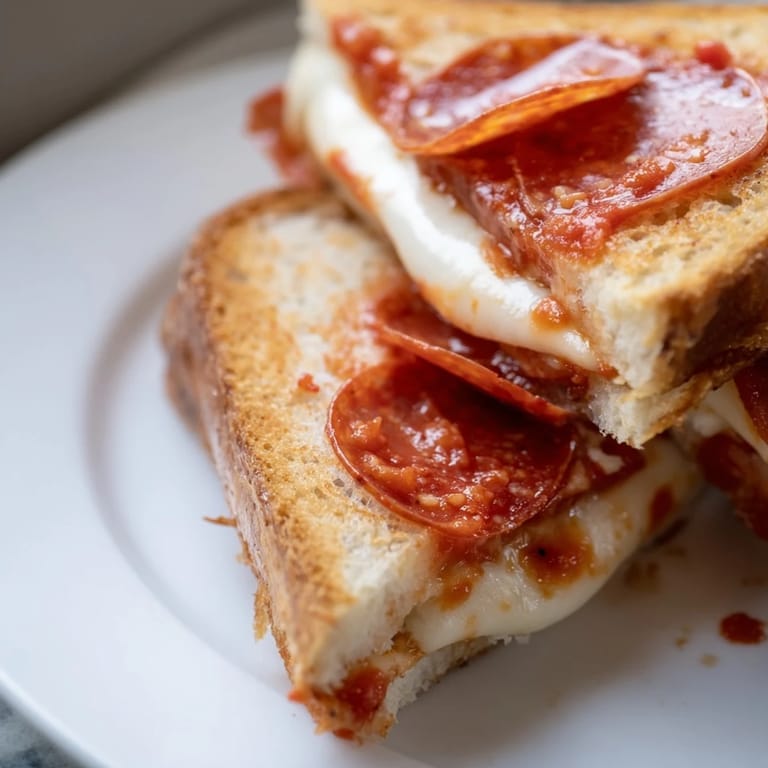
 This sandwich proves that the best dishes often come from happy accidents and kitchen bravery. Make it, feed it to someone, and watch their face light up.
Recipe FAQs
- → What type of bread works best?
Italian bread or sourdough provides a sturdy, flavorful base that crisps well when toasted, supporting the melting cheese and pepperoni layers.
- → Can I use other cheeses besides mozzarella?
While mozzarella offers excellent meltability and mild flavor, provolone or fontina can also complement the pepperoni and sauce nicely.
- → How do I prevent the sandwich from getting soggy?
Spreading butter on the outside and pan-toasting the sandwich creates a crispy crust that seals in moisture and keeps the interior flavorful yet not soggy.
- → Is it possible to add vegetables?
Yes, sautéed mushrooms, bell peppers, or spinach make great additions to boost flavor and texture within the sandwich layers.
- → What cooking equipment is recommended?
A skillet or griddle paired with a spatula works best for even toasting and pressing the sandwich during cooking.