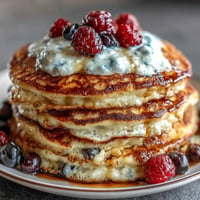
 Pin It
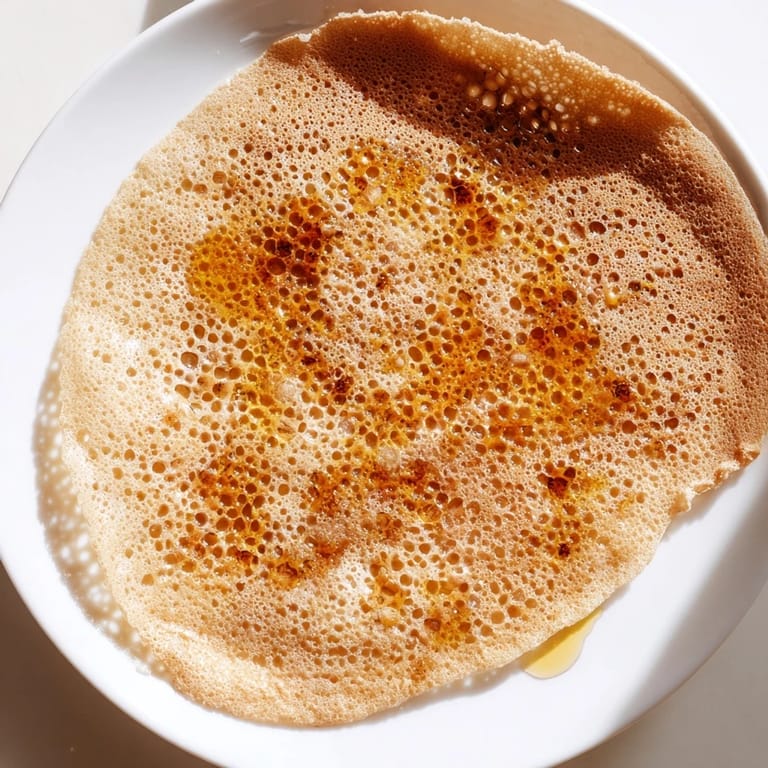
 The first time I made baghrir, I wasn't expecting those tiny holes to appear across the surface like magic. I'd watched my neighbor flip these spongy pancakes in her kitchen one morning, and the way she described them—light, almost cloud-like, soaked in butter and honey—stuck with me for weeks. When I finally tried making them myself, that moment when the batter started bubbling on the pan felt like discovering a small kitchen secret.
I remember making these for a friend who'd just returned from Morocco, wondering if I'd get it even close to what she'd grown up eating. When she took that first bite and closed her eyes, then asked for seconds while they were still warm, I knew I'd found something worth making again and again.
Ingredients
- Fine semolina: The star ingredient that gives baghrir its signature spongy texture and gentle wheat flavor; if you can only find medium semolina, it'll still work beautifully.
- All-purpose flour: Balances the semolina and helps create structure without making the crepes dense.
- Warm water: Activates the yeast and creates the magical bubbles; if it's too hot, it'll kill the yeast, so aim for around 110°F.
- Granulated sugar: Feeds the yeast and adds just a whisper of sweetness to the batter itself.
- Active dry yeast: The ingredient responsible for all those tiny holes; make sure it's fresh or the crepes won't develop that honeycomb texture.
- Baking powder: Gives extra lift and ensures the holes stay visible and airy.
- Salt: A small amount that brings all the flavors into focus.
- Unsalted butter: Melted warm with honey, it's the finishing touch that turns these crepes into something memorable.
- Honey: Use whatever you love; dark honey brings depth, lighter honey keeps things delicate.
Tired of Takeout? 🥡
Get 10 meals you can make faster than delivery arrives. Seriously.
One email. No spam. Unsubscribe anytime.
Instructions
- Combine your dry ingredients:
- Whisk together the semolina, flour, sugar, yeast, baking powder, and salt in a large bowl. Make sure everything is evenly distributed so the yeast spreads throughout the batter and does its job properly.
- Create your batter:
- Slowly pour in the warm water while whisking constantly, like you're coaxing the flour to incorporate smoothly. Stop when you have a batter that's the consistency of thin pancake batter, completely smooth with no lumps hiding anywhere.
- Let time do the work:
- Cover the bowl loosely and let it sit at room temperature for 30 minutes. You'll notice small bubbles forming on the surface, which is exactly what you want, a sign the yeast is alive and working.
- Heat your pan:
- Set a nonstick skillet or crepe pan over medium heat and let it warm for a minute or two. Don't add any oil or butter to the pan itself, the batter won't stick and the honeycomb holes need that direct heat to form.
- Pour and swirl:
- Using a ladle or measuring cup, pour about ¼ cup of batter into the center of the hot pan and immediately swirl it gently outward in a circular motion. The batter should spread thin and even, creating an almost translucent layer.
- Watch for the holes:
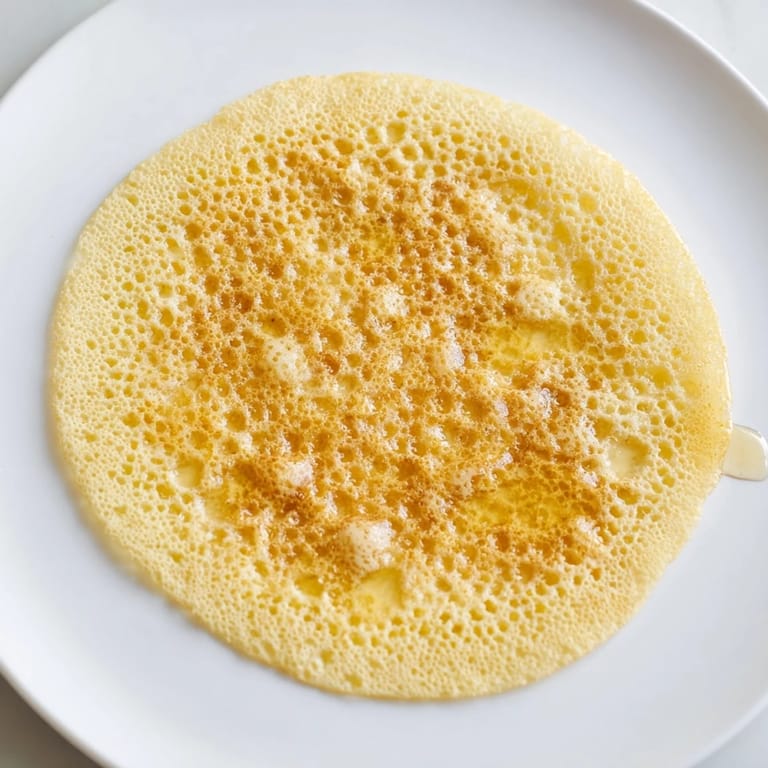
- Cook for about 2 to 3 minutes without flipping, and watch as the surface transforms with tiny holes appearing before your eyes. When the top looks dry and those holes are clearly visible, it's done.
- Stack and repeat:
- Transfer the baghrir to a plate and keep going with the remaining batter, stirring occasionally to keep the yeast distributed. If the batter thickens while you're cooking, add a tablespoon or two of warm water to bring it back to the right consistency.
- Finish with warmth:
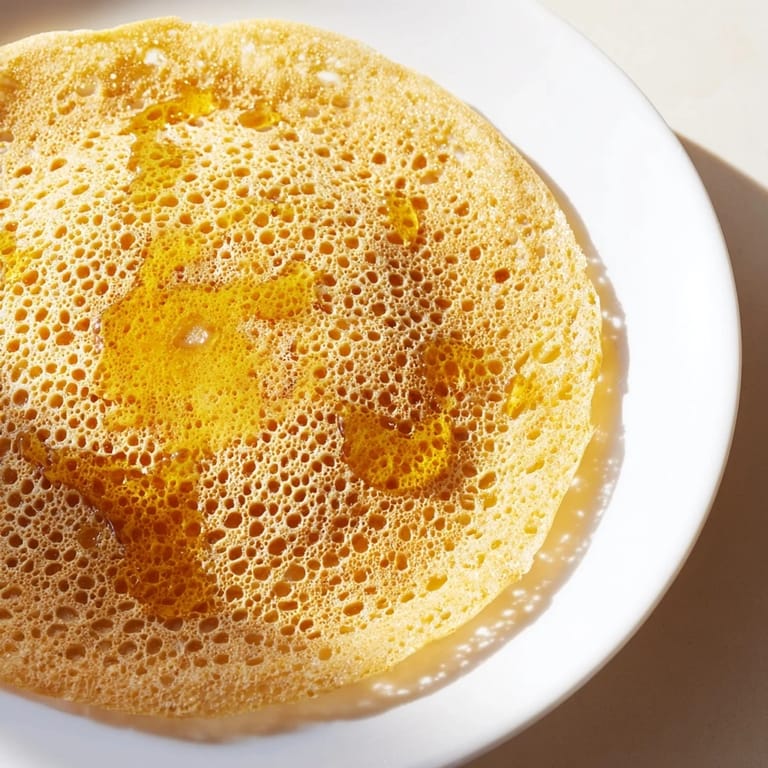
- In a small saucepan over low heat, melt the butter with the honey, stirring gently so they blend together in a luxurious mixture. Pour this generously over your warm baghrir right before serving.
 Pin It
 There's something almost meditative about making baghrir, watching the transformation happen in real time, knowing that what you're about to eat is both incredibly simple and somehow special. My kitchen smelled like toasted grain and honey that morning, and it felt like enough.
The Texture That Changes Everything
Those holes aren't just decoration, they're functional magic. They create pockets that hold butter and honey without making the crepes soggy, and they catch the light in a way that makes even a simple breakfast feel elegant. The spongy crumb stays tender even after a few minutes, so you don't have to rush to eat them the second they come off the pan.
Serving Baghrir Like You Mean It
Warm is where baghrir shines, so don't let them cool to room temperature before serving. Stack them on a plate, drizzle that honey-butter mixture over everything, and pour a cup of hot tea or coffee to go alongside. If you want to add texture, chopped pistachios or almonds scattered on top bring a lovely contrast to the softness.
Making Ahead and Storing
Baghrir is genuinely best eaten fresh, but life happens and you might need to make these in advance. You can store them in an airtight container for a day and reheat them gently in a low oven or even briefly in a dry pan, and they'll soften back up beautifully. The batter can also sit in the fridge overnight, though the yeast activity will slow down, so add a pinch more baking powder if you go that route.
- Keep finished baghrir covered with a clean kitchen towel while you cook the rest so they stay warm and soft.
- If reheating, a light spritz of water and a gentle warm up brings back that just-made texture.
- Don't store them with the honey-butter already on top, dress them right before eating.
 Pin It
 Baghrir taught me that the most crave-able dishes are often the simplest ones, made with just enough skill and the right ingredients to let their nature shine. These crepes are proof that breakfast can be both humble and unforgettable.
Recipe FAQs
- → What makes Baghrir different from other crepes?
Baghrir is unique due to its light, spongy texture and honeycomb surface created by bubbles forming during resting and cooking on only one side.
- → How do I achieve the honeycomb texture?
Resting the batter allows yeast to create bubbles, which form the characteristic holes when cooking at medium heat without flipping.
- → Can I use a nonstick pan for cooking Baghrir?
Yes, a nonstick skillet or crepe pan works best to prevent sticking and allows delicate crepes to cook evenly.
- → What is the best way to serve Baghrir?
Traditionally, it’s served warm with melted butter and honey drizzled on top for rich sweetness and moisture.
- → How do I adjust the batter if too thick after resting?
Add 1–2 tablespoons of water gradually to reach a pourable consistency before cooking.