 Pin It
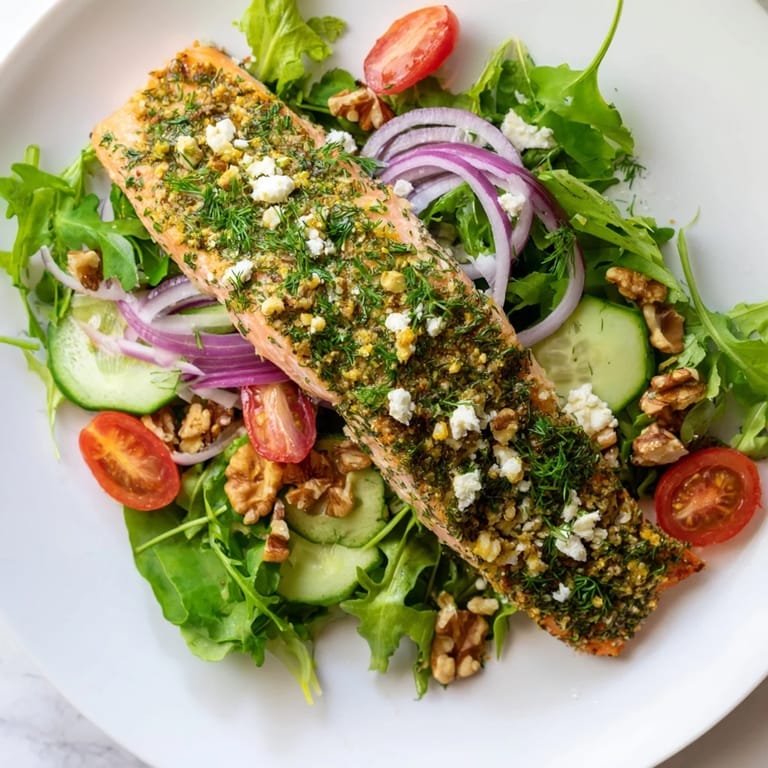
 One afternoon, I was rummaging through the fridge when I spotted a beautiful salmon fillet next to a bunch of fresh herbs that were about to wilt. Rather than toss them, I had this sudden thought: what if I crushed those herbs into a paste and baked the salmon right on top? Twenty minutes later, I was sitting down with the most aromatic, tender fish I'd made in months, perched on a bed of crisp greens. That simple improvisation became my go-to when I want something that feels restaurant-quality but takes barely longer than a quick lunch break.
I made this for a friend who'd just mentioned she was tired of boring work lunches, and watching her face when she took that first bite—the way she paused and said, "You made this?"—reminded me why I love cooking. It became her regular Tuesday meal request, and now whenever I make it, I think of her telling her colleagues at the office that her friend makes her fancy salads.
Ingredients
- Salmon fillets (4 fillets, about 150 g each): Look for fillets that smell like the ocean, not fishy—that's your indicator of freshness. Skinless fillets cook more evenly and let that herb crust shine.
- Olive oil and Dijon mustard: The mustard acts as an emulsifier in the herb paste, helping everything cling to the salmon and creating a slight tang that cuts through the richness.
- Fresh herbs (parsley, dill, chives): Don't use dried here—the whole point is that bright, garden-fresh flavor. If one is hard to find, use extra of another and the dish still works beautifully.
- Garlic powder: It distributes evenly across the surface unlike minced garlic, which can burn in the oven.
- Mixed salad greens: A mix of textures matters more than using just one type—the peppery bite of arugula, the softness of spinach, the crunch of romaine all together create something more interesting.
- Cherry tomatoes and cucumber: These stay fresh and crisp under the warmth of the salmon, adding brightness that balances the richness of the herb crust.
- Walnuts and feta (optional): The nuttiness and saltiness add depth, but if you skip them, the dish is still complete—sometimes restraint is the secret.
- Vinaigrette (olive oil, vinegar, honey, Dijon): The honey rounds out the acidity, making the dressing silky rather than sharp, which matters when it's meeting warm salmon.
Tired of Takeout? 🥡
Get 10 meals you can make faster than delivery arrives. Seriously.
One email. No spam. Unsubscribe anytime.
Instructions
- Get your oven ready and line your sheet:
- Preheat to 200°C (400°F) and cover a baking sheet with parchment paper. This takes just a minute but saves you from any sticking drama later.
- Make the herb paste:
- Mix olive oil, Dijon mustard, lemon juice, parsley, dill, chives, garlic powder, salt, and pepper in a small bowl. You'll know it's right when it looks almost like a chunky pesto—vibrant green, glossy from the oil, and fragrant enough that you'll want to smell it again.
- Prepare the salmon:
- Pat your salmon fillets dry with a paper towel (moisture is the enemy of crust), then place them on the parchment. Spread that herb mixture generously across the top of each fillet, using your fingers or a small spoon to get it into every crevice.
- Bake until just cooked through:
- Slide into the oven for 12–15 minutes. You're looking for the moment when the flesh turns opaque and a fork easily flakes through the thickest part—overcooked salmon turns dry and sad, so set a timer and check at 12 minutes.
- Assemble the salad while salmon cooks:
- Toss your greens, tomatoes, cucumber, red onion, nuts, and feta in a large bowl. Don't dress it yet; that's a timing thing.
- Whisk the vinaigrette:
- In a small bowl, combine olive oil, vinegar, honey, Dijon mustard, salt, and pepper. Taste it before you dress the salad—adjust the acidity or sweetness if you like, there's no police coming if you do.
- Dress and plate:
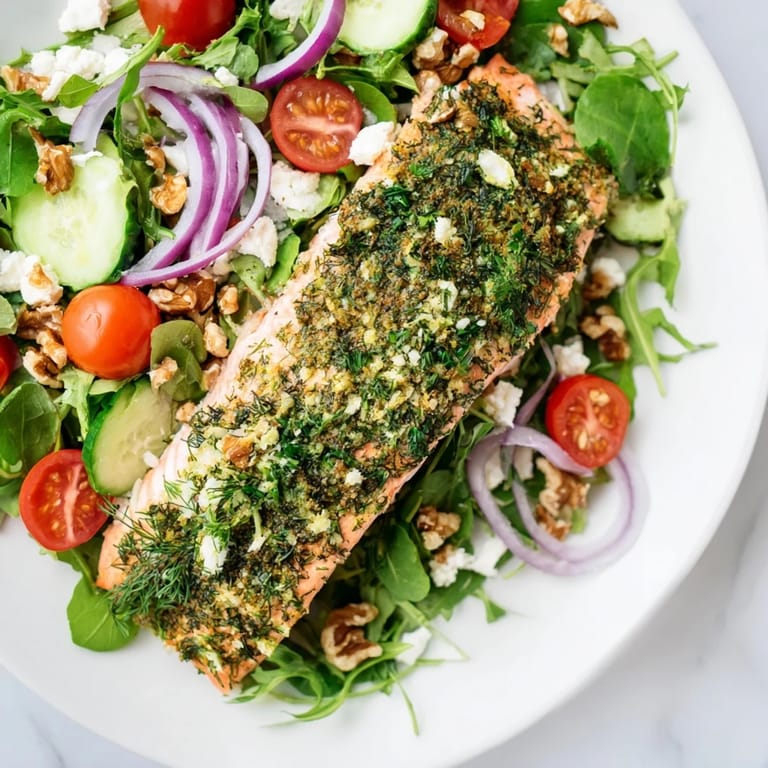
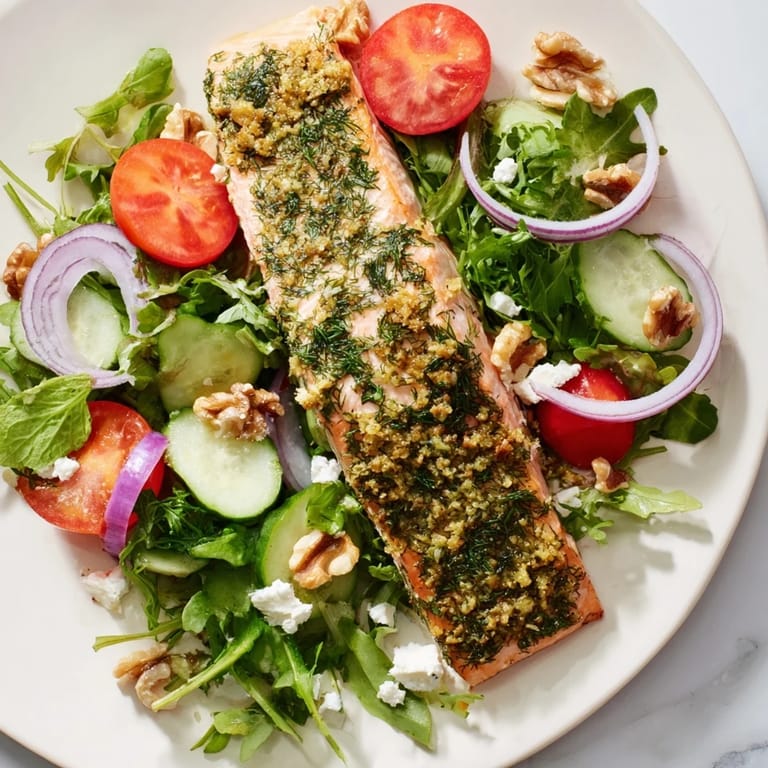
- Drizzle the vinaigrette over the salad, toss gently so everything is coated but the greens aren't bruised, then divide among four plates. Top each with a warm salmon fillet and serve right away while everything is at its best.
 Pin It
 There's something about placing warm salmon on a cool bed of greens that feels like an act of care, whether you're cooking for yourself or someone else. That moment when the herb aroma rises with the heat and mingles with the brightness of the salad—that's when you know you've made something worth your time.
Why This Works as a Weeknight Dinner
The beauty of this dish is that it respects your time. Everything preps while the oven does the heavy lifting, and you're never standing over the stove stirring or watching something carefully. Even on nights when you feel too tired to cook, 15 minutes of oven time feels manageable, and the result tastes like you put in way more effort than you actually did.
Playing with Flavors and Swaps
If you don't have dill, use more parsley or add tarragon—the herb flavors will shift but the dish adapts gracefully. Trout works just as well as salmon if that's what you find, and I've even made this with halibut when salmon wasn't available. The vinaigrette is flexible too; swap white wine vinegar for lemon juice if that's all you have, or add a tiny pinch of Dijon to any basic vinaigrette and it becomes something more interesting.
Making It Your Own
The first few times I made this, I followed the recipe exactly, but after that, I started playing. I've added sliced avocado on mornings when I wanted extra richness, stirred cooked quinoa into the salad for substance, and once, when I was out of walnuts, I toasted some seeds instead and it was equally good. The dish is sturdy enough to handle your preferences and creative moods.
- If you want more protein, toss some cooked chickpeas or white beans into the salad and adjust the vinaigrette proportions slightly.
- For a warm salad experience, you can briefly warm the greens in a low oven while the salmon finishes, letting the leaves soften just a touch.
- Pair this with something crisp to drink—a Sauvignon Blanc if you're having wine, or sparkling water with lemon if you're not, and the whole meal feels elevated.
 Pin It
 This recipe became a favorite not because it's complicated or fancy, but because it reminds me every time I make it that good food doesn't have to demand your entire evening. You eat it warm, surrounded by cool brightness, and feel completely satisfied.
Recipe FAQs
- → What herbs are used in the crust for the salmon?
Fresh parsley, dill, and chives are finely chopped and combined with garlic powder, salt, and pepper to form the crust.
- → Can I substitute the salmon with another type of fish?
Yes, firm fish like trout can be used as a substitute while maintaining similar texture and flavor.
- → How is the vinaigrette prepared?
The vinaigrette is made by whisking together extra-virgin olive oil, white wine vinegar or lemon juice, honey or maple syrup, Dijon mustard, salt, and pepper.
- → Is it necessary to use nuts and feta in the salad?
Nuts and feta are optional but add extra texture and richness to the salad, enhancing overall flavor.
- → What is the recommended cooking time for the salmon fillets?
Bake salmon for 12–15 minutes at 200°C (400°F) until it flakes easily with a fork.
- → What are some good beverage pairings with this dish?
A crisp Sauvignon Blanc or sparkling water with lemon complement the fresh, light flavors well.