 Pin It
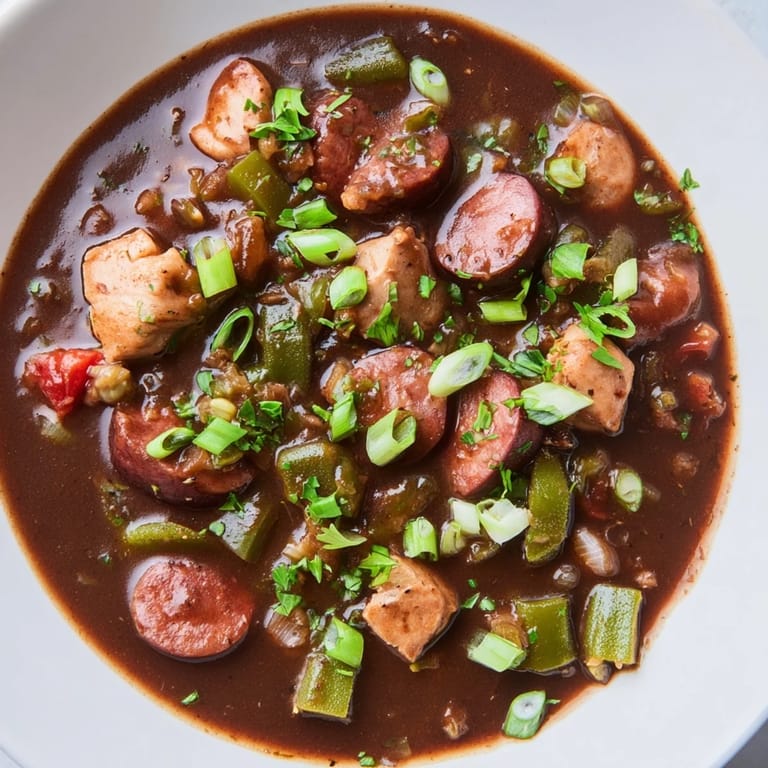
 The first time I made gumbo, my kitchen filled with a smell so rich and deep that my neighbor actually knocked on the door asking if something was burning. It wasn't—it was that crucial moment when the roux finally turned the color of dark chocolate, and I realized I'd been holding my breath the entire time. That dark roux, patience incarnate in a pot, became the foundation for everything that followed: the sausage, the chicken, the okra all sinking into this velvety brown base that somehow tastes like Louisiana itself.
I made this for a dinner party once where someone arrived late, and by the time they walked in, the gumbo had been simmering for forty minutes—the whole apartment was thick with steam and spice. They actually sat down at the table before taking off their coat. That's when I knew this recipe was something special, something that moves beyond technique into pure comfort.
Ingredients
- Boneless, skinless chicken thighs (350 g): Thighs hold flavor and texture so much better than breasts; they won't dry out during the long simmer.
- Smoked andouille sausage (225 g): This is where the smoke and spice live; it's not negotiable for authentic gumbo, though any quality smoked sausage works if needed.
- Fresh or frozen okra (250 g): Okra thickens the gumbo naturally as it cooks down; if using frozen, thaw and drain it completely.
- Onion, green bell pepper, and celery (the holy trinity): These three vegetables are the heartbeat of Louisiana cooking; don't skip any of them.
- Garlic (3 cloves): Minced fresh garlic wakes up the whole pot in the final seconds before the liquid goes in.
- Tomatoes (2 fresh or 1 can, drained): Fresh tomatoes add brightness, but canned works beautifully when fresh aren't at their peak.
- All-purpose flour (60 g) and vegetable oil (60 ml): Equal parts make the roux; this is where patience pays off because rushing this step changes everything.
- Chicken stock (1.5 liters): Use a good quality stock; it's the liquid foundation of your entire dish.
- Bay leaves, dried thyme, smoked paprika, and cayenne: These seasonings layer and build on each other; start conservative with cayenne if you're unsure about heat.
- Worcestershire sauce and salt and pepper: Worcestershire adds a subtle depth that catches people off guard in the best way.
- Spring onions and fresh parsley (for garnish): These bright additions cut through the richness and remind you this dish is still alive.
Tired of Takeout? 🥡
Get 10 meals you can make faster than delivery arrives. Seriously.
One email. No spam. Unsubscribe anytime.
Instructions
- Make the roux with patience and presence:
- Heat the oil in your large pot over medium heat, then whisk in the flour slowly. Keep whisking—this takes about 15–20 minutes and demands your attention. Watch it move from pale blonde to peanut butter brown to deep chocolate. When you hit that chocolate color, you're done; keep going and you'll burn it, which changes everything. Don't step away; this is where the soul of gumbo lives.
- Build the base with the holy trinity:
- Add your chopped onion, bell pepper, and celery to the roux and let them soften for 3–4 minutes, scraping the bottom of the pot to release all that brown goodness. Stir in the garlic for one more minute—you'll smell it transform immediately.
- Brown the proteins gently:
- Add the sliced sausage and chicken pieces, stirring for about 5 minutes until the chicken just starts to color. You're not cooking it through yet; you're just waking it up.
- Welcome the okra:
- Stir in the okra and let it cook for 3–4 minutes. It will start to release its natural thickness into the pot, which is exactly what you want.
- Add the liquid and seasonings:
- Pour in your diced tomatoes and chicken stock, then add the bay leaves, thyme, smoked paprika, cayenne, Worcestershire sauce, salt, and pepper. Bring everything to a boil, then lower the heat and let it simmer uncovered for 45–50 minutes. Stir occasionally and taste as you go.
- Finish and adjust:
- Remove the bay leaves and taste the gumbo. Add more salt, pepper, or cayenne if it needs it—this is your moment to make it exactly right. If you want it thicker, sprinkle in filé powder off the heat (never boil it after filé goes in).
- Serve with reverence:
- Ladle it over white rice, top with spring onions and parsley, and let people add hot sauce to their preference. Some gumbo is best eaten in silence.
 Pin It
 Years later, I watched my father make this gumbo while I stood at the stove beside him, and he never looked at a recipe once. He moved through each step like a conversation he'd had a thousand times, and somewhere between the roux and the simmering, I understood that this dish becomes part of you if you pay attention to it.
The Roux: Your Foundation
The roux is the most important player in this game, and it deserves respect. This isn't a quick five-minute situation; it's a meditation. As the flour and oil gradually darken, you're actually developing hundreds of flavor compounds that you can't shortcut. The deeper the brown, the deeper the flavor, but there's a razor-thin line between deep chocolate and burnt. Watch for the moment it smells toasty and rich rather than acrid. Your nose knows better than any timer.
Why the Okra Matters
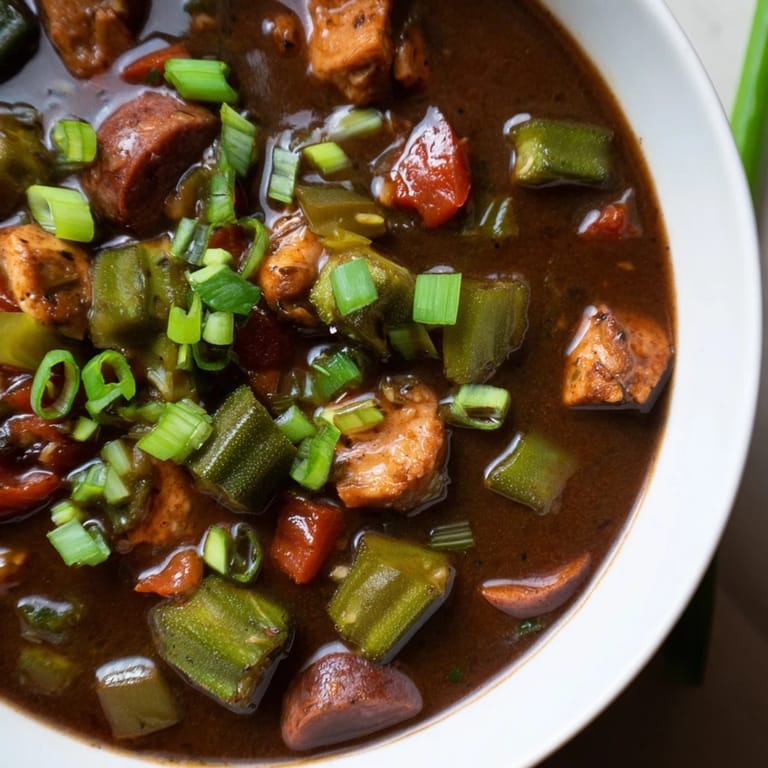
Okra gets a bad reputation for being slimy, but in gumbo, that's its superpower. As it cooks down in the hot broth, it releases a natural thickener that gives gumbo its signature silky body. Some people use filé powder for the same reason, and you can use either or both. If you're using frozen okra, the key is thorough draining—excess ice crystals will water down your carefully built broth. Fresh okra is ideal, but frozen works when the seasons don't cooperate.
Variations and Thinking Ahead
Once you understand the structure of this gumbo, you can pivot it in any direction your cravings pull you. The roux base, the trinity, and the long simmer are non-negotiable, but everything else bends to your will. Some cooks swear by a seafood version—add shrimp or crab during the last 10 minutes so they don't overcook. Others skip the chicken entirely and load it with vegetables. The beauty is that gumbo is a framework, not a formula.
- For seafood, add peeled shrimp or crab meat in the final 10 minutes of simmering—any longer and they'll turn rubbery.
- If your andouille isn't available, any quality smoked sausage will give you the depth you're after.
- Serve with crusty French bread to soak up every last drop of broth.
 Pin It
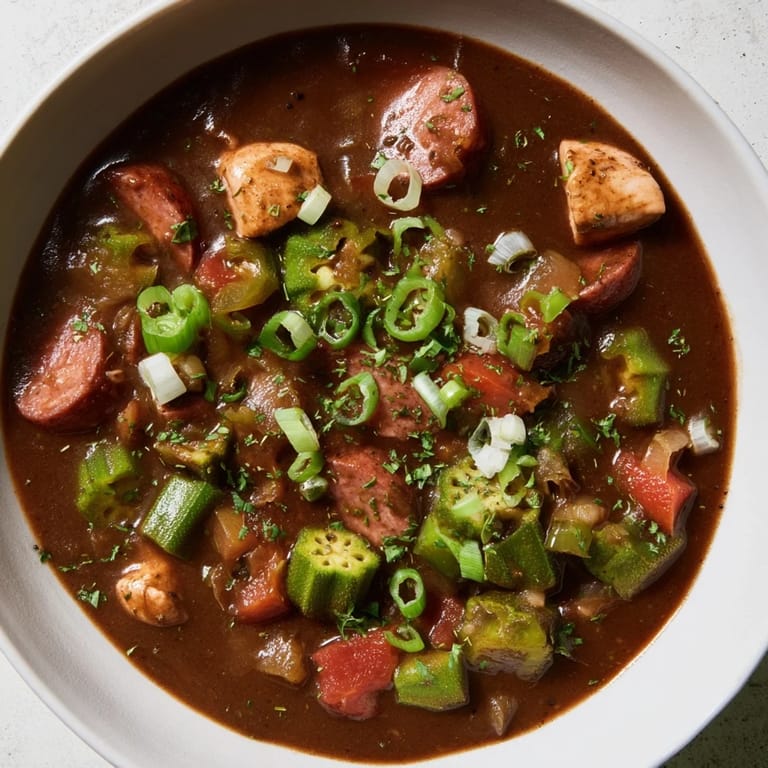
 This gumbo tastes like home, like patience rewarded, like one perfect meal that somehow feeds more than your body. Make it for people you love.
Recipe FAQs
- → What is the purpose of the dark roux?
The dark roux adds a rich, nutty flavor and thickens the broth, forming the classic base for the stew’s deep taste.
- → Can I substitute the sausage?
Yes, any smoked sausage can replace andouille, though it may slightly alter the traditional flavor profile.
- → Should I use fresh or frozen okra?
Fresh okra is preferred for texture, but frozen can be used if thawed and drained beforehand.
- → How is the stew typically served?
It is commonly served hot over cooked white rice, often garnished with sliced spring onions and parsley.
- → What optional ingredients enhance the stew?
Filé powder can be added off heat to thicken and add unique flavor; hot sauce is optional for heat adjustments.
- → Can seafood be added?
Yes, peeled shrimp or crab meat can be incorporated during the last 10 minutes of simmering for a seafood twist.