 Pin It
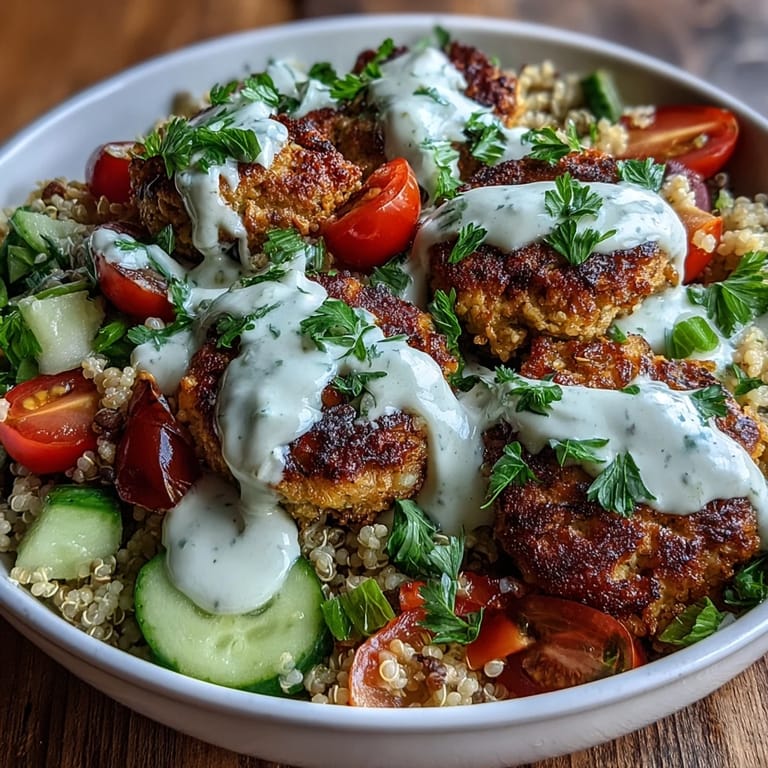
 There's a moment every spring when I crave something that tastes like warmth and the Mediterranean at once, and that's when this bowl comes together in my kitchen. My neighbor brought over fresh cilantro from her garden one afternoon, and I suddenly remembered how falafel had shifted my whole approach to vegetarian cooking—no more thinking of it as what you eat when meat isn't an option, but as something genuinely craveable on its own. Pairing it with quinoa felt like the natural evolution, a way to make it feel substantial and nourishing without losing that crispy, herbaceous magic. The tahini sauce was the detail that made it sing, threading everything together with something warm and silky.
I made this for a potluck once when I wasn't sure what to bring, and I watched people come back for seconds while I was still setting out napkins. Someone asked if it was complicated, and I realized how much easier it is than it looks—the food processor does most of the thinking, and suddenly you're serving something that feels like you've been cooking all day.
Ingredients
- Cooked chickpeas: Use canned if you're short on time, but rinse them really well so the falafel stays light and fluffy rather than gluey.
- Fresh parsley and cilantro: These are what make the falafel taste alive—don't skip them or swap them for dried, the flavor completely changes.
- Green onions: They add brightness and a gentle onion note without the harshness of raw onion.
- Garlic: Two cloves in the falafel, one in the sauce—this is the backbone of the whole thing.
- Cumin and coriander: Toast them in a dry pan first if you have a minute and want to deepen their flavor, though fresh spices work beautifully too.
- Cayenne pepper: Optional, but it gives a subtle warmth that lingers pleasantly in the back of your mouth.
- Chickpea flour: This keeps things gluten-free and helps bind the mixture without making it dense—if you only have all-purpose flour, it still works but the texture shifts slightly.
- Quinoa: Rinse it under cold water to remove that bitter coating, a step that takes thirty seconds and makes a real difference.
- Tahini: The creamy heart of the sauce, it needs whisking with lemon juice and water to become silky rather than grainy.
Tired of Takeout? 🥡
Get 10 meals you can make faster than delivery arrives. Seriously.
One email. No spam. Unsubscribe anytime.
Instructions
- Heat your oven and get organized:
- Preheat to 400°F and line a baking sheet with parchment paper so cleanup is nearly effortless later. Having everything ready means the falafel mixture goes straight from processor to pan without sitting around.
- Pulse the falafel together:
- Combine chickpeas, herbs, green onions, garlic, spices, salt, pepper, lemon juice, and chickpea flour in a food processor and pulse until the mixture looks like coarse breadcrumbs with some texture still visible. You're aiming for something that holds together but still feels a bit rustic, not a smooth paste.
- Shape and brush:
- Wet your hands slightly so the mixture doesn't stick, then form twelve balls or slightly flattened patties and arrange them on the parchment. Brush each one lightly with olive oil—this is what gives them that crispy golden exterior.
- Bake until golden:
- Slide them into the oven for 22 to 25 minutes, flipping them halfway through so they crisp up all over. You'll know they're ready when they're deep golden and smell absolutely incredible.
- Start the quinoa alongside:
- While the falafel bakes, rinse quinoa under cold water, then combine it in a saucepan with two cups of water and a quarter teaspoon of salt. Bring to a boil, cover, reduce heat to low, and let it simmer gently for 15 minutes.
- Rest the quinoa:
- Once the timer goes off, let it sit covered for five minutes off the heat, then fluff it gently with a fork so the grains separate and stay light.
- Make the tahini sauce smooth:
- Whisk together tahini, minced garlic, lemon juice, salt, and two tablespoons of water until it becomes silky and pourable. If it's too thick, add more water one tablespoon at a time until it reaches the right consistency.
- Assemble your bowls:
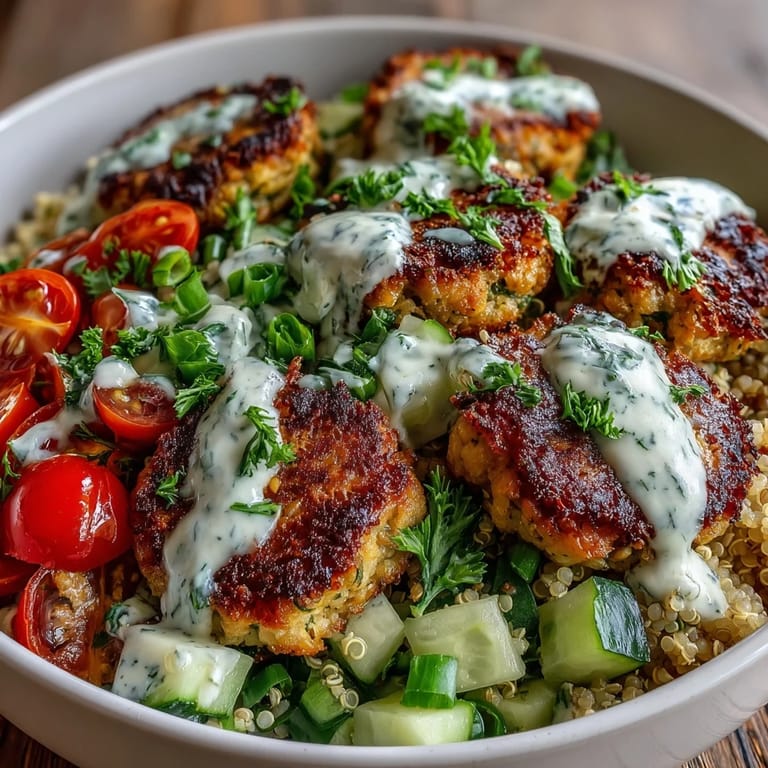
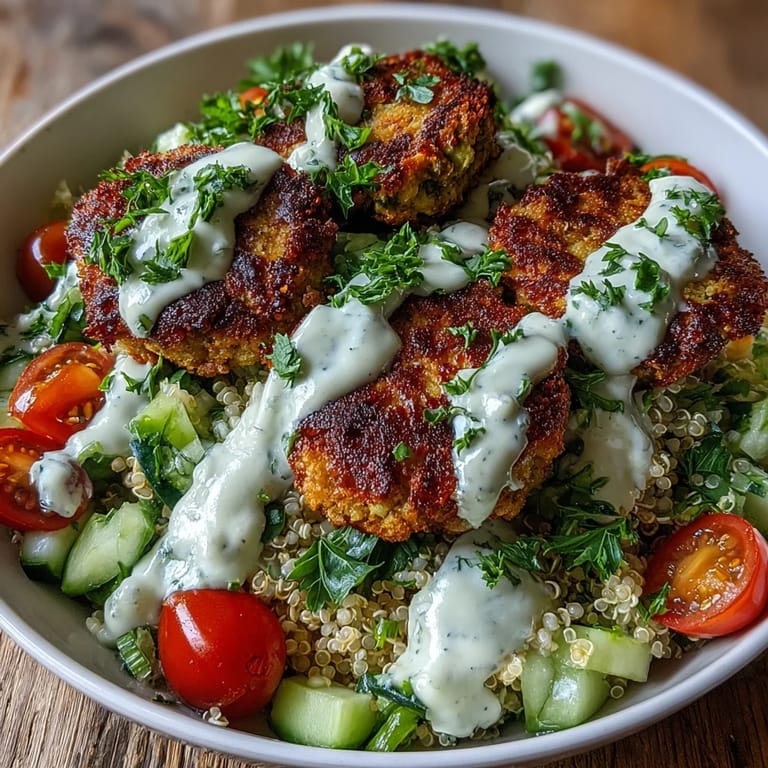
- Divide the fluffy quinoa among four bowls, then top each with diced cucumber, halved cherry tomatoes, sliced green onions, and three falafel. Finish with a generous drizzle of tahini sauce.
 Pin It
 There's something genuinely moving about watching someone taste this bowl for the first time and just pause, savoring it without talking. It's when I know I've created something that feels nourishing in every sense—satisfying your body and somehow settling your mood at the same time.
Building Layers of Flavor
Each element plays a role, and the order you build the bowl matters more than you might think. The warm falafel against cool vegetables creates this pleasant temperature contrast that keeps things interesting with every bite. The quinoa acts like a neutral base that lets the tahini sauce do its thing, coating each grain with that garlic warmth.
Making It Your Own
This bowl is forgiving and flexible, which is part of why I return to it so often. Swap the cherry tomatoes for roasted red peppers if that's what you have, or add some crumbled feta cheese if vegetarian is your style but vegan isn't required. The falafel holds strong enough that you can build around it with whatever fresh vegetables feel right for the season.
Storage and Second Meals
Leftovers actually improve overnight as the flavors deepen and meld, though I'd keep the tahini sauce separate if you're planning ahead so it doesn't soften the falafel by morning. The baked falafel keeps for three days in an airtight container and reheats beautifully in a 350°F oven for about eight minutes, emerging just as crispy as the first time.
- Store quinoa and vegetables in separate containers to keep textures distinct until assembly.
- The tahini sauce lasts about four days refrigerated and can be thinned with a splash of water if it thickens up too much.
- For meal prep, bake extra falafel on the weekend and mix and match with different grains or greens throughout the week.
 Pin It
 This bowl has become something I make when I want to feel like I'm taking care of myself and the people around me, all in one gesture. It's proof that food doesn't have to be complicated to be completely satisfying.
Recipe FAQs
- → Can I make the falafel ahead of time?
Yes, you can prepare the falafel mixture up to 24 hours in advance and store it covered in the refrigerator. Form and bake when ready to serve. Leftover baked falafel keeps well for 3 days and reheats beautifully in the oven.
- → What can I substitute for chickpea flour?
All-purpose flour works perfectly as a binder. For gluten-free options, try almond flour or additional oat flour. The key is using just enough to hold the mixture together without drying it out.
- → How do I prevent the falafel from crumbling?
Ensure the mixture isn't too wet by draining chickpeas thoroughly. Using damp hands when forming helps, and don't skip the flour—this binds everything together. Letting the mixture rest for 10 minutes before shaping also helps.
- → Can I cook the falafel differently?
Air frying works wonderfully at 375°F for 12-15 minutes, shaking halfway. For traditional results, pan-fry in oil until golden on all sides. Baking gives the crispest texture with less oil.
- → Is this bowl freezer-friendly?
Freeze baked falafel separately for up to 3 months. Quinoa and fresh vegetables don't freeze well, so assemble fresh bowls when ready to eat. Reheat falafel in a 350°F oven for 10 minutes.
- → How can I add more protein?
Top with crumbled feta cheese, add a hard-boiled egg, or serve with grilled chicken strips. Hemp seeds or toasted pumpkin seeds also provide extra protein and delightful crunch.