 Pin It
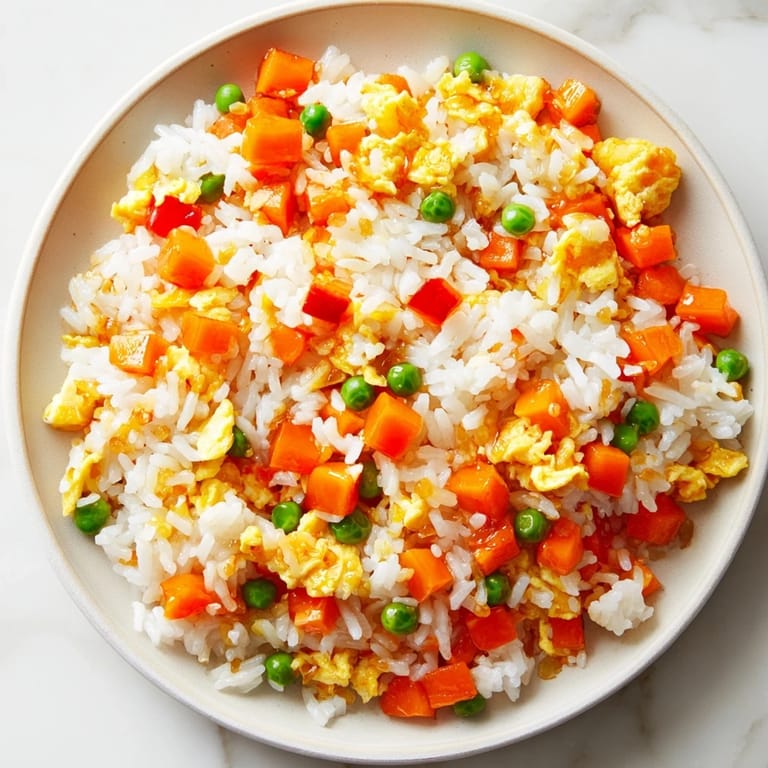
 There's a Tuesday evening I won't forget when my roommate opened the fridge to find a container of leftover rice and complained about being hungry. I rifled through the vegetable drawer, cracked a couple of eggs into a bowl, and twenty minutes later we were eating the best thing we'd made together that month. Egg fried rice is one of those dishes that tastes like it took hours but actually thrives on speed and a hot pan. It's become my go-to answer whenever someone asks what's for dinner and the pantry feels half-empty.
I made this for a friend who had just moved into her first apartment with almost no groceries, and watching her face light up when she tasted it was one of those small kitchen victories that stays with you. She kept asking what made it so good, like there was some secret ingredient, but honestly it was just the sizzle of a hot wok and paying attention for those few crucial minutes.
Ingredients
- Leftover rice (2 cups, day-old and cold): Day-old rice is essential because fresh rice clumps and steams instead of frying; the drier grains separate beautifully in the hot oil.
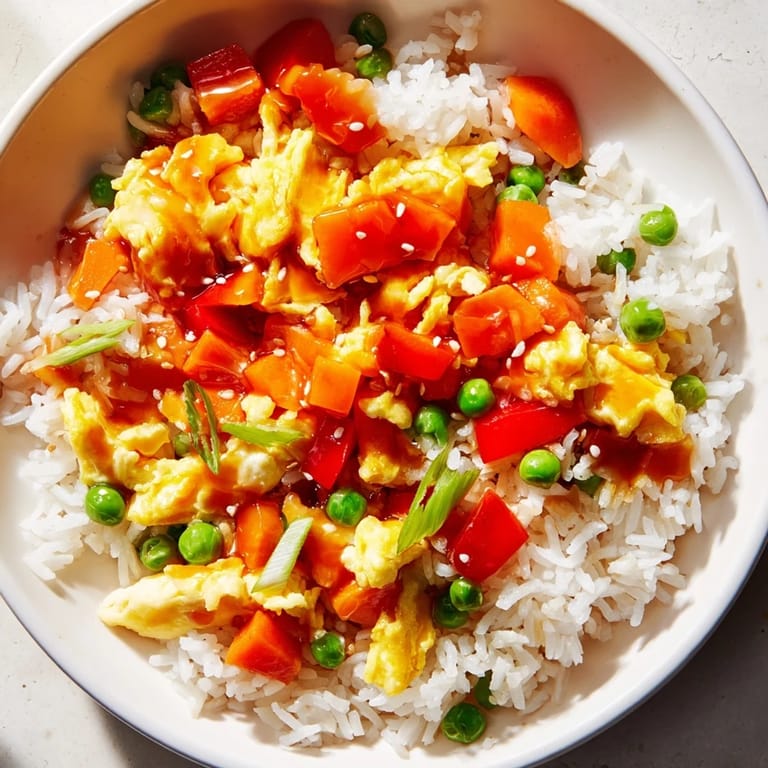
- Eggs (2 large): Beat them before you start cooking so they're ready to hit the hot oil and scramble into fluffy ribbons.
- Carrots (1/2 cup diced): Their natural sweetness balances the savory soy sauce and they hold texture through the cooking.
- Frozen peas (1/2 cup, thawed): Thaw them ahead so they warm through without becoming mushy in the pan.
- Scallions (1/4 cup chopped): Split them so you have white parts for cooking and green parts to finish the dish fresh and bright.
- Bell pepper (1/2 cup diced, optional): Adds color and a gentle crunch if you prefer it; easy to skip if you don't have one on hand.
- Soy sauce (2 tablespoons): Use low-sodium if you want more control over salt, and add it at the very end so it coats everything evenly.
- Sesame oil (1 teaspoon): A small pour is all you need; it's intensely aromatic and rounds out the savory notes beautifully.
- White or black pepper (1/4 teaspoon): White pepper dissolves invisibly while black pepper adds visible specks; choose based on what you have.
- Vegetable oil (2 tablespoons): Use a neutral oil that can handle high heat without smoking up your kitchen.
Tired of Takeout? 🥡
Get 10 meals you can make faster than delivery arrives. Seriously.
One email. No spam. Unsubscribe anytime.
Instructions
- Gather everything first:
- Dice your carrots and bell pepper into small, even pieces so they cook at the same pace. Thaw your peas and chop your scallions, keeping the white and green parts separate. Beat your eggs in a bowl until the yolks and whites are completely combined.
- Get the pan screaming hot:
- Pour 1 tablespoon of oil into a large skillet or wok over medium-high heat and let it shimmer for a minute. You'll know it's ready when a drop of water sizzles and evaporates instantly.
- Scramble and set aside:
- Pour in your beaten eggs and stir constantly with a spatula, breaking them into small curds as they cook. As soon as they're just set but still slightly wet, slide them onto a plate; they'll continue cooking a tiny bit from residual heat.
- Build the vegetable base:
- Add your remaining oil to the hot pan and immediately add the carrots and bell pepper. Stir constantly for about 2 minutes until they start to soften but still have a little bite to them.
- Add the quieter vegetables:
- Toss in your thawed peas and half of your chopped scallion whites, stirring everything together for about a minute. You'll smell the sweetness of the peas as they warm through.
- Bring the rice to life:
- Add your cold rice in one big handful, using your spatula to break up any clumps as you stir. Keep stirring and lifting the rice for 2 to 3 minutes until the grains are heated through and loosened, with some getting slightly browned at the edges.
- Add the seasoning liquid:
- Drizzle the soy sauce and sesame oil over the rice and toss everything together thoroughly. The warm rice will absorb these flavors almost immediately, and the smell will tell you it's working.
- Reunite everything:
- Return your scrambled eggs to the pan and stir everything together gently for another minute. Taste as you go and add pepper and salt if it needs it, remembering that soy sauce is already salty.
- Finish with flair:
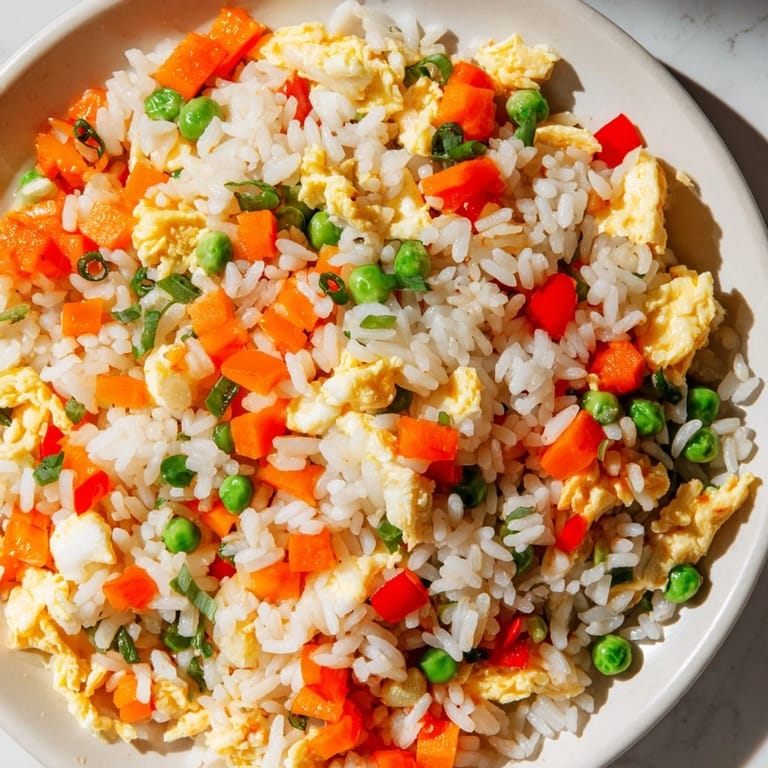
- Remove the pan from heat and scatter the remaining fresh scallion greens over top. Serve right away while it's steaming.
 Pin It
 One night I made this for a group of people who had just finished a long workday, and someone took one bite and actually closed their eyes. That's when I realized this dish isn't just convenient—it's genuinely comforting, the kind of food that tastes like someone understands what you need right now.
Why Cold Rice Makes All the Difference
The first time I tried this without cold rice, I ended up with a sticky, clumpy mess that no amount of stirring could fix. The moisture in hot rice creates steam, which softens the grains until they fall apart instead of frying separately. Ever since, I've made a point of saving leftover rice specifically for this, knowing it'll transform into something crispy and perfect. Cold rice has less moisture and a firmer texture, which means each grain stays intact and absorbs flavor directly from the soy sauce and oil rather than turning into a paste.
The Art of the Scramble
There's a rhythm to scrambling eggs in a hot pan that you learn after a few tries. The key is constant movement—a spatula always moving through the pan, breaking the eggs into small, delicate curds rather than letting them set into a solid block. Pull them out when they still look slightly underdone, with a little shine to them, because they'll keep cooking from the heat of the pan and the rice. Overcooked eggs turn rubbery and disappear into the dish, but perfectly scrambled eggs create these little bursts of richness with every bite.
Building Flavor Layer by Layer
This dish teaches you something about cooking that matters across a thousand recipes: layering flavor makes everything taste better. The vegetables cook first and release their sweetness, the rice takes on color and warmth, and then the soy sauce and sesame oil arrive at the end like a finishing touch that ties everything together. It's not a single flavor dominating the plate; it's a conversation between savory, a hint of sesame, and the natural sweetness of rice and vegetables. That's why this simple dish tastes so complete.
- Prep all vegetables before you start cooking so you're never scrambling for ingredients while the pan is hot.
- If you don't have sesame oil, a tiny drizzle of soy sauce works, but that aromatic sesame really does make it special.
- Add any protein you want—leftover chicken, cooked shrimp, or crumbled tofu—right when you return the eggs to the pan.
 Pin It
 Egg fried rice has become my answer to a lot of kitchen moments—when the fridge is nearly bare, when time is short, when someone shows up hungry and unexpected. It's taught me that the best meals don't need to be complicated, just thoughtfully put together with a little heat and attention.
Recipe FAQs
- → Can I use fresh rice instead of leftover rice?
Day-old leftover rice is best as it’s drier and prevents clumping, but fresh rice can work if cooled and slightly dried.
- → What vegetables work well in this dish?
Diced carrots, peas, scallions, and bell peppers are ideal, but you can swap in corn, snap peas, or broccoli based on preference.
- → How do I prevent eggs from overcooking during stir-fry?
Scramble eggs quickly over medium-high heat until just set, then remove before combining with other ingredients.
- → Can I add protein like chicken or tofu?
Yes, cooked chicken, shrimp, or tofu can be added for extra protein and texture variety.
- → What is the role of sesame oil in this dish?
Sesame oil adds a toasty, nutty flavor that enhances the overall depth and aroma of the stir-fry.