 Pin It
 There's something about cottage cheese that most people miss entirely when it comes to eggs. I discovered this by accident one morning when my usual milk carton was empty, and I grabbed what I thought was yogurt from the fridge. What emerged from my skillet wasn't just breakfast—it was the fluffiest, most luxuriously creamy scrambled eggs I'd ever made, with a protein punch that kept me full until dinner. That happy mistake became my go-to move whenever I needed something quick but substantial.
I made these for my roommate once when he complained about being hungry after his usual eggs, and watching him go back for seconds while asking what made them taste so different was genuinely satisfying. He couldn't pinpoint it until I told him about the cottage cheese, and then he did that thing where people say, "Wait, really?" like I'd just revealed a kitchen secret. Now he requests them whenever I'm cooking.
Ingredients
- Eggs: Large eggs give you more yolk and richness; I've found that the difference between large and medium actually matters here since you're not adding much liquid.
- Cottage cheese: Full-fat is non-negotiable if you can find it—the reduced-fat versions won't give you that silky texture, and you'll taste the difference in how the eggs set.
- Milk or cream: Just a splash to loosen things up; I use whatever's open in my fridge, and honestly, even a tiny bit of water works in a pinch.
- Salt and pepper: Freshly ground pepper makes an actual difference here since there's not much else going on flavor-wise, so don't skip the grinder.
- Unsalted butter: Medium-low heat is your friend, so the butter doesn't brown and turn bitter before the eggs even hit the pan.
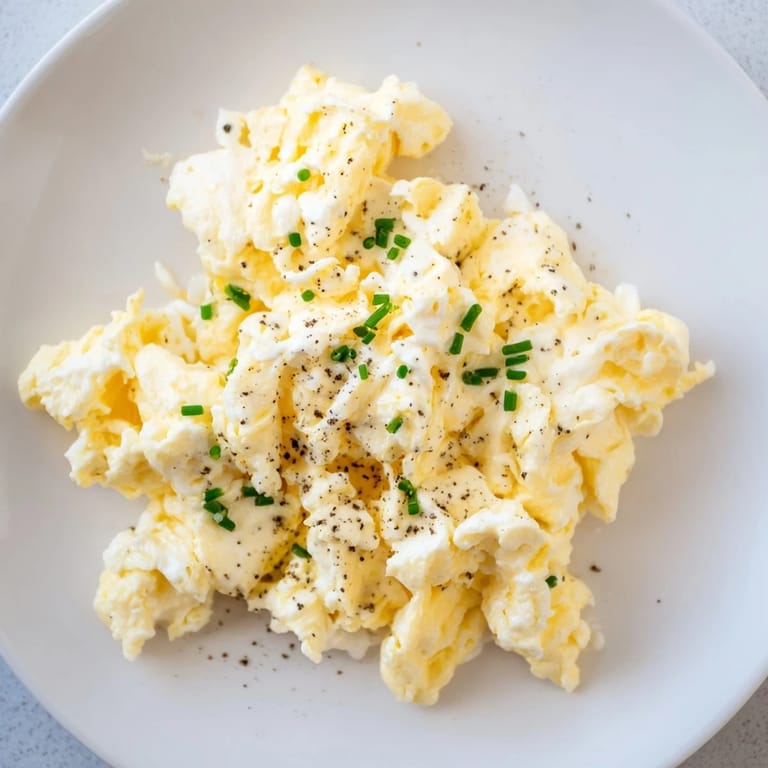
- Chives or parsley: This is the part that makes people think you fussed over breakfast, but it's literally just chopped green things on top.
Tired of Takeout? 🥡
Get 10 meals you can make faster than delivery arrives. Seriously.
One email. No spam. Unsubscribe anytime.
Instructions
- Combine everything with a light hand:
- Whisk the eggs, cottage cheese, milk, salt, and pepper together until the mixture is well combined and looks slightly foamy on top. Don't overbeat it—you want to incorporate air, not turn it into a scrambled egg smoothie.
- Get the pan ready:
- Melt the butter in your nonstick skillet over medium-low heat. You want it to smell warm and nutty, with tiny bubbles forming, but definitely not browning.
- Pour and pause:
- Add the egg mixture to the hot pan and let it sit completely undisturbed for about 20 seconds. This gives the bottom a chance to start setting without you fussing with it.
- Stir gently and often:
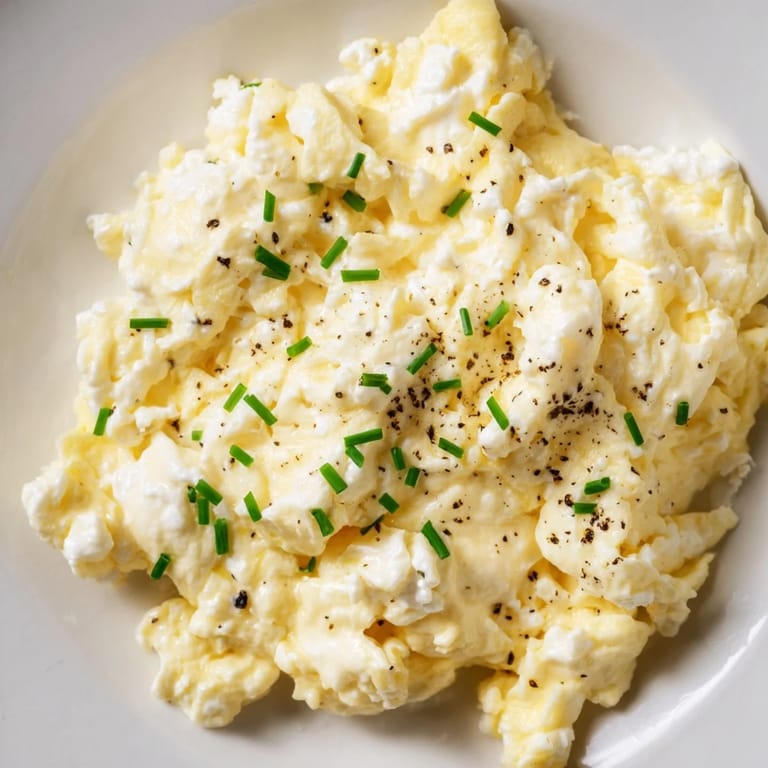
- Using a spatula, gently push the cooked edges toward the center in a slow, deliberate way. The key is to keep the larger curds from forming—you want delicate, small curds that feel almost creamy.
- Know when to stop:
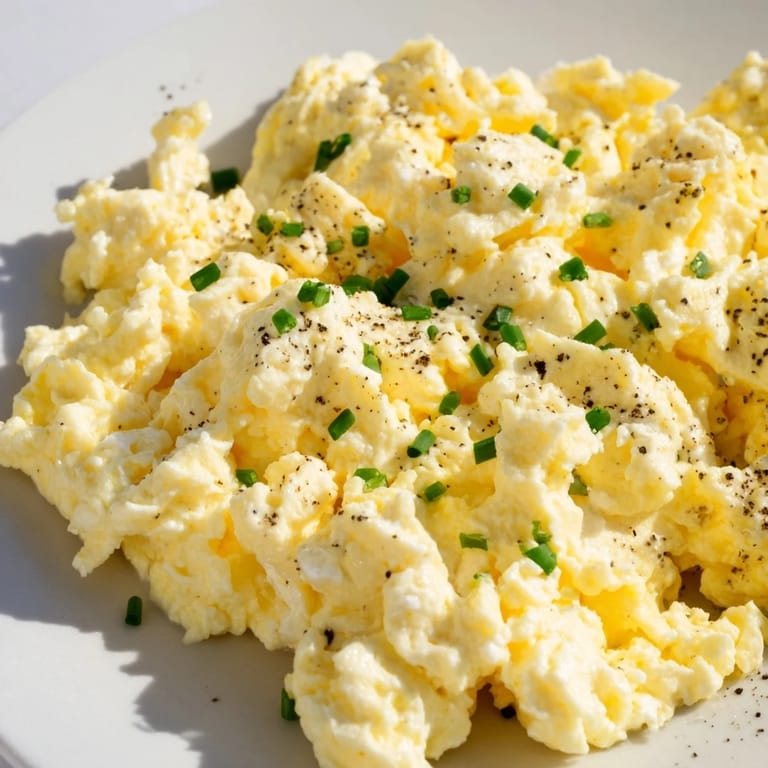
- Pull the pan off the heat the moment the eggs look mostly set but still have a slight glossiness to them. They'll firm up a tiny bit more from residual heat, and that's when they'll be absolutely perfect.
- Plate and garnish:
- Transfer everything to plates right away while they're still warm, then sprinkle with chives or parsley if you have them. Serve immediately.
 Pin It
 There was this one Sunday morning when I made these for someone I was trying to impress, and they asked for the recipe before they'd even finished eating. That's when I realized this simple breakfast had somehow become something that felt like I'd put real care into it, even though I'd basically thrown it together while half-awake.
Why Cottage Cheese Changes Everything
The cottage cheese doesn't announce itself—it just makes the eggs feel richer and stay softer longer. It adds this subtle creaminess that milk alone can't achieve, almost like the eggs are holding onto tiny pockets of moisture. Most people won't know why these taste different from regular scrambled eggs, they'll just notice that they want another bite.
Making Them Your Own
Once you nail the basic version, you can absolutely play around with additions without breaking anything. I've stirred in leftover roasted vegetables, crumbled feta, smoked salmon, even sautéed spinach, and the cottage cheese base handles all of it gracefully. The texture stays creamy no matter what you fold in, which is why this recipe feels so flexible and forgiving.
Serving Suggestions That Actually Work
Pair these with something textured to balance out all that creaminess—whole-grain toast works beautifully, or sliced avocado if you're being fancy about it. I've also plated them alongside fresh fruit, which adds brightness and prevents the meal from feeling too heavy. A cup of strong coffee or tea is basically mandatory.
- Buttered whole-grain toast is the classic move, and there's a reason why.
- Sliced tomato with a pinch of salt elevates the whole plate without fussing.
- Fresh herbs like dill or tarragon scattered on top make it feel special on mornings that need it.
 Pin It
 This breakfast has quietly become one of those recipes I return to constantly, the kind that works just as well when you're feeding yourself as when you're feeding someone else. There's something grounding about making something so simple that actually tastes like you put thought into it.
Recipe FAQs
- → How does cottage cheese affect the texture?
Cottage cheese adds moisture and creaminess, creating extra fluffy and tender eggs.
- → What’s the best way to cook these eggs?
Cook over medium-low heat, stirring gently to keep eggs soft and prevent overcooking.
- → Can I use other dairy instead of cottage cheese?
Milk or cream alone will produce less fluffy eggs; cottage cheese uniquely boosts fluffiness and protein.
- → What garnishes complement this dish?
Chopped chives or parsley add fresh flavor and a pop of color to the creamy eggs.
- → Are there flavor variations to try?
Try adding shredded cheddar, sautéed spinach, tomatoes, or smoked salmon for new tastes.