 Pin It
 There's a Tuesday afternoon I keep coming back to—my neighbor knocked on my door with an armful of vegetables from her garden, and I had a can of coconut milk sitting in my pantry. I'd never made curry before, but something about that moment felt right, so I opened a cookbook and started layering spices into hot oil. The kitchen filled with this warmth that smelled like turmeric and ginger and something just beyond familiar, and when she tasted it twenty minutes later, she actually stopped mid-bite. That's when I realized how simple it could be to make something that feels both exotic and comforting.
I made this for a friend who'd been having a rough week, and watching her face relax with the first spoonful reminded me that food isn't always about impressing anyone. She asked for the recipe three days later, and now she makes it every other Sunday. That's the thing about this curry—it doesn't demand perfection or fancy technique, just good ingredients and a little attention.
Ingredients
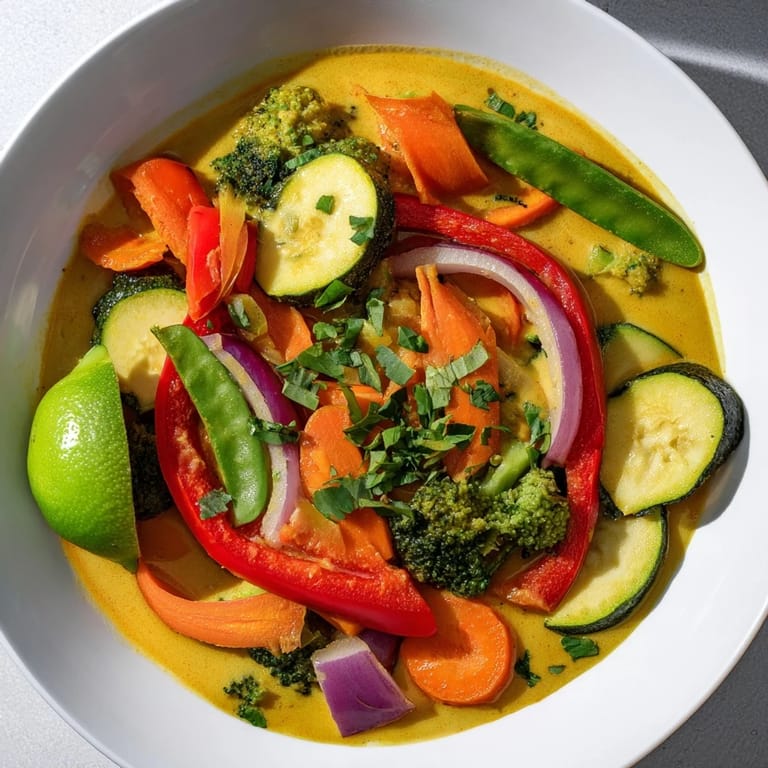
- Red bell pepper, carrot, zucchini, broccoli, snap peas: The vegetables are your canvas here; the fresher and more colorful, the better they'll taste and look.
- Coconut oil: Use refined if you don't want coconut flavor to dominate, or go with virgin if you want that richness to shine through.
- Garlic and ginger: These two do the heavy lifting flavor-wise, so don't skip them or use the jarred versions if you can help it.
- Red curry paste: This is where your spice comes from; check the label if you're vegan, as some brands sneak in shrimp or fish paste.
- Turmeric, cumin, coriander: The spice trio that makes this feel authentically warm and complex rather than just hot.
- Coconut milk and vegetable broth: Full-fat coconut milk is worth it here; it creates that silky sauce that coats every vegetable.
- Soy sauce or tamari: Just a tablespoon adds a depth that you can't quite put your finger on but definitely makes a difference.
- Fresh lime juice: Add this at the very end; it brightens everything and keeps the dish from feeling heavy.
- Fresh cilantro: A handful scattered on top transforms the whole thing from nice to alive.
Tired of Takeout? 🥡
Get 10 meals you can make faster than delivery arrives. Seriously.
One email. No spam. Unsubscribe anytime.
Instructions
- Build your flavor base:
- Heat the coconut oil until it shimmers, then add the red onion and let it soften for a couple minutes. You'll know it's ready when it goes from sharp and raw to sweet and translucent.
- Wake up the aromatics:
- Add your garlic and ginger and let them sit in that hot oil for just a minute—don't let them brown or they'll turn bitter. You want to catch that moment when your entire kitchen smells like magic.
- Toast the spices:
- Stir in the curry paste and spices and keep stirring for a full minute. This is the crucial step that releases all those flavors from their hiding places and makes them blend into something greater than themselves.
- Add the vegetables:
- Toss in the bell pepper, carrot, zucchini, and broccoli and keep them moving around the pan for a few minutes. You're not cooking them all the way through yet, just starting to soften their edges.
- Bring everything together:
- Pour in the coconut milk and broth and give it all a gentle stir, then let it bubble softly. The sauce will start to smell creamy and complex as the spices dissolve into it.
- Finish strong:
- Add the snap peas and soy sauce and let the whole thing simmer covered until the vegetables are tender but still have some resistance when you bite into them, about ten to twelve minutes. This is where the magic happens and everything melds.
- Brighten and taste:
- Turn off the heat, squeeze in the fresh lime juice, and taste as you go with salt and pepper. You want that brightness to cut through the richness so nothing feels overwhelming.
 Pin It
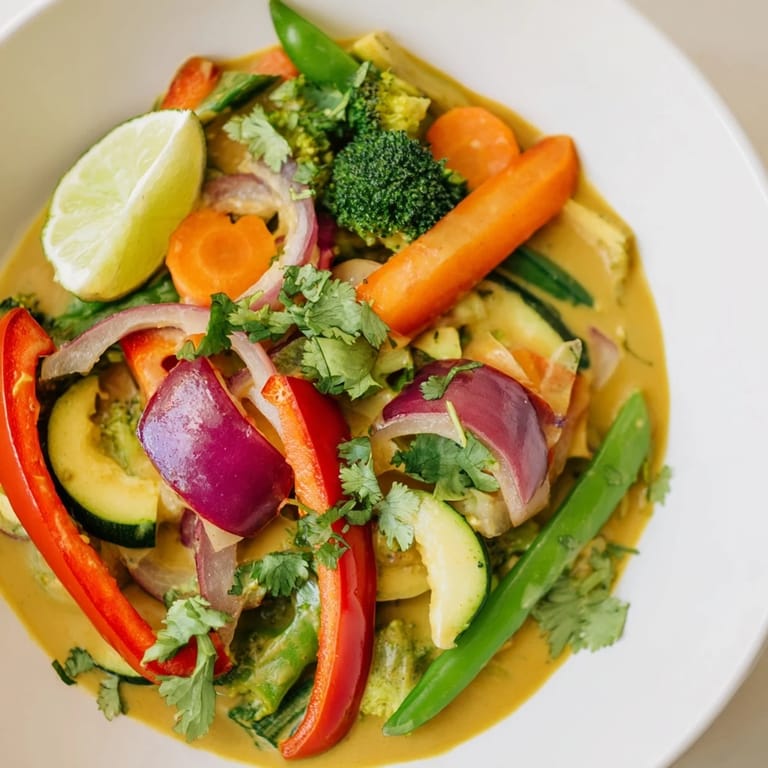
 There's something about sitting down to a bowl of this while steam rises off it, with rice soaking up all that sauce and cilantro scattered across the top, that feels like taking care of yourself. That's when I remember why I started making this in the first place.
Make It Your Own
The beauty of this curry is how forgiving it is with substitutions. If you've got cauliflower taking up space in your crisper drawer, throw it in instead of zucchini. Green beans work beautifully, as do mushrooms if you want something earthier. I've even added a handful of spinach at the very end and watched it melt into the sauce.
Adding Protein to Make It Heartier
If you're feeding someone with a bigger appetite or want this to feel more like a complete meal on its own, chickpeas are your friend—add a drained can right when you add the snap peas and let them warm through. Tofu works too if you cube it and toss it in gently so it doesn't break apart. I've even added white beans and nobody questioned it.
Serving Suggestions and Storage
This tastes best served immediately over jasmine rice or quinoa, though I've had great results with naan bread for scooping up the sauce. Leftovers keep in an airtight container for about three days in the fridge, and the flavors actually deepen a bit as it sits, so don't hesitate to make extra.
- If you find it too spicy the next day, add a splash of coconut milk or broth when you reheat it to mellow things out.
- Freeze it without the cilantro garnish if you want to save some for later; thaw overnight and reheat gently on the stove.
- The lime juice doesn't keep as well, so add that fresh each time you serve it.
 Pin It
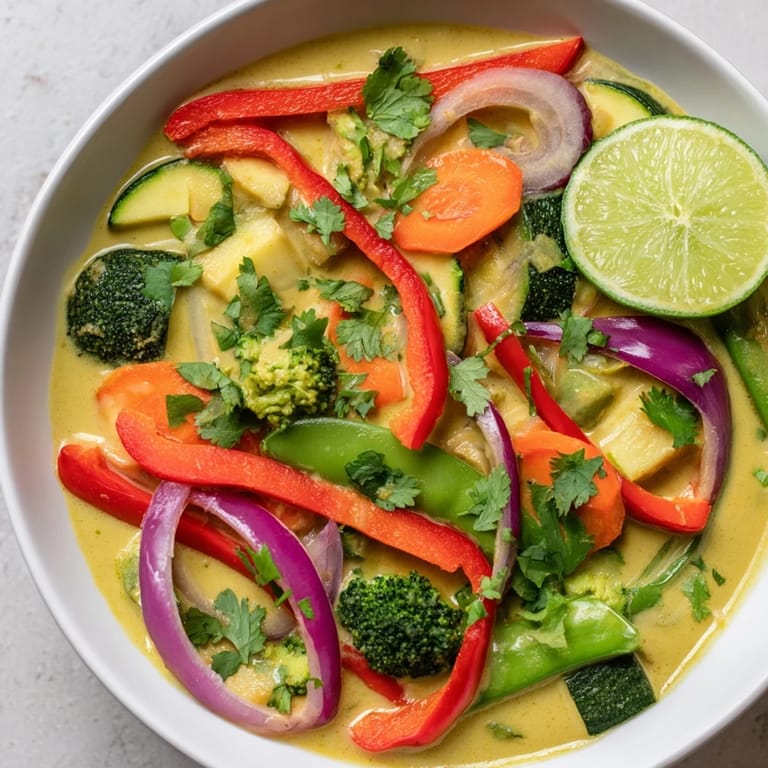
 This curry has become the meal I make when I want to feel grounded and warm, when I'm cooking for someone I care about, or when I just need my kitchen to smell like home. It's simple enough to make on a Tuesday, but special enough to serve on any day that needs a little brightness.
Recipe FAQs
- → What vegetables work best in this curry?
Bell pepper, carrot, zucchini, broccoli, snap peas, and red onion are ideal, but you can also add cauliflower, green beans, or mushrooms.
- → Can I adjust the spiciness of the curry?
Yes, simply use less red curry paste for a milder flavor or increase it for more heat according to your taste.
- → What can be added for extra protein?
Chickpeas or tofu can be included during cooking to boost protein content and add texture.
- → Which liquids create the sauce base?
Coconut milk combined with vegetable broth forms a rich, creamy sauce that gently simmers the vegetables.
- → How can I make this dish soy-free?
Replace soy sauce or tamari with coconut aminos for a soy-free alternative without sacrificing flavor.